
A cash sale of an occupied rental property is the fastest legal way for a landlord to exit a property without spending a dollar on repairs or evicting a single tenant. Traditional sales take 60–120 days to close and routinely require $15,000 or more in pre-sale repairs, realtor commissions near 5.5%, and months of carrying costs. A cash sale compresses that timeline to 7–21 days, transfers the existing tenant lease directly to the buyer, and eliminates repair obligations entirely. For landlords facing foreclosure, mounting maintenance bills, or a tenant situation they no longer want to manage, a cash sale is not just convenient. It is often the financially smarter move.
How a cash sale helps you avoid rental repairs and tenant headaches
The core mechanic is straightforward. A cash buyer, typically a real estate investor, purchases your property in its current condition, with the tenant still in place. Cash offers are guaranteed funds, free from mortgage approvals, appraisal requirements, or bank inspection contingencies. That removes two of the biggest reasons traditional deals fall apart at the last minute.
Cash buyers actively want occupied rentals. Investors prefer tenant-occupied properties because they gain immediate rental income the day the sale closes. You are not asking them to overlook the tenant. You are offering them a built-in revenue stream. That changes the negotiation dynamic entirely in your favor.

The lease transfers with the property. Under real estate law, lease agreements remain legally binding when ownership changes hands. The buyer steps into your role as landlord, inheriting both the lease terms and the tenant relationship. You walk away clean, with cash in hand and zero ongoing obligations.
Traditional sales demand the opposite. Lenders require appraisals, appraisers flag deferred maintenance, and buyers request repair credits or walk away. You end up either fixing the property or watching deals collapse. A cash sale skips that entire cycle.
Step-by-step process to sell a rental property for cash without repairs
Selling a tenant-occupied rental for cash follows a clear sequence. Each step protects you legally and keeps the deal moving.
-
Prepare a full property disclosure. Document the tenant's lease terms, monthly rent, security deposit amount, and any known repair needs. Honest disclosure of tenancy and property condition reduces legal risk and prevents deal fallout later.
-
Identify cash buyers experienced with occupied properties. Not every cash buyer handles tenant-occupied sales. Look for investors or companies that specifically advertise as-is purchases of rental properties. Slocashbuyer, for example, specializes in exactly this type of transaction in San Luis Obispo, CA.
-
Schedule a property walkthrough with proper notice. Most states require 24–48 hours notice before entering a tenant-occupied unit for inspections or showings. Respect that window. Tenants who feel respected cooperate. Tenants who feel ambushed create delays.
-
Negotiate the offer on an as-is basis. The offer should reflect the property's current condition and include the tenant lease transfer. Cash buyers typically offer 80–95% of market value, but that gap closes fast once you subtract commissions, repairs, and carrying costs from a traditional sale.
-
Close within 7–21 days and transfer the security deposit. At closing, the security deposit transfers to the buyer per your state's landlord-tenant law. Confirm the exact transfer procedure with your closing agent to stay compliant.
-
Communicate with your tenant throughout. A brief, honest conversation with your tenant about the sale reduces anxiety and encourages cooperation during walkthroughs. Buyers inherit a smoother relationship when you handle this well.
Pro Tip: Get your lease documents, rent payment history, and any repair records organized before you contact a cash buyer. Buyers who see clean documentation move faster and offer more confidently.
The table below compares the two sale paths side by side so you can see where the real cost difference lives.
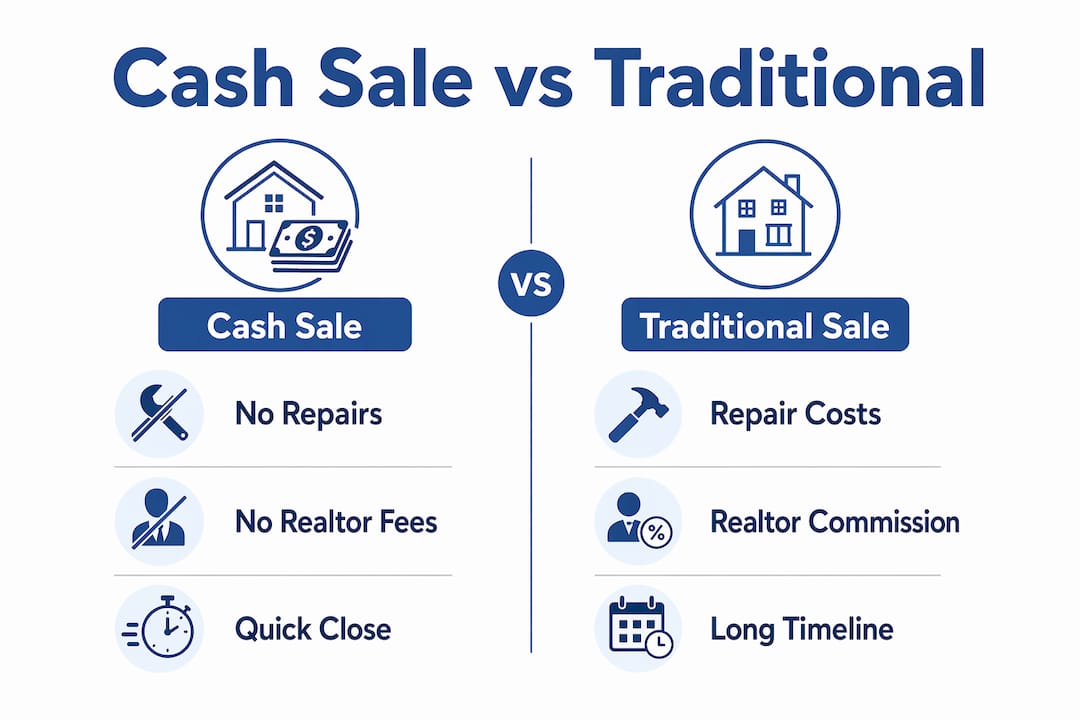
| Cost Category | Traditional Sale | Cash Sale |
|---|---|---|
| Realtor commission | ~5.5% of sale price | None |
| Pre-sale repairs | $15,000+ average | $0 |
| Carrying costs (90 days) | $5,400+ | Minimal |
| Closing fees | ~$4,000 | Often covered by buyer |
| Timeline | 60–120 days | 7–21 days |
Traditional sale deductions can total over $40,000 on a mid-range property. That context makes a cash offer at 85% of market value look very different from the first glance.
What landlords need to know about tenant rights during a cash sale
Tenant rights do not pause because you decided to sell. The law protects your tenant's lease regardless of who owns the property. Understanding these rules keeps your sale on track.
- Notice for inspections and showings: Most states require 24–48 hours written notice before entering a rental unit. Skipping this step can give tenants grounds to block access, which stalls your sale.
- Lease termination notice: If the buyer wants the property vacant, 30–60 days advance notice is typically required depending on your jurisdiction. Month-to-month tenants generally require less notice than those on fixed-term leases.
- Security deposit transfer: The deposit belongs to the tenant, not the seller. At closing, it transfers to the new owner, who then holds it under the same legal obligations you had.
- Eviction is not required: Selling a tenant-occupied property does not require eviction. The buyer assumes the landlord role and handles any future lease issues after closing. That burden leaves with the sale.
- Cash-for-keys as an option: If you or the buyer want the unit vacant before closing, cash-for-keys is a legal and common approach. You offer the tenant rent forgiveness, relocation assistance, or a cash bonus to move out early. Many tenants accept willingly.
Pro Tip: Check your specific county or city rules before scheduling any showings. Some California municipalities have stricter notice requirements than state law. A quick call to a local real estate attorney costs far less than a delayed closing.
Compliance with local tenant laws is not optional. Violations can expose you to liability and give tenants legal grounds to delay or block the sale entirely.
Common mistakes landlords make when selling rental property for cash
The biggest mistake landlords make is assuming a cash offer is a bad deal because the number looks lower. Many landlords overestimate the gains from evicting tenants and repairing the property first. Once you add eviction legal fees, repair costs, carrying costs during vacancy, and realtor commissions, the traditional route often nets less than the cash offer.
- Skipping disclosure: Hiding known repair issues or tenant disputes kills deals at the last minute. Buyers who discover undisclosed problems either walk away or renegotiate downward. Full disclosure upfront protects you.
- Attempting eviction before sale: Eviction timelines run 30–90 days and cost thousands in legal fees. Post-eviction repairs routinely add $2,000–$8,000 more. That is months of delay and real money spent before you even list the property.
- Ignoring local notice requirements: Failing to give proper notice for inspections creates legal exposure and damages tenant cooperation. Both outcomes slow your sale.
- Not vetting the cash buyer: Not all cash buyers have experience with tenant-occupied properties. An inexperienced buyer may not understand lease transfer obligations, which creates complications at closing.
- Waiting too long: If you are facing foreclosure or mounting debt, every week you delay costs money. Cash sales close fast precisely because they are designed for urgent situations.
"The landlords who come out ahead in a cash sale are the ones who treat it as a business decision, not an emotional one. Run the real numbers, including repair costs, eviction timelines, and commissions, before you compare offers."
Speed and transparency are the two levers you control. Use both.
Key takeaways
A cash sale is the most direct way for a landlord to exit a rental property without repair costs, eviction timelines, or financing delays.
| Point | Details |
|---|---|
| Cash sales close in 7–21 days | Traditional sales take 60–120 days, making cash the clear choice for urgent situations. |
| No repairs required | Cash buyers purchase as-is, saving landlords $15,000 or more in pre-sale repair costs. |
| Leases transfer automatically | Existing tenant leases remain legally binding and pass to the new owner at closing. |
| Traditional costs can exceed $40,000 | Commissions, repairs, carrying costs, and fees make traditional sales more expensive than they appear. |
| Tenant notice rules still apply | Landlords must give 24–48 hours notice for inspections regardless of sale type or timeline. |
What I have learned from watching landlords choose the hard way
I have seen landlords spend three months and $20,000 trying to get a rental property "ready to sell," only to net less than a cash offer they turned down on day one. The math rarely works in favor of the repair-first approach, especially when you factor in the carrying costs during the work and the vacancy period after.
The part that surprises most people is how tenant-occupied properties actually appeal to serious cash buyers. These buyers are not doing you a favor by accepting a tenant. They want the tenant. Immediate rental income is worth more to an investor than a vacant, freshly painted unit. That insight alone should change how you frame the conversation when you reach out to a buyer.
My honest advice: do not wait until you are in financial distress to explore a cash sale. The landlords who get the best cash offers are the ones who approach buyers from a position of choice, not desperation. If your rental is costing you more than it earns, or if a major repair is looming, that is the right time to get a cash offer and compare it honestly against your real net proceeds from a traditional sale.
Working with a buyer who knows tenant-occupied sales is non-negotiable. The wrong buyer will fumble the lease transfer, mishandle tenant notice requirements, and create legal headaches that slow everything down. Vet your buyer the same way you would vet a contractor.
— Abel
Slocashbuyer makes selling your occupied rental simple
Landlords in San Luis Obispo, CA who need to sell fast without repair costs have a direct option in Slocashbuyer. The process is built for exactly your situation: a tenant in place, repairs you do not want to make, and a timeline that cannot stretch to six months.

Slocashbuyer buys rental properties in any condition, with tenants in place, and closes in as little as 7 days. There are no commissions, no repair requirements, and no hidden fees. The lease transfers to Slocashbuyer at closing, and the security deposit transfer is handled correctly per California law. You get a fair cash offer, a clear timeline, and a team that has done this before. Reach out to Slocashbuyer at slocashbuyer.com to get your offer started.
FAQ
How fast can I sell a rental property for cash?
Cash sales typically close in 7–21 days, compared to 60–120 days for traditional listings. The timeline depends on buyer readiness and how quickly you provide property and tenant documentation.
Do I have to evict my tenant before a cash sale?
No. Cash buyers purchase tenant-occupied properties and assume the landlord role at closing. The existing lease transfers legally to the new owner, so eviction is not required.
Will I net less money from a cash sale?
Not necessarily. Traditional sales deduct realtor commissions, pre-sale repair costs, carrying costs, and closing fees, which can total over $40,000. A cash offer at a slight discount often nets a comparable or higher amount once those costs are removed.
What notice do I have to give my tenant during a sale?
Most states require 24–48 hours written notice before entering a rental unit for inspections or showings. Lease termination, if needed, typically requires 30–60 days notice depending on your jurisdiction and lease type.
What happens to the security deposit when I sell?
The security deposit transfers to the buyer at closing. The new owner then holds it under the same legal obligations you had as the original landlord.