
Transitioning from landlord to cash seller means selling your rental property directly to an investor or cash buyer, bypassing the traditional listing process entirely. Cash buyers purchase tenant-occupied properties as-is, which removes the pressure to stage, repair, or wait for mortgage approvals. Investor sales typically close in 7–21 days, compared to months for conventional sales. That speed comes with a trade-off: cash offers generally run 10–25% below full retail value. For landlords dealing with difficult tenants, mounting repair costs, or a need to exit quickly, that discount is often worth every dollar.
What does transitioning from landlord to cash seller actually require?
The core requirement is understanding that your tenant's lease does not disappear when you sell. Leases transfer to the new owner automatically, and the buyer inherits all existing tenant rights and obligations. This is foundational legal knowledge every landlord must have before approaching a cash buyer.
Cash buyers who specialize in rental properties already expect this. They factor the lease into their offer. Your job is to give them accurate, organized information so they can move fast. A landlord exit strategy built on transparency closes deals. One built on surprises does not.

The two main paths forward are selling with the tenant in place or negotiating a cash-for-keys agreement to gain vacant possession before closing. Each path has different costs, timelines, and buyer pools. Knowing which path fits your situation is the first decision you need to make.
What documents do you need before approaching a cash buyer?
Organized digital documentation accelerates buyer due diligence and keeps deals on track. Cash buyers conduct their review in 24–48 hours. Landlords without ready records risk losing offers or watching deals stall.
Gather these documents before you contact a single buyer:
- Current lease agreement with all addendums and renewal terms
- Rent roll showing monthly rent, payment history, and any arrears
- Security deposit records and the account where funds are held
- Maintenance and repair logs for the past two to three years
- Utility bills to confirm what the landlord pays versus the tenant
- Property tax statements and any HOA documents
- Certificate of occupancy and any open permits or code violations
Pro Tip: Build a single shared folder with all documents labeled clearly. When a buyer asks for the lease at 9:00 PM, you can send it in two minutes. That speed signals professionalism and keeps momentum alive.
Tenant notification is equally critical. Most states require 24–48 hours notice before entering for showings. Skipping this step gives tenants legal grounds to refuse entry and can derail your marketing entirely.
| Document or Action | Why It Matters |
|---|---|
| Current lease agreement | Confirms tenant rights and lease end date for buyer |
| Rent roll with payment history | Shows income reliability and any delinquency risk |
| Maintenance records | Reduces buyer concern about hidden property issues |
| Written showing notices | Protects against tenant harassment claims |
| Security deposit documentation | Prevents disputes at closing over fund transfers |
Preparing a tenant information package for the buyer is a step most landlords skip. Include the tenant's contact info, lease summary, payment history, and any known maintenance preferences. Buyers appreciate it, and it signals a well-managed property.
How do you negotiate a cash-for-keys agreement with tenants?
A cash-for-keys agreement is a voluntary arrangement where the landlord pays the tenant to vacate before the lease ends. The key word is voluntary. You cannot force a tenant out mid-lease without following the eviction process, which is slower, more expensive, and legally risky.
Buyout amounts range from $1,500 to over $100,000, with an average around $25,000 in major metro areas. The right number depends on several factors:
- Remaining months on the lease
- Local relocation costs and rental market tightness
- Whether the property is in a rent-controlled area
- The tenant's personal circumstances and flexibility
In rent-controlled markets, local laws may set minimum buyout amounts. Offering less than the legal minimum voids the agreement and creates liability. Always check your city or county ordinances before making an offer.
A written cash-for-keys agreement should specify the move-out date, the payment amount and timing, the condition the unit must be left in, and a mutual release of claims. Both parties sign. Both parties keep a copy. Verbal agreements are unenforceable and invite disputes.
The negotiation itself works best when you lead with empathy. Explain that you are selling the property and that you want to make the transition easy for them. Tenants who feel respected are far more likely to cooperate. Tenants who feel pressured dig in.
Pro Tip: Offer the cash-for-keys payment in two installments. Pay half when they sign the agreement and half on the day they hand over the keys. This protects you if they change their mind and gives them a financial incentive to follow through.
Here is the sequence that works in practice:
- Confirm the tenant's lease end date and local legal requirements.
- Research average relocation costs in your area.
- Make a written offer with a clear move-out date.
- Give the tenant at least a week to consider before following up.
- Negotiate the amount if needed, but stay within your financial break-even point.
- Execute a written agreement with both signatures before any money changes hands.
What are the step-by-step actions to close a cash sale quickly?
Selling a rental property for cash follows a clear sequence. Skipping steps creates delays that cost you money and buyer confidence.
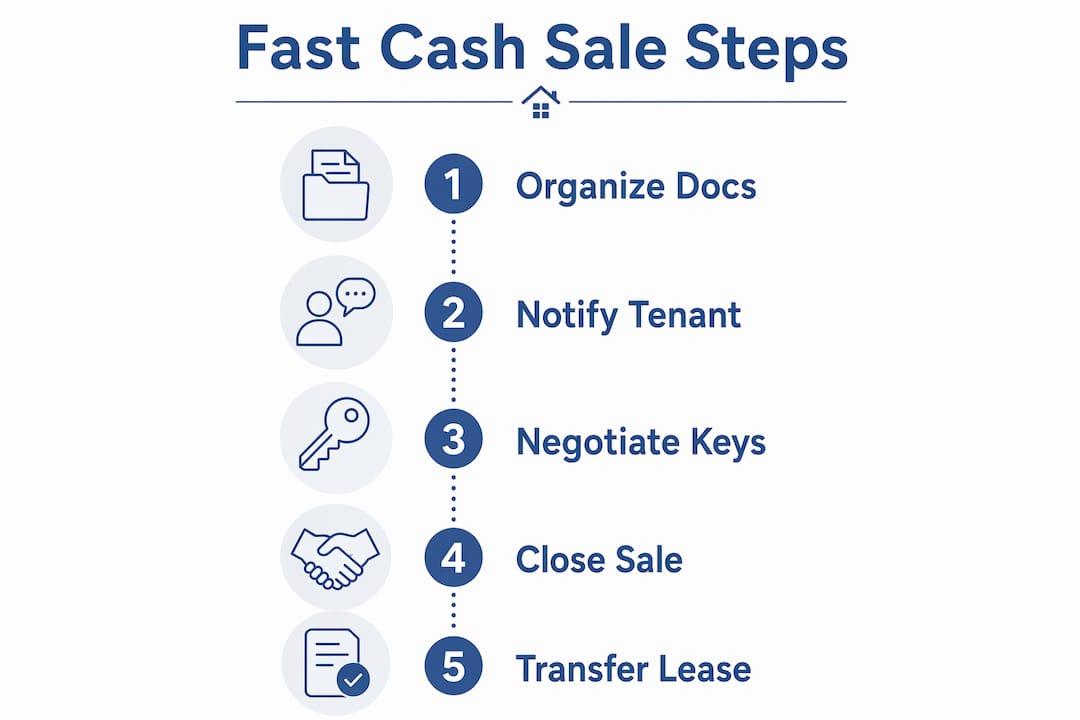
- Gather and organize all documentation into a digital folder before contacting buyers.
- Notify tenants in writing of your intent to sell and the showing schedule, respecting the required notice period.
- Contact cash buyers with a transparent property summary including lease terms, rent amount, and property condition.
- Evaluate offers and decide whether to sell with the tenant in place or pursue a cash-for-keys agreement first.
- Manage showings by scheduling them at times convenient for the tenant and confirming each visit in writing.
- Open escrow and prepare title as soon as you accept an offer. Have your title company ready to move fast.
- Finalize tenant relocation if applicable, confirming the move-out date aligns with the closing timeline.
The table below shows how a cash sale compares to a traditional listing for a tenant-occupied property.
| Factor | Cash buyer sale | Traditional listing |
|---|---|---|
| Closing timeline | 7–21 days | 60–120 days |
| Repairs required | None | Often required |
| Tenant cooperation needed | Minimal | High |
| Offer price | 10–25% below retail | Near full market value |
| Contingencies | Few or none | Financing, inspection, appraisal |
| Deal certainty | High | Moderate |
Selling to cash buyers bypasses mortgage contingencies and tenant complications that routinely kill traditional sales. That certainty has real financial value, especially when you are managing a difficult tenancy or facing financial pressure.
What common challenges do landlords face when selling to cash buyers?
Tenant resistance is the most common obstacle. A tenant who refuses showings, leaves the unit in poor condition, or simply does not respond to communication can slow or kill a deal. Respectful, transparent communication reduces this risk more than any legal threat.
Watch for these pitfalls:
- Skipping proper notice for showings. This gives tenants legal grounds to refuse entry and exposes you to harassment claims.
- Poor or missing documentation. Cash buyers who cannot complete due diligence in 24–48 hours will move to the next deal.
- Underestimating the tenant's emotional response. A sale feels threatening to tenants. Acknowledge it and address it directly.
- Accepting a cash offer without checking title. Unresolved liens or open permits slow closings even in cash deals.
- Overpricing for a cash sale. Cash buyers price in risk and speed. Holding out for retail value defeats the purpose.
The landlords who close fastest are the ones who treat the tenant as a partner in the process, not an obstacle to work around. That mindset shift changes everything about how the negotiation and the sale unfold.
Effective tenant management during a sale can improve the final price by 15–20%. That is a significant return on the time you invest in communication and preparation.
Pro Tip: Send the tenant a simple one-page letter explaining the sale, their rights, and what to expect during the process. Most tenant friction comes from fear of the unknown. Remove the unknown and you remove most of the friction.
Key takeaways
The fastest path from landlord to cash seller runs through organized documentation, honest tenant communication, and a clear-eyed view of the speed-versus-price trade-off.
| Point | Details |
|---|---|
| Leases transfer automatically | The buyer inherits your tenant's lease, so disclose all terms upfront. |
| Documentation speed matters | Cash buyers review documents in 24–48 hours; disorganized records kill deals. |
| Cash-for-keys is voluntary | Buyouts range from $1,500 to $100,000+; always use a written, signed agreement. |
| Tenant communication reduces friction | Respectful, transparent updates keep tenants cooperative during showings. |
| Speed costs money | Cash offers run 10–25% below retail; weigh that against months of carrying costs. |
What I have learned from watching landlords sell the hard way
Working with landlords in San Luis Obispo and the surrounding Central Coast, I have seen the same mistakes repeat. The landlord who hides the lease situation from the buyer. The one who tries to pressure a tenant into leaving without a written agreement. The one who contacts buyers before gathering a single document.
Every one of those situations ends the same way: a deal that falls apart, a closing that drags on for months, or a legal dispute that costs more than the property was worth fighting over.
The landlords who close cleanly do one thing differently. They treat the sale like a business transaction from day one. They get their records in order before they make a single call. They talk to their tenant honestly and early. They pick a cash buyer who has done this before and knows how to handle a tenant-occupied property.
The price discount on a cash sale stings. I understand that. But when you factor in the carrying costs of a six-month traditional listing, the repair demands, the agent commissions, and the stress of managing a difficult tenancy through the process, the math often flips. Speed has real value. Certainty has real value. Do not let the headline number fool you into a slower, more painful path.
— Abel
Slocashbuyer works with landlords who need to sell fast
Landlords in San Luis Obispo dealing with difficult tenants, deferred maintenance, or a need to exit quickly have a direct option.

Slocashbuyer purchases tenant-occupied rental properties as-is, with no repairs required and no agent commissions. The process is straightforward: you share your property details, receive a fair cash offer, and choose your closing date. Slocashbuyer handles the complexity of tenant-occupied sales and closes in as little as 7 days. If you are ready to sell your house fast and move on without the months of uncertainty, reach out to Slocashbuyer today for a no-obligation cash offer.
FAQ
Can I sell a rental property with tenants still living there?
Yes. Leases transfer to the new buyer automatically, so you can sell a tenant-occupied property without requiring the tenant to leave. Cash buyers who specialize in investment properties regularly purchase homes with active leases in place.
How fast can a landlord close a cash sale?
Cash sales typically close in 7–21 days when documentation is organized and the buyer has no financing contingencies. Traditional sales with tenant-occupied properties often take 60–120 days or longer.
What is a cash-for-keys agreement?
A cash-for-keys agreement is a voluntary arrangement where the landlord pays the tenant a negotiated amount to vacate before the lease ends. Buyout amounts average around $25,000 in major metro areas and must always be documented in a signed written agreement.
Do I have to give tenants notice before showings?
Yes. Most states require written notice of 24–48 hours before entering a rental unit for showings. Failing to provide proper notice gives tenants legal grounds to refuse entry and can expose you to claims of lease violation.
Will a cash buyer pay full market value for my rental property?
Cash buyers typically offer 10–25% below full retail value. That discount reflects the speed, certainty, and as-is condition they provide. For landlords who need to sell quickly or avoid costly repairs, the net result often compares favorably to a traditional sale after commissions, repairs, and carrying costs.