
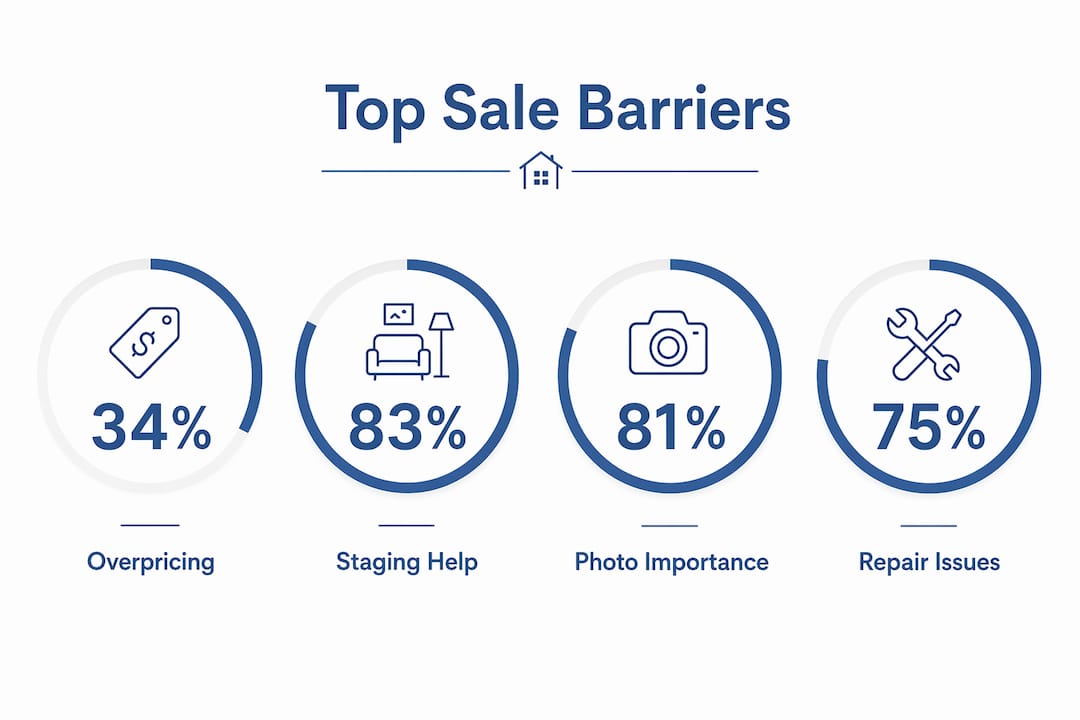
Overpricing, poor presentation, and unmet buyer expectations are the leading reasons why homes fail to sell in today's real estate market. The National Association of Realtors reports that 81% of buyers consider listing photos the most important online search feature, yet many sellers still skip professional photography. Sellers who ignore pricing data, skip staging, and defer repairs consistently watch their listings go stale. Understanding these patterns is the first step toward fixing them.
Why homes fail to sell: the pricing problem
Overpricing is the single most common reason a listing dies on the market. 34% of sellers admit in hindsight that their asking price was too high, and nearly 1 in 5 sellers were forced to cut their price in 2025. That price drop rarely recovers the momentum lost during those first critical weeks.
The root cause is almost always emotional or outdated reference points. Many sellers price based on what a neighbor sold for two years ago, or what they feel their home is worth after years of memories. Neither of those factors reflects what a buyer will pay today. Buyers compare your home to everything else currently available at that price point, and they are ruthless about value.
Pandemic-era pricing expectations are another trap. Many sellers still carry the assumption that bidding wars and above-list offers are normal. Pricing even slightly above comparable sales kills early market momentum, and that momentum is nearly impossible to rebuild once lost.
Realistic pricing starts with a current comparative market analysis, not gut instinct. Look at homes that closed in the last 60–90 days in your zip code, at similar square footage and condition. Price at or just below that range to generate early interest and competing offers.
Pro Tip: The first two weeks of your listing are your highest-traffic window. Buyers and their agents filter new listings daily. A price that is even 5% too high will push your home to the bottom of search results and attract no showings.
- Price your home based on current closed sales, not active listings
- Avoid anchoring to what you paid or what you spent on renovations
- Treat the first two weeks as your best and most valuable marketing window
- Be prepared to reduce quickly if showings are low after week two
Does visual presentation really affect whether a house sells?
Yes, and the data is clear. 81% of buyers rank listing photos as the most important feature when searching online. Homes without professional photography routinely sit on the market beyond three to six months. In a world where buyers scroll through dozens of listings on their phones, a dark or blurry photo is a skip.

Staging compounds the effect of good photography. 83% of buyers' agents say staging makes it easier for clients to picture themselves living in a home. That mental connection is what drives offers. An empty room with white walls gives buyers nothing to connect with emotionally.
Common staging mistakes sellers make include leaving too much furniture in a room, keeping personal photos on the walls, and ignoring curb appeal. Buyers form their first impression before they even walk through the front door. A cluttered porch, dead plants, or a faded front door all signal neglect.
Pro Tip: Before any photos are taken, walk through your home and smell it as if for the first time. Buyers walk away over pet odors, cooking smells, and mustiness that sellers stop noticing over time. A professional cleaning and odor treatment costs far less than a price reduction.
The fix is straightforward. Hire a professional photographer. Rent or borrow furniture if the home is vacant. Remove personal items and excess clutter. Address odors before the first showing. These steps cost a fraction of what a price cut will cost you later.
- Remove personal photos and family-specific decor
- Use neutral colors and minimal furniture to make rooms feel larger
- Clean windows, power wash the driveway, and repaint the front door
- Address pet odors, cooking smells, and musty areas before any showings
How neglected repairs drive buyers away
Buyers expect a move-in ready home, and visible deferred maintenance destroys that expectation fast. Small defects like dripping faucets, scuffed walls, and sticking doors send a clear signal: if the seller ignored these, what else did they ignore? Buyers assume the worst, and that assumption shows up in low offers or no offers at all.
The psychology here matters. A buyer walking through a home is constantly building a mental list of costs they will inherit. Every visible repair adds to that list. By the time they leave, they have mentally subtracted thousands from your asking price, or they have simply moved on to the next listing.
Pro Tip: Walk your home with fresh eyes before listing. Better yet, hire a pre-listing inspector. Knowing your home's condition before buyers do gives you control over what gets fixed and how it gets disclosed.
Buyers in 2026 are also more demanding during inspections. Rigid seller negotiation on inspection repairs caused many deals to fall apart in 2025. Affordability pressure means buyers have less cash left over after closing to handle repairs themselves. They expect sellers to either fix issues or offer credits.
Prioritize repairs that are visible, functional, and safety-related. Fix leaky faucets, patch scuffed walls, replace broken light fixtures, and oil squeaky hinges. These repairs are inexpensive but carry outsized weight in buyer perception. Save your budget for these high-visibility fixes rather than cosmetic upgrades that may not match buyer taste.
- Fix dripping faucets, running toilets, and leaky pipes
- Patch holes and scuffs in walls, and touch up paint
- Replace burned-out bulbs and broken light fixtures
- Repair sticking doors, broken locks, and damaged window screens
What role do timing and negotiation play in a failed sale?
The first two weeks on market attract the most serious buyers. After that window closes, your listing accumulates what agents call "market stigma." Buyers start asking why it hasn't sold. That question alone reduces your negotiating power and often forces a price cut that brings your final sale price below what you could have gotten with correct initial pricing.
Negotiation flexibility is equally critical. Successful sellers in 2026 are adjusting their mindset away from hardball tactics. Buyers are stretched thin on affordability, and a seller who refuses to budge on a $2,000 repair credit often loses a $400,000 sale. The math rarely favors rigidity.
Here is a practical framework for negotiation:
- Respond to every offer. Even a low offer is a conversation starter. Counter with your terms rather than rejecting outright.
- Separate emotional value from market value. What your home means to you does not affect what a buyer will pay.
- Offer credits instead of repairs when possible. Buyers often prefer a closing cost credit over waiting for repairs to be completed.
- Know your bottom line before listing. Decide in advance the minimum price and terms you will accept so you can respond quickly and confidently.
- Watch market conditions weekly. If similar homes are sitting unsold, that is data. Adjust your price or terms before your listing ages out.
Market timing also matters at a macro level. Listing in late winter or early spring typically generates more buyer activity than listing in late fall. If you have flexibility on timing, use it.
Key Takeaways
The most common reasons homes fail to sell are overpricing, weak visual presentation, deferred repairs, and inflexible negotiation, all of which sellers can fix before or during a listing.
| Point | Details |
|---|---|
| Overpricing kills momentum | 34% of sellers regret their initial price; set yours from current closed sales data. |
| Photos drive buyer interest | 81% of buyers rank listing photos first; professional photography is non-negotiable. |
| Staging accelerates decisions | 83% of agents say staging helps buyers commit; remove clutter and personal items. |
| Repairs signal home condition | Small visible defects lead buyers to assume larger hidden problems exist. |
| Flexibility closes deals | Rigid inspection negotiation caused many 2025 deal failures; offer credits when possible. |
What I've learned from watching sellers repeat the same mistakes
After working with homeowners across San Luis Obispo, I've seen the same patterns repeat themselves. Sellers overprice because they love their home. They skip staging because they think buyers have imagination. They ignore the dripping faucet because it's been dripping for three years and it hasn't bothered them.
The uncomfortable truth is that buyers do not share your attachment to the home. They are making a financial decision, often the largest of their lives. They need to see value clearly, feel confident about the condition, and picture themselves living there. When any of those three things are missing, they move on.
What I tell sellers is this: treat the sale like a business transaction from day one. Price it based on data. Invest in presentation. Fix what buyers will notice. And when an offer comes in, respond with flexibility rather than pride. The sellers who do those four things consistently close faster and at better prices than those who don't.
If you are in a situation where repairs, pricing, or timing feel out of reach, there is another path. Sometimes the traditional listing process is not the right fit, and that is okay.
— Abel
When a traditional sale isn't working, Slocashbuyer can help
If your home has been sitting on the market, or if repairs, pricing pressure, and negotiations feel like too much to manage, Slocashbuyer offers a direct alternative. We buy homes in any condition for cash in San Luis Obispo, CA, with no repairs required, no agent fees, and no lengthy negotiations.

Whether you are facing foreclosure, dealing with inherited property, or simply need to sell your house fast, Slocashbuyer provides a fair cash offer and a closing timeline that works for you. There are no hidden fees and no surprises. Contact Slocashbuyer today for a no-obligation cash offer and find out how straightforward selling your home can be.
FAQ
What is the number one reason homes don't sell?
Overpricing is the leading cause. 34% of sellers acknowledge in hindsight that their asking price was too high, reducing buyer interest and showings from the start.
How long does it take for a home to go stale on the market?
The first two weeks are the most critical. After that window, listings begin accumulating market stigma, which reduces buyer confidence and negotiating leverage.
Does staging really help a home sell faster?
Yes. 83% of buyers' agents confirm that staging helps buyers visualize living in the home, which directly increases the likelihood of receiving an offer.
Can small repairs actually affect whether a home sells?
Small visible defects like dripping faucets and scuffed walls lead buyers to assume larger hidden problems exist, reducing confidence and offer amounts.
What should sellers do if their home isn't selling?
Reassess your price against current closed sales, improve your listing photos, address visible repairs, and increase negotiation flexibility on inspection items. If the traditional process is not working, a cash buyer like Slocashbuyer offers a faster, simpler path to closing.