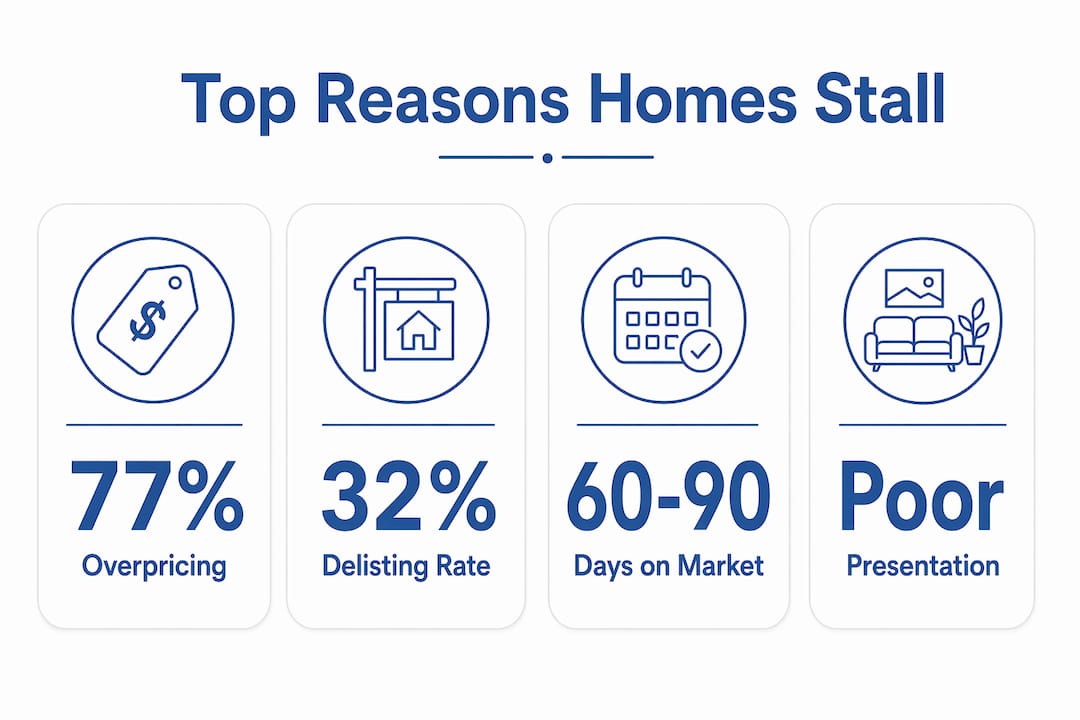
Overpricing is the single leading reason homes sit on the market, with 77% of top agents identifying it as the primary cause of stale listings. Poor presentation and weak marketing follow close behind. Together, these three factors explain the vast majority of listings that linger past 30, 60, or even 90 days. If your home is not selling, the cause almost always falls into one of these categories. Understanding which one applies to your situation is the first step toward fixing it.
Why homes sit on the market: the pricing problem
Pricing a home too high is the fastest way to kill buyer interest before it starts. A HomeLight survey of top real estate agents found that overpricing tops the list of reasons homes fail to sell. That number reflects a consistent pattern agents see across every market and price range.
The damage from a high starting price compounds over time. Homes priced correctly from day one attract the most buyer attention in the first two to three weeks. Miss that window, and you lose what agents call critical early momentum. Price reductions after 60 days rarely recover the same level of interest a correct starting price would have generated.
Buyers notice when a listing has been sitting. Experienced sellers recognize that exceeding 60–90 days on market labels a listing as stale, which signals to buyers that something is wrong, even when nothing is. That stigma pushes buyers toward fresher listings and forces sellers into deeper price cuts than they would have needed at the start.
The data backs this up. Median days on market in South Denver Metro rose 6.7% year over year to 64 days in february 2026. That increase happened even in a market with strong underlying demand, showing how pricing sensitivity affects sale timelines everywhere.
Pro Tip: Request a comparative market analysis (CMA) from your agent before setting your list price. A CMA compares your home to recently sold properties with similar size, condition, and location. It removes emotion from the pricing decision and grounds your number in what buyers are actually paying.
| Scenario | Typical outcome |
|---|---|
| Correctly priced from day one | Strong early showings, offers within 2–3 weeks |
| Overpriced at listing | Few showings, price reduction needed after 30–60 days |
| Price reduced after 60+ days | Stale listing stigma, lower final sale price than if priced right initially |
| Repeated price reductions | Buyer skepticism increases, longer total time on market |
Starting with an inflated price often means accepting less than market value in the end. The irony is that sellers who push for a higher price frequently walk away with less money than sellers who priced accurately from the start.
How home condition and presentation drive buyers away
Condition problems are one of the most common home selling mistakes, and they are often invisible to the seller. About two-thirds of sellers make at least some repairs before listing, which means the sellers who skip this step are already at a disadvantage. Buyers compare every home they tour, and a property with visible deferred maintenance loses ground quickly.
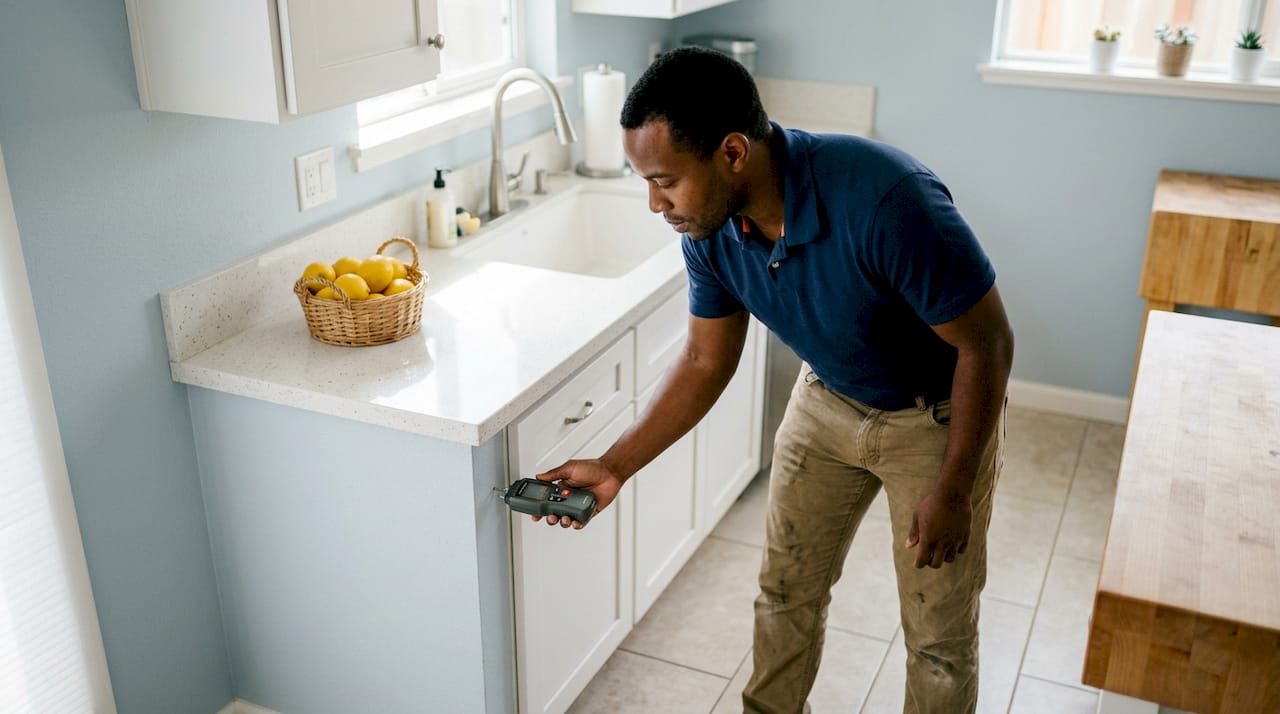
The issues that hurt sellers most are not always structural. Odors from pets, cooking, or mustiness are among the fastest ways to kill buyer interest during a showing. Sellers often develop nose-blindness to smells they live with daily, so what feels normal to you can be a dealbreaker for a buyer walking in cold.
Pro Tip: Ask a trusted friend or neighbor to walk through your home before showings begin. Give them permission to be honest about odors, clutter, or anything that feels off. A fresh set of eyes catches what you have stopped noticing.
Common condition issues that reduce buyer interest include:
- Visible repairs left undone (cracked tiles, peeling paint, broken fixtures)
- Clutter that makes rooms feel smaller than they are
- Outdated or dirty carpeting
- Poor curb appeal from overgrown landscaping or a worn exterior
- Dark or poorly lit rooms during showings
Staging and photography also play a direct role in how many buyers even schedule a showing. Poor quality listing photos reduce buyer interest before a single foot crosses your threshold. Professional photography is one of the lowest-cost, highest-return investments a seller can make before going live on the market.
Emotional connection drives buying decisions. Buyers need to picture themselves living in the space. A cluttered, personalized, or poorly lit home makes that mental leap harder. Decluttering, neutralizing decor, and staging key rooms like the living room and primary bedroom give buyers the blank canvas they need to fall in love with the property.
Does your marketing plan actually reach buyers?
Effective home marketing today goes well beyond placing a listing on the MLS and sticking a yard sign in the ground. Digital campaigns, broker outreach, and story-driven listings are now the baseline for reaching serious buyers. Sellers who rely on passive exposure alone see fewer showings and longer days on market.
Your agent's marketing plan should include specific, measurable tactics. When interviewing agents, ask directly how they plan to market your home. A strong plan typically includes:
- Professional photography and video walkthroughs
- Targeted social media advertising to buyer demographics
- Email outreach to active buyer agents in the area
- A listing description that tells a story, not just lists features
- Open houses timed to peak buyer activity in your market
Agent selection matters as much as the plan itself. An agent who specializes in your neighborhood understands local buyer behavior, knows which price points move fast, and has relationships with other agents who represent active buyers. A generalist agent with a large territory may not bring that same depth of local knowledge.
Showing restrictions are another underappreciated factor. Limiting access to your home shrinks the buyer pool significantly. Flexible showing windows, including evenings and weekends, give more buyers the chance to see your property. Every showing you turn away is a potential offer you never receive.
How 2026 market conditions affect why real estate is slow
The broader market environment in 2026 adds a layer of complexity that sellers cannot ignore. The mortgage rate lock-in effect is a real force: high financing costs prevent homeowners from moving, which reduces both inventory and the pool of motivated buyers. Fewer buyers in the market means more competition among sellers and longer average sale timelines.
Delisting rates have risen to 32% of new listings, up from 8% in 2022. That jump tells you sellers are pulling homes rather than accepting offers they consider too low. It also signals that many sellers entered the market with unrealistic expectations shaped by the pandemic-era pricing environment.
Sellers today must adjust pricing and mindset to match a more competitive and cautious market. Pandemic-era pricing no longer applies. Buyers are more selective, negotiate harder, and expect reasonable concessions on closing costs and repairs. Sellers who resist this reality stay on the market longer.
Practical ways to stay competitive in this environment:
- Price at or slightly below comparable sales to generate early interest
- Offer closing cost assistance to expand your buyer pool
- Be flexible on the closing timeline to accommodate buyer financing needs
- Respond to showing requests quickly, ideally within the hour
- Review your pricing strategy every 14 days if offers are not coming in
Buyer caution and the rate lock-in effect create a low-inventory environment that paradoxically prolongs time on market for many sellers. Understanding this dynamic helps you make faster, smarter adjustments instead of waiting and hoping the market shifts in your favor.
Key Takeaways
Overpricing, poor presentation, and weak marketing are the three root causes that explain why most homes linger on the market far longer than necessary.
| Point | Details |
|---|---|
| Overpricing is the top cause | 77% of top agents cite it as the primary reason homes fail to sell. |
| Early momentum is irreplaceable | Homes priced right from day one attract the most buyer attention in the first two to three weeks. |
| Condition and odors lose buyers fast | Nose-blindness is real; have someone else walk through before your first showing. |
| Marketing must go beyond the MLS | Digital campaigns, professional photos, and broker outreach are now the baseline. |
| 2026 market conditions demand flexibility | Rising delisting rates and buyer caution mean sellers must price and negotiate realistically. |
What I have seen sellers get wrong, even in a good market
I have watched sellers in San Luis Obispo and across the Central Coast make the same mistake repeatedly: they price for the offer they want, not the offer the market will give. It feels logical. You know what you paid, what you put into the home, and what you need to walk away with. But buyers do not care about any of that. They compare your home to every other active listing in their price range, and they will move on if yours does not compete.
The second pattern I see is sellers waiting too long to adjust. If your home has been on the market for 30 days without a serious offer, something needs to change. That might be the price, the photos, the showing schedule, or all three. Waiting another 30 days rarely produces a different result. The market gives you clear feedback quickly. The sellers who act on that feedback early almost always come out ahead of those who hold firm and hope.
Presentation is the one area where sellers consistently underinvest relative to the return. A professional photographer costs a few hundred dollars. Staging a living room costs a weekend of effort. These are small costs compared to a price reduction of $10,000 or $20,000 after two months of sitting. The sellers I have seen move their homes fastest are the ones who treated the listing like a product launch, not a passive event.
— Abel
Selling in San Luis Obispo without the wait
If your home has been sitting and the traditional route is not working, there is another path worth knowing about.

Slocashbuyer buys homes directly in San Luis Obispo, in any condition, for cash. No repairs, no agent fees, no drawn-out negotiations. If you are dealing with a home that needs work, a timeline that does not allow for months on the market, or a situation like foreclosure or an inherited property, Slocashbuyer can give you a fair cash offer fast. The process is straightforward: you reach out, we assess your home, and you receive an offer without the usual headaches. Get a cash offer and see what your home is worth on your timeline, not the market's.
FAQ
What is the most common reason homes don't sell?
Overpricing is the leading cause. A HomeLight survey found 77% of top real estate agents identify it as the primary reason homes sit on the market without selling.
How long before a listing is considered stale?
Most agents consider a listing stale after 60–90 days on market. At that point, buyers begin to assume something is wrong with the property, even when nothing is.
How can I sell a house faster in a slow market?
Price at or below comparable sales, invest in professional photography, and offer flexible showing times. Responding quickly to buyer inquiries and being open to concessions on closing costs also shortens sale timelines.
Does home condition really affect how long a home sits on the market?
Yes. Odors, visible repairs, and clutter are among the fastest ways to lose buyer interest during a showing. About two-thirds of sellers make repairs before listing because condition directly affects both offers and days on market.
What is the mortgage rate lock-in effect and how does it affect sellers?
The rate lock-in effect occurs when homeowners with low existing mortgage rates avoid selling because buying a new home at current rates would cost significantly more. This reduces the buyer pool and slows sales across the market.