Yes, San Luis Obispo homeowners can get a fair, no-obligation cash offer quickly. Cash buyers in San Luis Obispo County typically deliver initial offers within 24 to 72 hours, with closing often happening in 7 to 21 days. Selling as-is means skipping repairs, but California still requires you to disclose known problems with the property.
TL;DR:
- Most cash offers in San Luis Obispo are delivered within 24 to 72 hours, with closing typically happening in 7 to 21 days.
- Accepting a cash offer allows you to skip repairs and speed up the closing process, especially useful in urgent situations like foreclosure or relocation.
- Cash offers generally sell below market value, reflecting repair costs and risk, but limited local inventory and property condition can narrow this gap.
- You must disclose known material problems regardless of selling as-is, including roof leaks, structural issues, and unpermitted additions.
- Verifying the buyer’s proof of funds and avoiding high-pressure tactics are essential to ensure a trustworthy transaction.
Table of Contents
- How SLO Cash Buyer Delivers a Fair Cash Offer
- What Happens From Your First Call to Closing Day
- Cash Offer vs. Listing: The Real Timeline and Money Tradeoff
- What Actually Changes Your Offer Amount
- Do You Still Have to Disclose Problems When Selling As-Is?
- How to Tell a Legitimate Cash Buyer From a Risky One
- Why Speed and Honesty Matter More Than the Highest Number
- Ready for Your Own Fair Cash Offer?
- Sources
- FAQ
How SLO Cash Buyer Delivers a Fair Cash Offer
You don't have to fix a leaking roof, replace a water heater, or repaint a single wall before selling your house. That's the core promise behind a cash-offer service in San Luis Obispo, and it's why so many homeowners facing a tight deadline look here first.
Some cash buyers purchase homes in any condition, whether that's a well-kept rental or a property that's been sitting untouched since an inheritance. Some companies also offer a traditional listing service through licensed agents, so sellers are not locked into one path before they know what fits their situation.
Here's what a typical cash-offer relationship includes:
- No repairs required, no matter how significant the damage
- Help coordinating logistics like move-out timing and paperwork
- A stated commitment to no hidden fees, though you should always confirm what "no fees" covers in your specific offer (standard cash-sale costs like a title search or recording fee apply in any California closing).
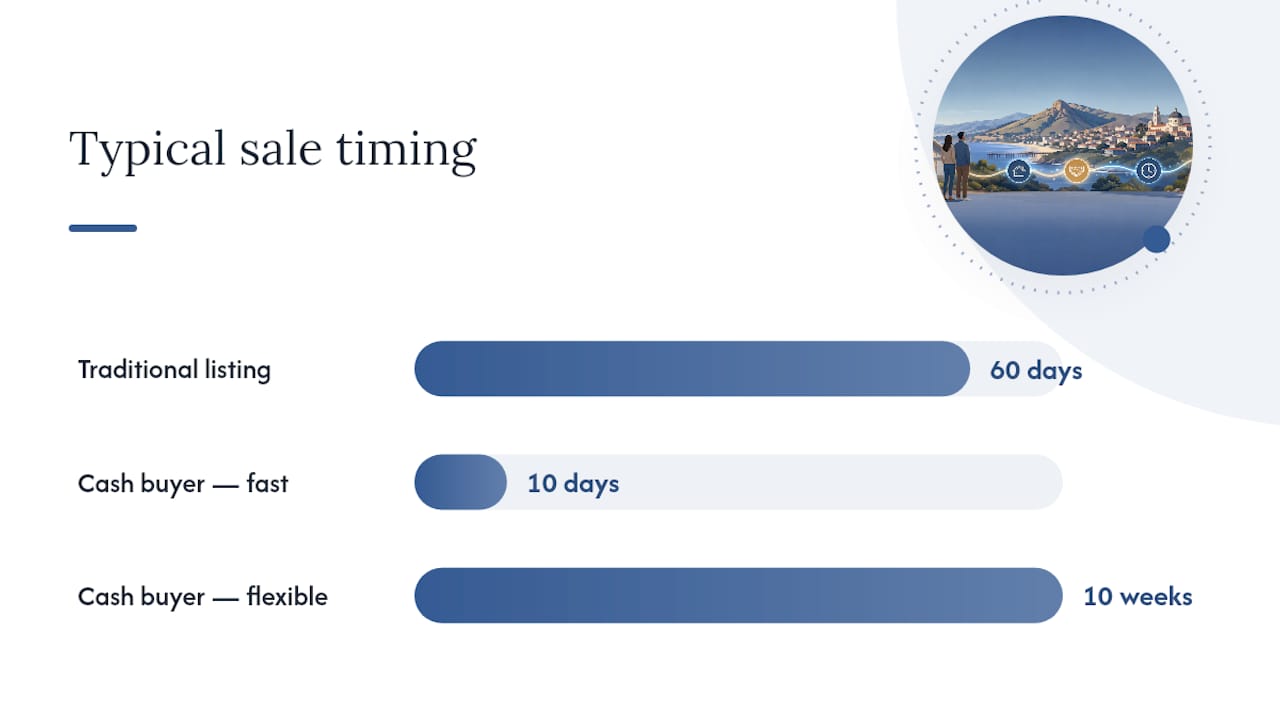
- Flexibility on closing date, whether you need to move in ten days or ten weeks
This path tends to make the most sense for a few specific situations. If you're relocating for a job and can't wait through a 60-day listing process, a cash offer removes that clock entirely. If foreclosure is approaching, speed can matter more than squeezing out the last few thousand dollars. And if you've inherited a property you never wanted to manage, or you're staring down a repair bill that would eat your equity anyway, selling as-is often nets you more than fixing it up first would cost.
What Happens From Your First Call to Closing Day
Selling for cash isn't complicated, but knowing the sequence in advance helps you spot a legitimate process and move through it with confidence.
- Expect a walkthrough or virtual assessment. A buyer usually visits or reviews photos within 24 to 48 hours to verify condition before finalizing a number. This is the step where surprises hurt you most, so accuracy upfront protects your final offer.
- Understand how the number gets built. A fair offer isn't a guess. Buyers weigh recent local comps, subtract an estimated repair cost, and factor in their own carrying costs and margin. That formula is why two buyers can look at the same house and land on different numbers.
- Move through escrow. Once you accept, expect standard closing documents and a timeline that often lands within 7 to 21 days, since there's no lender appraisal holding things up.
Pro Tip: Take photos of every problem area before your walkthrough, even the embarrassing ones. Buyers who see issues upfront rarely revise an offer downward later. Buyers who find them during inspection sometimes do.
Cash Offer vs. Listing: The Real Timeline and Money Tradeoff
A cash sale trades a faster close for a lower gross number, and that tradeoff plays out differently depending on your property and how badly you need speed. There's no way around this exchange, but there is a way to understand it clearly enough to decide if it's worth it for you.
Because cash sales skip lender-ordered appraisals, they close weeks faster than financed sales that can stretch 30 to 45 days waiting on underwriting. That speed has real value if you're managing a foreclosure deadline, a job relocation, or a property draining your savings every month it sits empty.
On the money side, cash offers commonly land below full market value, since buyers are pricing in renovation costs, holding costs, and their own risk. Ranges vary widely by condition and local market strength, so treat any percentage you hear as a rough starting point, not a promise.
What narrows that gap in your favor:
- Low inventory in San Luis Obispo County, which keeps buyer competition and comps stronger than in slower markets
- A property in decent structural shape, even if it's cosmetically dated
- Clear title and no liens complicating the transaction
San Luis Obispo's coastal desirability and limited housing supply work in sellers' favor here. Tighter inventory generally means cash offers in this county sit closer to market value than they might in a slower-moving inland market.
What Actually Changes Your Offer Amount
Every cash offer starts with the same math: local comps minus estimated repairs minus the buyer's margin. Understanding each piece gives you leverage, even in a "take it or leave it" transaction.
Buyers deduct hardest for the line items that scare off retail buyers and mortgage lenders alike:
- Roof age and condition, especially anything showing active leaks
- Foundation cracks or settling issues
- Outdated electrical or plumbing systems that wouldn't pass a standard inspection
- Pest damage, particularly termite activity common in older Central Coast homes
- Unpermitted additions or conversions, which can complicate both valuation and future resale
Comps matter just as much as repairs. A buyer looking at recent sales on your street, factoring in neighborhood condition and how fast homes are moving right now, will land on a very different number than one working off stale data from six months ago.
You have more control over your offer than you might think. Organizing your disclosures ahead of time, getting a rough repair estimate from a contractor before your walkthrough, and clearing personal items so the buyer can see the actual bones of the house all remove guesswork that otherwise gets priced in as risk.
Pro Tip: If you already know your roof needs replacing, get one contractor quote before your assessment. A specific number beats a buyer's worst-case guess almost every time.
Do You Still Have to Disclose Problems When Selling As-Is?
Yes. Selling as-is only means you won't fix problems before closing. It does not remove your legal obligation to tell buyers about them. Under California Civil Code Section 1102, most residential sellers must complete a Transfer Disclosure Statement, and skipping known material facts can give a buyer the right to cancel or pursue a claim after closing.
That's a distinction worth sitting with: "as-is" governs repairs, not honesty. A buyer who later discovers you knew about a foundation issue and said nothing has real legal recourse, cash sale or not.
Common material facts you're expected to disclose include:
- Past or current roof leaks
- Any history of flooding or drainage problems
- Unpermitted room additions, garage conversions, or structural work
- Known structural problems, even ones you haven't fixed
Nolo's guidance on California disclosure law makes clear that sellers should deliver these forms as early in the process as practical. Waiting until the last minute doesn't just create friction. It can hand the buyer a legal out.
One instructive figure from disclosure law: under Civil Code Section 1102, the TDS requirement applies to most residential sales statewide, regardless of whether the buyer is paying cash or financing. There's no as-is exemption written into that statute.
If you're unsure whether something rises to the level of a "known material fact," keep records of what you knew and when, and consider a quick consult with a real estate attorney before you sign anything. Truthful disclosure protects you as much as it protects the buyer.
How to Tell a Legitimate Cash Buyer From a Risky One
Not every "we buy houses" offer in San Luis Obispo comes from a buyer worth trusting. A few minutes of vetting can save you from a bad deal or a stalled closing.
- Ask for proof of funds. A real buyer can show you they have the cash to close, not just the intention.
- Request a sample contract before you're under pressure to sign one. Read the fine print on contingencies and fees while you still have room to walk away.
- Confirm the escrow or title company they use. A buyer who resists using a neutral third party is a red flag worth taking seriously.
- Check public reputation. Look at their BBB profile, Google reviews, and ask for references from past San Luis Obispo closings.
- Watch for pressure tactics. Any buyer pushing you to sign fast without documentation, or refusing to explain their closing cost breakdown, deserves more scrutiny, not less. A closer look at how to vet "we buy houses" buyers covers the specific questions worth asking before you commit.
Why Speed and Honesty Matter More Than the Highest Number
The homeowners who regret a cash sale usually aren't the ones who took a fair offer fast. They're the ones who skipped disclosure or didn't vet their buyer. Speed and fairness aren't opposites here. A transparent process built on honest condition reporting tends to produce the strongest offers, cash or listed. Choose cash when your priority is certainty and timeline. Choose listing when you can absorb the wait for a shot at top dollar.
— Abel
Ready for Your Own Fair Cash Offer?
If waiting weeks for a buyer's financing to clear isn't an option, and repairing a roof or renegotiating after inspection sounds like a headache you'd rather skip, a direct cash sale solves both problems at once. SLO Cash Buyer - San Luis Obispo County Home buyer's cash offer program is built around a no-obligation offer, typically delivered within 24 to 72 hours, with no repairs, no cleaning, and no agent commissions eating into your proceeds.

To get started, share your property address, a few photos, and a rough idea of your timeline. From there, you'll get a straightforward number to consider, with zero pressure to accept. If you'd rather explore listing with an agent for top dollar instead, that option is on the table too. Either way, the next step is the same: request your cash offer today and see what a fair, fast sale actually looks like for your house.
Sources
For legal specifics, Schorr Law and Nolo both break down California disclosure law in plain terms. For buyer verification, check the BBB profile before signing anything.
This article is general information, not a substitute for advice from a qualified financial advisor. Consult a qualified financial professional about your own circumstances before acting on anything here.
- Does Selling Property "As Is" in a Real Estate Need Disclosure? - Schorr Law
- Residential home sellers in California: Your disclosure obligations - Nolo
- A no-stress guide to selling a house as-is in California (2026) - AnytimeEstimate
- SLO Cash Buyer - BBB profile
FAQ
What Is the Most Affordable Place to Live in San Luis Obispo County?
Inland communities like Paso Robles and Atascadero typically carry lower home prices than coastal cities such as San Luis Obispo, Pismo Beach, or Morro Bay, though the gap has been narrowing as county-wide demand stays strong.
If I Sell for $100,000 in Cash, Do I Need to Explain Where the Money Came From?
That question usually applies to buyers, not sellers. If you're selling your home for cash, the funds come from the buyer's proceeds at closing, not from you, so there's no source-of-funds explanation required on your end.
How Much Can You Realistically Negotiate Off a House?
It depends heavily on condition and comps, but cash offers commonly land below full market value to offset a buyer's repair costs and risk, while traditional listings tend to negotiate in smaller percentage swings tied to inspection findings.
What Is the 3-3-3 Rule for Buying a House?
The 3-3-3 rule is a budgeting guideline for buyers, not sellers. It's a useful reference if you're planning to buy your next home after selling this one.
How Fast Can I Actually Close With a Cash Buyer in San Luis Obispo?
Most cash sales close in 7 to 21 days once you accept an offer, since there's no lender appraisal or underwriting delay to wait through.