
Selling a hoarder house comes down to three realistic paths: sell it as-is to a cash buyer, clean it up and list it traditionally, or route valuables through an estate sale before selling the shell. Each one trades speed for money in a different way. The rest of this guide walks you through assessing the property, budgeting for cleanup, checking for legal snags, and picking the option that fits your timeline and your energy.
TL;DR:
- Selling as-is to a cash buyer can close in one to three weeks but typically results in a lower net profit compared to repairs and listing.
- A full cleanup and renovation often take four to twelve weeks and cost thousands more upfront but can significantly increase the sale price.
- An estate sale or auction can recover value from valuable items when time allows, but it requires proper organization and can still take two to four weeks.
- Structural hazards, mold, pests, and severe contamination may be hidden beneath clutter and should be evaluated by professionals before any cleanup effort.
- Legal issues like unpaid taxes or liens can delay or block a sale, making early title searches and legal consultation essential.
Table of Contents
- How Do You Sell a Hoarder House?
- How Do You Assess a Hoarder Property Safely?
- What Does Hoarder House Cleanout Actually Cost?
- Should You Rehab or Sell the House As-Is?
- What Legal Roadblocks Delay a Hoarder House Sale?
- How Long Does It Take to Sell a Hoarder House?
- Your 30-Day Action Plan for a Hoarder House
- A Nonjudgmental Word From Our Team
- Sell Your Hoarder House As-Is, No Cleanout Required
- Where to Learn More
- Sources
How Do You Sell a Hoarder House?
Choosing how to sell a hoarder house mostly depends on three things: how much time you have, how much cash you can put in upfront, and how much emotional bandwidth you have left. Here's how the three main routes stack up.
- Sell as-is to a cash buyer. This is the fastest route, often closing in one to three weeks with no cleanout, no repairs, and no agent commissions. You'll typically net less than a fully renovated sale, but you skip months of work and carrying costs entirely.
- Clean up, repair, and list traditionally. This can produce a higher sale price, sometimes significantly higher, but it demands real capital upfront, weeks or months of contractor scheduling, and the risk that hidden damage under the clutter eats into your margin.
- Estate sale or auction first, then sell the house. If the home holds valuable furniture, collectibles, or antiques, a sale or auction can recover meaningful cash before you deal with the structure itself. It works well when you have time to organize it properly.
If you're dealing with probate, an executor's ticking deadlines, foreclosure, or a health and safety situation that can't wait, speed usually wins over maximizing price. Cash home buyers in San Luis Obispo exist largely for exactly this kind of pressure.
How Do You Assess a Hoarder Property Safely?
Not every cluttered house is the same, and treating a moderately messy home the same way you'd treat an extreme case wastes money and risks your safety. Clinical guidance classifies hoarding severity on a scale from light clutter to conditions that block exits and compromise structural safety, and hoarding disorder itself affects roughly 2 to 3 percent of the population, so you're far from the only family navigating this.
Before you touch anything, walk the property and note what you see, without judgment and without rushing.
- Check for structural red flags — sagging floors, water stains on ceilings, doors that won't close.
- Look for mold, pests, or strong odors, which often signal contamination deeper than surface clutter.
- Photograph every room before moving a single item, including mechanicals, appliances, and any visible damage.
- Call in professionals early if you see signs of severe hazard: a remediation specialist, a licensed home inspector, or a structural engineer.
Remediation experts consistently warn that long-term hoarding hides mold, structural rot, and pest infestations that aren't visible until the clutter comes out.
Pro Tip: Take a video walkthrough before cleanout begins, not just photos. It's the easiest way to document original condition if a buyer or probate court ever questions the property's history.

What Does Hoarder House Cleanout Actually Cost?
Cleanout services aren't one size fits all, and picking the wrong one either wastes money or leaves hazards unresolved.
- Junk removal handles ordinary volume clutter, boxes, furniture, old belongings, with no contamination involved.
- Professional hoarding remediation goes further, sorting salvageable items, deep cleaning, and addressing odor and pest issues.
- Biohazard cleanup is a separate, specialized service required when there's human or animal waste, bodily fluids, or severe mold contamination.
Costs swing widely depending on square footage, severity, and whether biohazard work is involved, so get itemized quotes from more than one company rather than relying on a single ballpark. Whatever number you land on, build in a contingency for hidden damage because water intrusion, subfloor rot, and pest damage almost always show up once the clutter is gone. Licensed remediation companies also document what they remove and how they dispose of it, which matters if local environmental rules govern the disposal of hazardous material. A partial cleanout, focused only on access paths and the worst rooms, is sometimes the right call if a full remediation isn't in the budget yet.
Should You Rehab or Sell the House As-Is?
The decision between fixing up a hoarder house and selling it as-is is really a math problem, and it's one you can run in an afternoon with a pen and paper.
Start with the after-repair value (ARV). A licensed appraiser or a comparative market analysis from an agent will tell you what the house is worth fully repaired. From there:
- Estimate full rehab costs, including cleanout, repairs, and a 25 to 40 percent contingency for the surprises that show up once walls are opened.
- Add carrying costs: property taxes, insurance, and utilities for however many months the work takes.
- Add selling costs: agent commissions, closing costs, and any concessions you'll likely need to offer.
- Subtract all of that from the ARV. If what's left is a meaningful gain, rehabbing may make sense.
A licensed appraiser's input often reveals that the math doesn't favor rehab once every cost is counted honestly. Beyond dollars, weigh the non-financial side: how much time you actually have, the emotional toll of sorting through a relative's belongings, probate deadlines, and whether Medicaid estate recovery rules affect how the sale needs to be handled.
What Legal Roadblocks Delay a Hoarder House Sale?
Heirs are often surprised to learn the house itself isn't the only obstacle. Unpaid property taxes, municipal liens, code-enforcement fines from neighbor complaints, or an unpaid HOA balance can all block a clean transfer of title. A thorough title review early in the process reveals these issues before they derail a closing.
- Order a title search as soon as you know you'll be selling, not after you've accepted an offer.
- Consult a probate attorney if the property is part of an estate, especially if there are multiple heirs or an unclear will.
- Gather documentation: photos, remediation invoices, and receipts, which help defend the sale price if it's reviewed under probate or Medicaid estate recovery scrutiny.
An inherited property sale checklist can help you keep executor duties straight while these pieces move in parallel.
How Long Does It Take to Sell a Hoarder House?
Timelines vary sharply by route, and knowing them upfront helps you plan cash flow and avoid surprises.
- Cash sale: Often one to three weeks from offer to closing, with a lower net but virtually no carrying costs or repair delays.
- Listed sale: Cleanup and repairs can take four to twelve weeks depending on severity, followed by a typical listing period and a standard closing timeline once under contract.
- Estate sale or auction: Usually two to four weeks to organize and run, with revenue that varies widely based on what's actually inside the house.
Investors and cash buyers consistently note that transparent, well-documented cleanup estimates reduce the back-and-forth that slows down closings. Sellers who hand over clear records upfront tend to face far less renegotiation at inspection.
Your 30-Day Action Plan for a Hoarder House
You don't need to have this all figured out today. Here's a practical sequence that gets you from overwhelmed to decided within a month.
- Days 1 to 3: Secure the property, change the locks if needed, photograph every room, and locate important documents and valuables before anything gets moved.
- Days 4 to 7: Get remediation and contractor estimates, order a title search, and talk to an appraiser or real estate agent.
- Week 2: Choose your route based on the numbers and your bandwidth, rehab, as-is sale, or estate sale first.
- Weeks 3 to 4: Begin targeted cleanout or contact a cash buyer directly, stop nonessential utilities, and keep documentation of every step.
Pro Tip: Designate one box or bin specifically for documents and valuables before cleanout starts. It's a small step that prevents accidental loss of paperwork or keepsakes that can't be replaced.
A Nonjudgmental Word From Our Team
Hoarding is a recognized behavioral condition, not a character flaw, and how you talk about it with a parent, sibling, or the person who lived in the home matters as much as the logistics. We specialize in purchasing homes in any condition for cash, helping families navigate challenging situations.
— Abel
Sell Your Hoarder House As-Is, No Cleanout Required
If the cleanout math doesn't pencil out or you simply don't have months to spare, One direct path is a cash offer on the house exactly as it sits, clutter and all, with no repair costs, no cleaning bills and no agent fees eating into your proceeds.

Here's what to expect: we look at the property (photos are often enough to start), make a fair cash offer within days, and let you pick a closing timeline that works for your situation, often just a couple of weeks. Have your deed or probate paperwork handy if you're selling as an heir, since that speeds things along. This route tends to work best for urgent sellers facing foreclosure, tax liens, or code violations, and for heirs who simply don't want to spend a weekend hauling boxes out of a house full of memories. If you'd rather explore a traditional listing for top dollar instead, we can walk you through that option too. Either way, visit SLO Cash Buyer to get a no-obligation cash offer and see your numbers side by side before you decide anything.
Where to Learn More
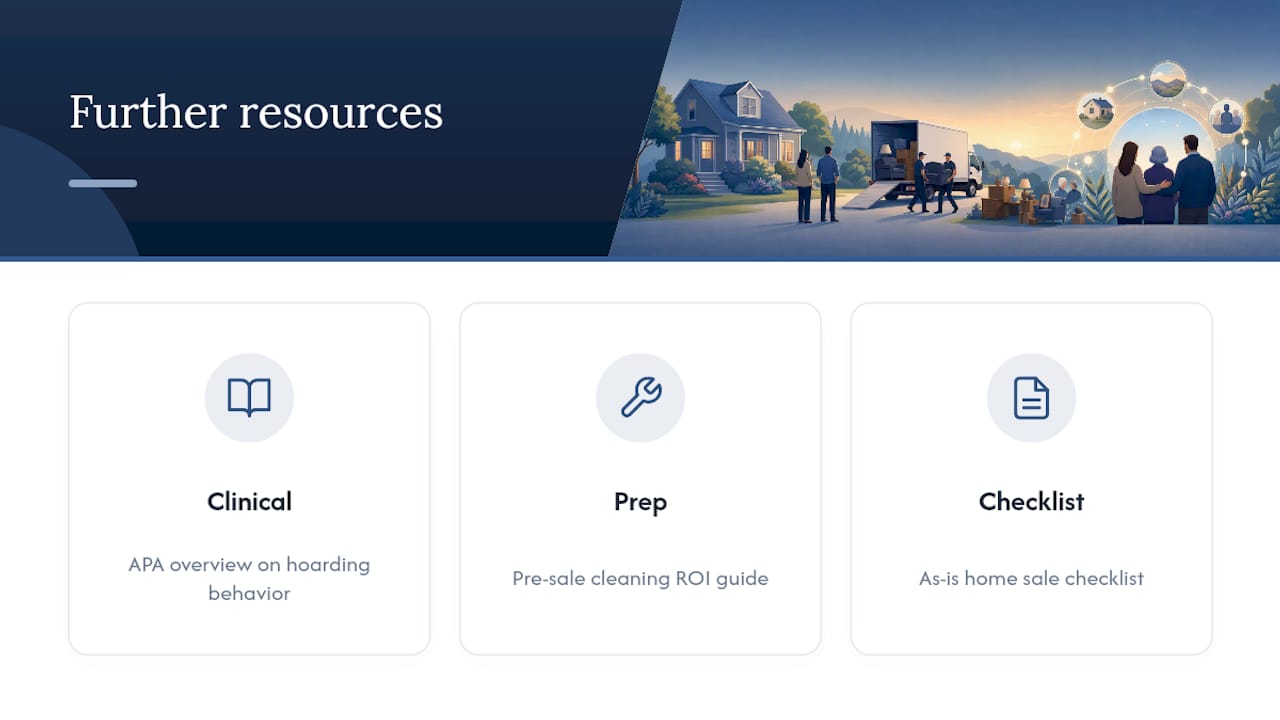
For clinical context on hoarding behavior, the American Psychiatric Association's overview is a solid starting point. For pre-sale prep, see pre-sale cleaning ROI and our as-is home sale checklist.
Sources
- Hoarding disorder — review and guidance (PMC)
- Why hoarding can complicate unattended death cleanup — Bio Recovery
- How to clean a hoarder’s house — Lifecycle Transitions
- Realtor
- Hoarder houses: what investors need to know — Evernest