
Even when a buyer pays cash, sellers still usually owe several closing costs.
TL;DR:
- Sellers typically pay around 1% to 3% of the sale price in direct closing costs, excluding commissions, which can total up to 6% to 10% with an agent.
- Negotiable costs include escrow, title insurance, and specific repairs, especially if requested as part of a seller concession written into the purchase agreement.
- Estimating net proceeds involves subtracting mortgage payoffs, closing costs, and any buyer credits from the sale price, with actual costs varying by location and sale specifics.
- Shopping multiple title and escrow providers, timing the closing strategically, and requesting itemized quotes can significantly reduce seller expenses before signing.
- Reviewing the closing disclosure carefully for accurate payoff amounts, prorated taxes, and clear itemization helps avoid surprises and ensures transparent costs at closing.
Table of Contents
- What Closing Costs Do Sellers Pay In A Cash Sale?
- Which Closing Costs Can You Negotiate With A Cash Buyer?
- How Do You Estimate Your Net Proceeds From A Cash Sale?
- How Can You Lower Your Closing Costs Before Signing?
- What Should You Check On The Closing Disclosure?
- A Note From Abel On Closing-Day Surprises
- Want A No-Obligation Cash Offer With Clear Closing Numbers?
- Sources
What Closing Costs Do Sellers Pay In A Cash Sale?
A cash sale skips lender fees like loan origination charges and appraisal costs the buyer would otherwise owe. It does not skip the fees tied to transferring the property itself. Those show up on your settlement statement whether the buyer wires cash or gets a mortgage.
Here's what typically lands on a seller's side of the ledger:
- Agent commissions, if you use one, usually split between listing and buyer's agents, often totaling 5% to 6% combined.
- Owner's title insurance and title search fees, which protect the buyer against ownership disputes and commonly run 0.3% to 0.6% of the sale price depending on your region.
- Escrow and settlement fees, paid to whoever handles the transaction paperwork and fund transfers.
- Transfer taxes and recording fees, set by your city or county, so they vary a lot by location.
- HOA transfer fees, if your property belongs to a homeowners association.
- Prorated property taxes and HOA dues, covering the days you owned the home during the current billing cycle.
- Mortgage payoff and any second liens, plus possible prepayment penalties on your existing loan.
- Attorney fees, required in some states, along with small fixed charges like wire transfer or courier fees.
Direct seller fees, excluding commissions, generally land between 1% and 3% of the sale price. Add a full-service agent commission and your total climbs toward that 6% to 10% range. Cash buyers who purchase homes directly, without agents involved, often help you avoid the commission piece entirely, which is one of the biggest reasons sellers in tight spots choose that route.
Which Closing Costs Can You Negotiate With A Cash Buyer?
More of these line items are negotiable than most sellers realize. A seller concession is a credit you request from the buyer, or the buyer requests from you, that shifts a specific cost from one party's column to the other's. In cash sales, this often means asking the buyer to cover part or all of the escrow fee, the title insurance premium, or even a repair credit instead of doing the work yourself before closing.
Rocket Mortgage's guidance on seller concessions confirms that these arrangements are common and legitimate, but they only hold up if they're written into the purchase agreement, not just discussed verbally.
Here's how to actually get one:
- Identify the specific cost you want shifted (title fee, escrow fee, a repair credit) before you sign anything.
- Put the request in writing as part of your offer negotiation, not as an afterthought.
- Confirm the agreed credit appears as a line item on the closing disclosure, not just in an email thread.
- Ask your title or escrow company to double check the disbursement matches what the contract says.
Cash buyers tend to be more flexible on these requests when they need a fast close, when they're buying as-is, or when you're clearly motivated to sell quickly. That flexibility is worth using.
Pro Tip: Never accept a verbal promise about who pays what. If it's not on the closing disclosure, it doesn't exist at disbursement.
How Do You Estimate Your Net Proceeds From A Cash Sale?
You don't need a spreadsheet to figure out roughly what you'll walk away with. The math follows four steps, in order:
- Start with the agreed sale price. This is your baseline number.
- Subtract your mortgage and any lien payoffs. Request a payoff statement from your lender early, since interest accrues daily and old estimates run short.
- Subtract seller-side closing costs. Use the 1% to 3% direct-fee range if there's no agent, or 6% to 10% if there is one.
- Subtract any concessions or credits you promised the buyer, since those come straight out of your proceeds too.
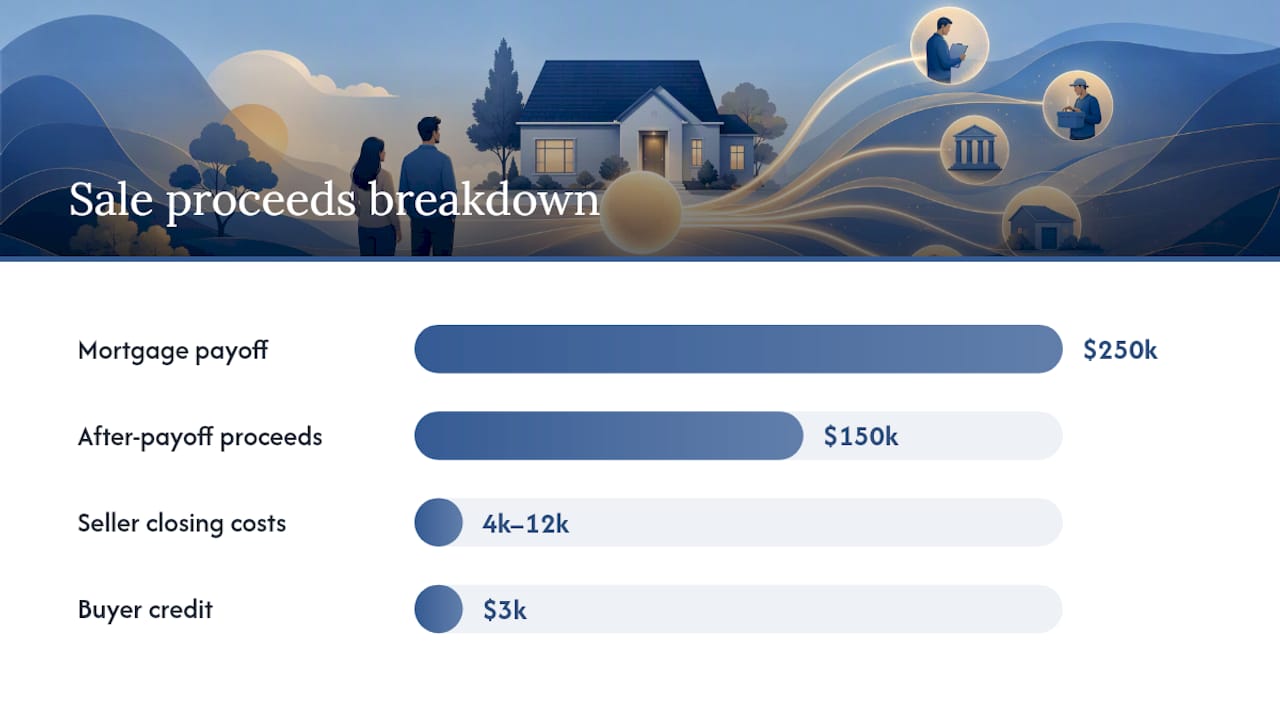
Here's a worked example on a $400,000 sale with a $250,000 mortgage payoff, no agent involved, and a $3,000 credit toward the buyer's escrow fee:
$400,000 minus $250,000 payoff leaves $150,000.
How Can You Lower Your Closing Costs Before Signing?
A few practical moves consistently save sellers real money, and none of them require a lawyer.
- Get multiple title and escrow quotes. These fees aren't fixed, and shopping providers can save several hundred to a few thousand dollars depending on your sale price and state.
- Ask about a title reissue rate. If you bought the property recently and still have your old title policy, some states allow a reissue discount of 20% to 40% off the standard premium.
- Negotiate your agent's commission, or weigh a FSBO route. Commissions are negotiable, though skipping an agent entirely means you handle the marketing and paperwork yourself.
- Time your closing date to reduce prorated property tax or HOA charges, especially near tax due dates.
- Ask for a credit instead of doing repairs. A cash credit at closing is often simpler than coordinating contractors on a deadline.
Pro Tip: Ask your title company for an itemized quote, not a bundled number. Bundled quotes hide the fees you actually have room to negotiate.
What Should You Check On The Closing Disclosure?
Your closing disclosure arrives roughly three days before closing, and that window exists so you can catch errors before money moves. Don't skip this review, even if you're eager to be done.
Check these items against your purchase agreement, line by line:
- Confirm your mortgage payoff amount matches the statement your lender sent, not an estimate from weeks earlier.
- Verify prorated taxes and HOA dues are calculated correctly for your actual closing date.
- Make sure any promised credits or concessions show up as itemized line items, not folded into a lump sum.
- Confirm who's paying the owner's title insurance, transfer taxes, and escrow fees, matching what you agreed to in writing.
- Call the title or escrow company directly, using a number you look up yourself, to verify wiring instructions before sending any funds. Wire fraud targeting real estate closings is real, and email instructions can be spoofed.
Our Home Closing Process Checklist for Fast Cash Sales walks through each of these steps in order, so you're not trying to remember them all under a deadline.
A Note From Abel On Closing-Day Surprises
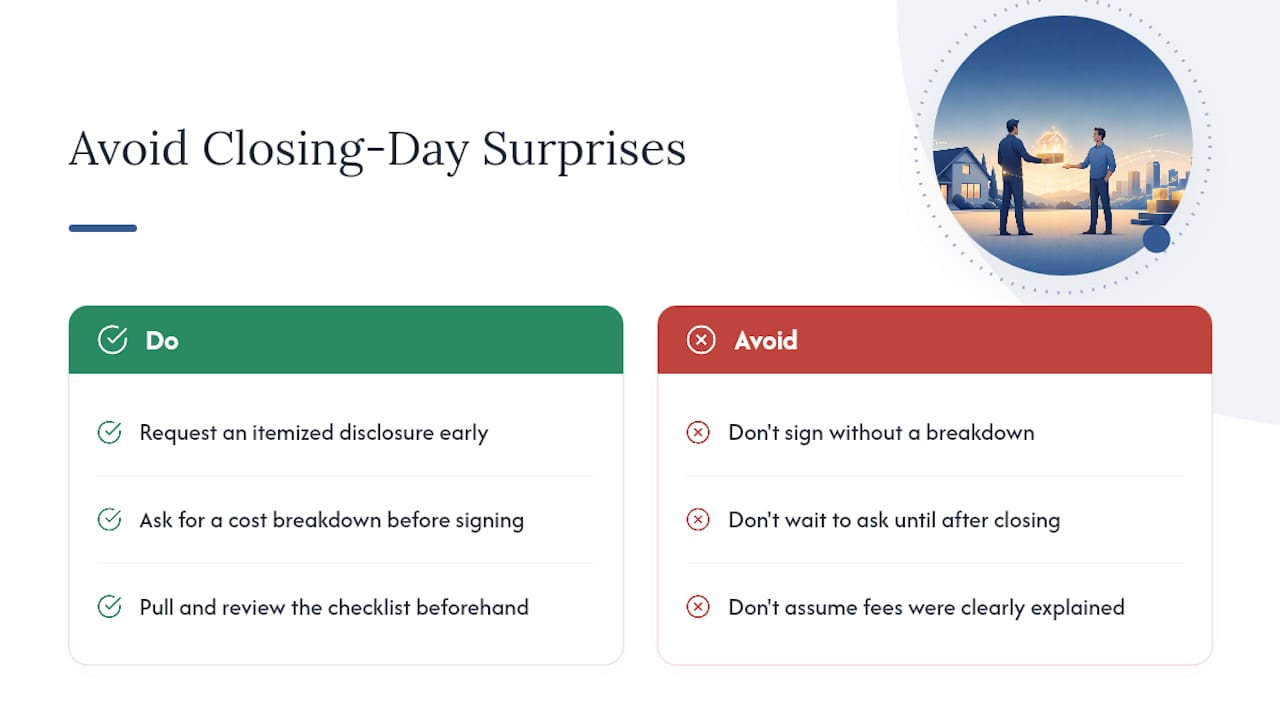
Most seller confusion at closing traces back to the same thing: a fee nobody explained clearly until it showed up on paper. That's not usually deception, it's just poor itemization. The fix is simple. Ask for a breakdown before you sign anything, not after.
Some cash buyers emphasize transparent offers and clear cost itemization as a key part of their service. Pull the checklist, ask for your itemized disclosure early, and you'll close with confidence instead of guesswork.
— Abel
Want A No-Obligation Cash Offer With Clear Closing Numbers?
We buy homes as-is, helping sellers avoid repair lists, cleaning, and commission fees typical of traditional listings. If you're facing foreclosure, dealing with costly repairs, handling an inherited property, or need to relocate quickly, a straightforward cash offer can often solve problems faster than a traditional sale.

Our offers typically include clear explanations of expected costs to help prevent surprise charges at closing. If you want to see your numbers laid out clearly before you commit to anything, request a no-obligation cash offer and get a closing-cost estimate built around your actual situation.
Sources
For a deeper breakdown of individual line items, see our Home Sale Closing Costs Breakdown for Sellers. For title-specific questions, review Title Insurance in Home Sales: What Sellers Must Know.
- Seller concessions — Rocket Mortgage
- Shop for title insurance and other closing services — CFPB
- What Are the Closing Costs for a Home Seller? — NerdWallet
- How to sell your house for cash: From offer to closing — LegalClarity