
Title insurance is defined as a policy that protects property owners and lenders from financial loss caused by defects in a property's title that existed before the sale closed. The role of title insurance in a home sale goes far beyond paperwork. It shields you from claims tied to unpaid liens, forged deeds, or undisclosed heirs that a title search may have missed entirely. The American Land Title Association (ALTA) sets the industry standards that govern these policies nationwide. Title insurance requires a one-time premium at closing, typically ranging from $1,500 to $3,500 for a standard home purchase, and coverage lasts as long as you own the property.
What types of title insurance policies exist and who do they protect?
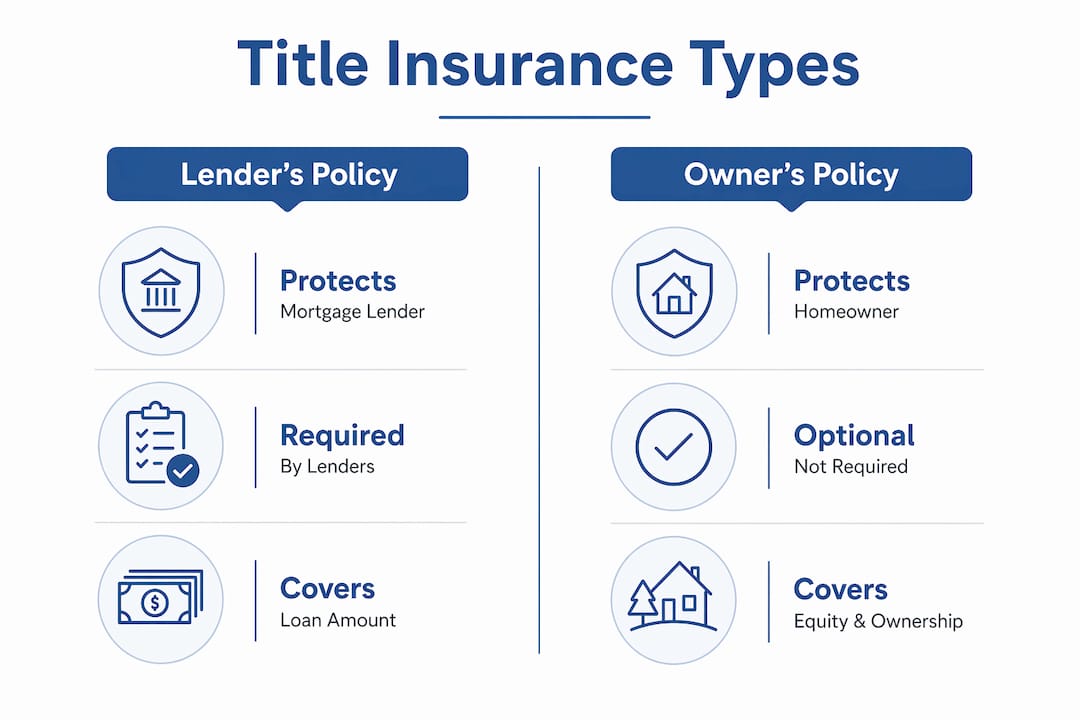
Two distinct policies exist in every real estate transaction, and they protect very different parties. Understanding both is the first step to protecting yourself.
Lender's policy
A lender's title insurance policy is required by virtually every mortgage lender. It protects the lender's financial interest in the property, not yours. The lender's policy covers the outstanding loan balance and shrinks as you pay down your mortgage. It costs roughly 0.5%–1% of the loan amount. The buyer almost always pays this premium at closing.
Owner's policy
An owner's title insurance policy is optional, but skipping it is a serious risk. This policy protects your equity and ownership rights up to the full purchase price of the home. Coverage continues indefinitely, even after you sell, and passes to your heirs. It is the only protection that covers your personal financial stake in the property.

| Feature | Lender's policy | Owner's policy |
|---|---|---|
| Who it protects | Mortgage lender | Homeowner/buyer |
| Required? | Yes, by lenders | Optional but recommended |
| Coverage amount | Outstanding loan balance | Full purchase price |
| Who typically pays | Buyer | Varies by state custom |
| Duration | Until loan is paid off | Indefinitely, including heirs |
Pro Tip: If you are buying a home with cash, you have no lender requiring a policy. That makes an owner's policy even more critical, since waiving title insurance without it leaves you fully exposed to any hidden defects in the title.
What common title problems show up during a home sale?
About 25% of real estate transactions reveal title issues that must be resolved before closing. That is one in four deals. These problems are not rare edge cases. They are a predictable part of the home sale process.
Title searches typically examine 40–60 years of ownership records, including deeds, liens, mortgages, and court judgments. Even a thorough search can miss something. That is exactly why title insurance exists. It covers the risks that slip through even the most careful review.
Common title defects that surface during a home sale include:
- Unpaid tax liens: A previous owner's unpaid property taxes can attach to the property and become your problem.
- Forged deeds: A deed signed fraudulently at any point in the chain of ownership can invalidate your claim.
- Undisclosed heirs: A deceased owner's relative may surface with a legal claim to the property after closing.
- Boundary disputes: Surveys sometimes reveal that a fence, driveway, or structure crosses a property line.
- Recording errors: Clerical mistakes in public records can create gaps or conflicts in the ownership chain.
- Unpaid contractor liens: Work done on the home before your purchase may carry an unpaid mechanic's lien.
Title insurance protects against these past events, including forged signatures and recording errors that no search can guarantee catching. Resolving these issues before closing protects both the seller's proceeds and the buyer's ownership rights. If a defect surfaces after closing without coverage, the legal costs alone can exceed the value of the dispute.
Pro Tip: If you are selling a home and title problems appear during the search, address them immediately. Delays at this stage are one of the top reasons deals fall apart.
Who pays for title insurance, and how is that negotiated?
Payment responsibility for title insurance is not fixed by law in most states. It follows local custom, and those customs vary widely by county and region. Understanding who typically pays what gives you real negotiating power at the closing table.
Here is how payment responsibility generally breaks down:
- Lender's policy: The buyer pays this premium in nearly every transaction. It is a non-negotiable lender requirement.
- Owner's policy: Payment varies by state custom and negotiation. In some states, the seller traditionally pays. In others, the buyer does. In many markets, it is split.
- Simultaneous issue discount: When both policies are purchased at the same time, title companies often reduce the combined premium. This is worth asking about at closing.
Regional differences matter. In California, for example, the seller often pays for the owner's policy in some counties, while the buyer pays in others. Contracts should explicitly state payment responsibilities to avoid disputes at closing. Never assume local custom will apply automatically.
Pro Tip: Sellers can offer to pay the owner's title insurance premium as a closing incentive. It costs relatively little compared to a price reduction, and it signals confidence in the property's clean title. Buyers notice that.
Negotiating who pays is also a useful tool when a deal stalls. If a buyer is hesitant, a seller covering the owner's policy premium can move things forward without dropping the sale price. Understanding the simultaneous closing process helps you see exactly where these costs land in the transaction timeline.
How does title insurance protect sellers before and after the sale?
Title insurance is primarily designed to protect the buyer and lender, not the seller. That said, sellers carry real responsibilities and face real risks tied to title issues throughout the sale process.
Before closing, the seller's job is to deliver a clear title. That means resolving any liens, judgments, or ownership disputes uncovered during the title search. Unresolved defects can delay or kill the deal entirely, and they directly affect the seller's net proceeds. A home inspection and title search done early in the listing process gives sellers time to fix problems before they become deal-breakers.
Best practices sellers should follow to protect themselves:
- Order a preliminary title report before listing the property.
- Pay off any outstanding liens or judgments before closing.
- Disclose known ownership disputes to the buyer upfront.
- Confirm that all prior deeds were properly recorded.
- Work with a licensed title company to clear any clouds on title.
After the sale closes, the seller's direct exposure largely ends. However, owner's policies continue coverage for claims related to the seller's period of ownership, even after the property changes hands. If a claim surfaces later tied to something that happened while you owned the home, your prior owner's policy may still respond. That long-term protection is one of the most overlooked benefits of carrying an owner's policy during your ownership period.
Key Takeaways
Title insurance is a non-negotiable protection in home sales, covering both buyers and lenders from financial loss tied to title defects that existed before closing.
| Point | Details |
|---|---|
| Two policies, two purposes | The lender's policy protects the bank; the owner's policy protects your equity and is the only coverage for your personal stake. |
| One in four deals has issues | About 25% of transactions surface title defects like liens or forged deeds that must be resolved before closing. |
| Payment is negotiable | Who pays the owner's policy premium varies by state and county, making it a real negotiation point in every sale. |
| Sellers carry pre-closing risk | Unresolved title defects delay or cancel sales and reduce seller proceeds, so a preliminary title report is worth ordering early. |
| Coverage outlasts the sale | An owner's policy protects against claims tied to your ownership period even after you sell the property. |
What I've learned about title insurance that most sellers miss
Most sellers treat title insurance as a closing formality. They sign where they are told and move on. That is a mistake I have seen cost people real money.
The detail that surprises sellers most is the industry's loss ratio of 3%–7%. That means the vast majority of premiums go toward preventing title problems before closing, not paying claims after. The real value of title insurance is not in the payout. It is in the title search and defect resolution process that happens before you ever sign. Sellers who understand this stop resenting the cost and start seeing it as a quality control step.
The second thing sellers consistently overlook is the negotiation angle on the owner's policy. Local customs are real, but they are not law. I have seen sellers offer to cover the owner's policy premium and close deals that were stalling over price. It is a low-cost move with high perceived value to the buyer.
My practical advice: order a preliminary title report the moment you decide to sell. Do not wait for a buyer to trigger the process. Surprises at closing are expensive and avoidable. The earlier you know what is in your title history, the more control you have over the outcome.
— Abel
How SLO Cash Buyer makes title issues less stressful for sellers
Dealing with title insurance questions on top of everything else in a home sale can feel like a lot. SLO Cash Buyer - San Luis Obispo County Home buyer works with sellers in San Luis Obispo County every day, including those facing title complications, inherited properties, or situations where a clean title is harder to establish.

When you sell to SLO Cash Buyer - San Luis Obispo County Home buyer, the process is straightforward. There are no agent fees, no repair demands, and no drawn-out negotiations. The team handles the title and closing process with transparency, so you know exactly what is happening at every step. If you want a fair cash offer without the usual closing headaches, reach out to SLO Cash Buyer - San Luis Obispo County Home buyer today.
FAQ
What does title insurance cover in a home sale?
Title insurance covers financial loss from defects in a property's title that existed before closing, including unpaid liens, forged deeds, undisclosed heirs, and recording errors. The owner's policy protects the buyer's equity; the lender's policy protects the mortgage lender.
Is title insurance required for sellers?
Sellers are not required to purchase title insurance, but they are responsible for delivering a clear title at closing. The buyer and lender each carry their own policies to protect their respective interests.
Who pays for title insurance in California?
Payment customs vary by county in California. In some counties, the seller traditionally pays for the owner's policy; in others, the buyer does. The contract should always specify who pays to avoid disputes.
How long does title insurance coverage last?
An owner's title insurance policy lasts indefinitely. Coverage continues for as long as you or your heirs hold an interest in the property, and it remains in effect for claims tied to your ownership period even after you sell.
Can you skip title insurance in a cash sale?
Skipping title insurance in a cash sale is possible but widely discouraged. Without a lender requiring a policy, cash buyers have no coverage unless they purchase an owner's policy themselves, leaving them fully exposed to any hidden title defects.