
Home sale closing costs are the fees a seller pays to complete the legal transfer of property, typically totaling 8% to 10% of the final sale price. That means on a $600,000 home, you could owe $48,000 to $60,000 before you see a single dollar of profit. These costs include agent commissions, title insurance, transfer taxes, escrow fees, and prorated property taxes. The 2024 NAR settlement changed how commissions work, making this a critical moment to understand exactly what you owe and where you can negotiate. This guide gives you a full home sale closing costs breakdown so you walk into closing with no surprises.
What are the main components of closing costs for home sellers?
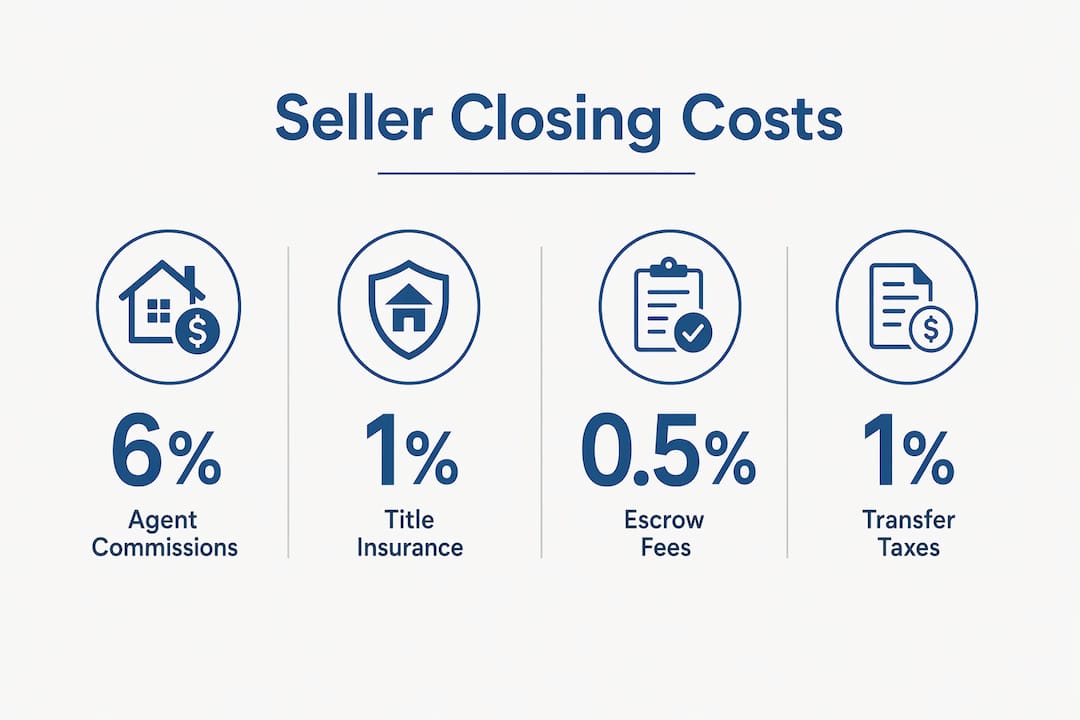
Seller closing costs fall into several distinct categories. Knowing each one helps you spot where the money goes and where you have room to push back.
Agent commissions are the largest single line item. Before the 2024 NAR settlement, sellers typically paid 5% to 6% of the sale price to cover both their listing agent and the buyer's agent. Post-settlement, typical commissions run 3.5% to 5%, and buyer agent compensation is now fully negotiable. That shift can save you thousands on a mid-range home.
Title insurance protects the buyer against ownership disputes or title defects discovered after closing. Owner's title insurance costs $1,500 to $3,000 in most markets, though state regulations and local customs determine who pays. In many California counties, the seller covers this cost by default.

Escrow and settlement fees cover the administrative work of closing the transaction. Escrow fees generally range from $500 to $2,000, depending on the sale price and local practice. These fees pay the escrow company or closing attorney to handle funds, documents, and the final transfer.
Transfer taxes vary sharply by location. Transfer taxes range from 0% in Texas to over 2% in states like Pennsylvania or cities in California and New York. On a $500,000 sale, that spread means anywhere from $0 to more than $10,000 owed at the closing table.
Prorated property taxes catch many sellers off guard. If you close mid-year and your annual tax bill is $6,000, you owe roughly $3,000 at closing to cover your share of the tax year. The exact amount depends on your closing date and whether you have already made tax payments.
Additional costs include:
- HOA transfer and document fees: HOA fees range from $200 to $1,000+ and cover the cost of transferring association records to the new owner.
- Recording fees: Typically $50 to $150, paid to the county to record the deed change.
- Attorney fees: In states like New York and Massachusetts, attorney fees add $500 to $1,500 to seller costs. Some states require attorney involvement by law.
Pro Tip: Request a preliminary closing disclosure from your escrow officer at least two weeks before closing. This document lists every fee line by line and gives you time to question anything that looks wrong.
How to calculate your net proceeds from selling a home
Net proceeds are what you actually pocket after the sale. The formula is straightforward, but sellers often miss key deductions.
The basic formula:
- Start with your agreed sale price.
- Subtract total closing costs (typically 8% to 10% of sale price).
- Subtract your mortgage payoff amount.
- Subtract any seller concessions or repair credits agreed during negotiation.
- The remaining amount is your net proceeds.
Mortgage payoff is the largest deduction from your proceeds, but it is not a closing cost. It is a separate obligation that gets paid from the sale funds at closing. Confusing the two leads sellers to underestimate what they will actually receive.
Here is a simple example for a $600,000 sale:
| Item | Amount |
|---|---|
| Sale price | $600,000 |
| Closing costs (9%) | ($54,000) |
| Mortgage payoff | ($280,000) |
| Seller concessions (2%) | ($12,000) |
| Estimated net proceeds | $254,000 |
The numbers shift significantly based on your loan balance and what you negotiate. A seller with no mortgage on the same home walks away with $254,000 more than the example above.
Two documents make this calculation accurate. The first is a seller net sheet, which your listing agent or escrow officer prepares before closing. The second is a mortgage payoff statement from your lender, which shows the exact amount owed including interest through the expected closing date. Request both documents early. Preparation with a seller net sheet prevents the most common closing surprises.
Pro Tip: Ask your lender for a payoff statement that runs 30 days past your expected closing date. Loan interest accrues daily, so a delayed closing can increase your payoff by hundreds of dollars.
What are seller concessions and how do they affect closing costs?
Seller concessions are credits you give the buyer at closing to cover their costs or repair expenses. They reduce your net proceeds directly, so understanding them matters before you agree to any.
Concessions typically add 0% to 3% to your total closing expenses. On a $500,000 home, a 3% concession means $15,000 less in your pocket. Buyers often request concessions to cover their own closing costs, buy down their mortgage interest rate, or offset repair findings from a home inspection.
Common types of seller concessions include:
- Closing cost credits: You credit the buyer a set dollar amount toward their closing fees.
- Repair credits: Instead of fixing a problem found during home inspection, you reduce the price or offer a credit.
- Rate buydown contributions: You pay to lower the buyer's mortgage rate, making the deal more attractive without cutting the sale price.
Market conditions drive how much leverage buyers have to request concessions. In a seller's market with multiple offers, concessions are rare. In a slower market, buyers routinely ask for 1% to 3%. Knowing your local market before you list helps you set realistic expectations.
Concessions are also strategic tools. Offering a repair credit instead of completing the work yourself saves time and avoids contractor delays. The trade-off is a direct reduction in what you receive at closing. Avoid common negotiation mistakes by deciding your concession limit before offers arrive, not during emotional negotiations.
Strategies to manage and reduce selling closing costs
Closing costs are not entirely fixed. Several of the largest line items are negotiable, and preparation eliminates the hidden ones.
- Negotiate agent commissions. The 2024 NAR settlement means you no longer have to accept a standard split. Ask your listing agent directly what their commission covers and whether they will reduce it for a higher-priced listing or a quick sale. Flat-fee MLS listing services can significantly lower seller commissions but may require you to handle more of the marketing and negotiation yourself.
- Shop title insurance providers. In states where title insurance rates are not fully regulated, you can request quotes from multiple title companies. Even a $300 to $500 difference matters when you are already paying thousands in fees.
- Request HOA documents early. HOA fees and title issues can delay closing and add unexpected costs. Contact your HOA as soon as you list to get the transfer fee schedule, resale certificate, and any outstanding assessments in writing.
- Calculate prorated taxes before listing. Accurate prorated tax calculation prevents disputes at closing. Ask your escrow officer to run the numbers based on your target closing date so you know what to expect.
- Understand regional customs. Local customs determine who pays title insurance and transfer taxes. In some California counties, these costs are split by negotiation. Knowing the local norm gives you a starting point to push back.
Pro Tip: Review your preliminary title report within the first week of escrow. Title issues like old liens or easement disputes take time to resolve. Catching them early keeps your closing on schedule.
Key Takeaways
Sellers who calculate their net proceeds early and negotiate commissions actively keep more money from every sale.
| Point | Details |
|---|---|
| Total closing costs | Sellers typically pay 8% to 10% of the sale price in closing costs. |
| Largest cost is commissions | Agent commissions run 3.5% to 5% post-2024 NAR settlement and are negotiable. |
| Net proceeds formula | Subtract closing costs, mortgage payoff, and concessions from the sale price. |
| Hidden costs to watch | Prorated taxes, HOA fees, and transfer taxes catch many sellers off guard. |
| Preparation reduces surprises | Request a seller net sheet and HOA documents early to avoid closing delays. |
What I have learned about closing costs after years of helping sellers
Sellers consistently underestimate two things: how much the mortgage payoff shrinks their proceeds, and how negotiable the commission line actually is. I have seen homeowners walk into closing expecting $80,000 and leave with $52,000 because nobody walked them through the math beforehand.
The 2024 NAR settlement is genuinely good news for sellers, but only if you use it. Most sellers still accept the first commission number their agent quotes. The settlement gave you the legal right to negotiate. Use it. Ask for a breakdown of what the commission covers, and compare at least two agents before signing a listing agreement.
The costs that surprise sellers most are not the big ones. They are the prorated taxes, the HOA transfer fee, and the attorney fee in states that require one. These are small individually, but together they can add $3,000 to $5,000 that nobody mentioned during the listing conversation.
My honest advice: run your net sheet before you accept any offer. Not after. Knowing your real number going in means you negotiate from a position of clarity, not anxiety. If the numbers do not work with a traditional sale, a cash offer with no commissions and minimal fees is worth comparing directly.
— Abel
Selling in San Luis Obispo? There is a simpler path
If the full breakdown of closing fees feels like a lot to manage, you are not alone. Traditional home sales come with commissions, title fees, transfer taxes, and concessions that can add up fast.

SLO Cash Buyer - San Luis Obispo County Home buyer purchases homes directly for cash in San Luis Obispo County, with no agent commissions, no repair requirements, and no hidden fees. The process skips most of the costs covered in this article entirely. If you want to know what a fair cash offer looks like for your home, reach out today for a no-obligation quote. There is no pressure and no cost to find out your number.
FAQ
What percentage of the sale price do sellers pay in closing costs?
Sellers typically pay 8% to 10% of the final sale price in closing costs, including agent commissions, title insurance, escrow fees, and transfer taxes.
Are agent commissions still fixed after the 2024 NAR settlement?
No. The 2024 NAR settlement made buyer agent compensation fully negotiable, and typical total commissions now run 3.5% to 5%, down from the previous 5% to 6% standard.
What is the difference between closing costs and mortgage payoff?
Closing costs are fees paid to complete the sale transaction. Mortgage payoff is the remaining loan balance paid from sale proceeds. Both reduce your net proceeds but are calculated separately.
Can sellers negotiate closing costs with the buyer?
Yes. Sellers can negotiate which party pays title insurance and transfer taxes, and buyers sometimes agree to cover their own closing costs in competitive markets.
How do I find out my exact net proceeds before closing?
Request a seller net sheet from your listing agent or escrow officer and a payoff statement from your lender. Together, these two documents give you an accurate picture of what you will receive at closing.