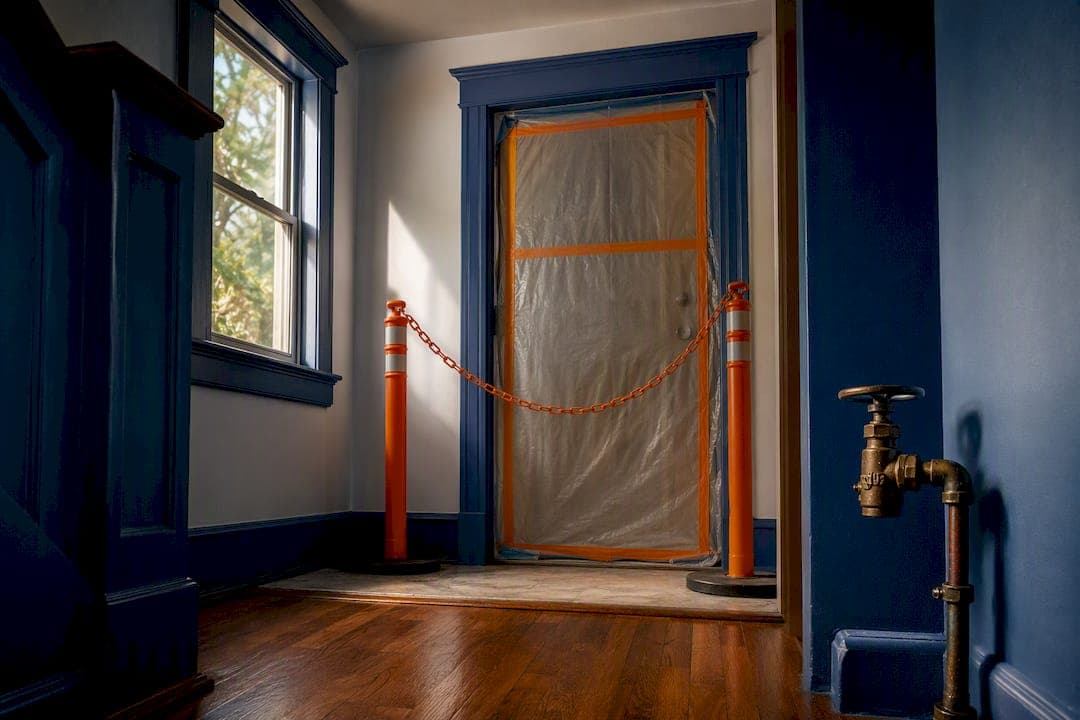
Yes, a condemned house sale can happen. Local building departments, county tax auctions, and cash buyers move condemned properties every year, but the transaction only works if you handle the condemnation order and the title mess it usually creates. Sellers typically choose between selling as-is to a cash buyer or covering demolition costs before listing the lot. Buyers need cash, a rehab loan, or hard-money financing lined up before they bid. Before you do anything else, pull two documents: the condemnation order itself, and a current title report.
TL;DR:
- Condemned properties often carry liens for unpaid taxes, code fines, or demolition costs, which reduce seller proceeds and complicate title transfer.
- The legal meaning of condemnation affects your options; code enforcement orders usually lead to demolition, while eminent domain involves government compensation and process.
- Buyers need to verify the type of condemnation, secure repair estimates, and often rely on cash, rehab loans, or hard money, since standard financing is unavailable.
- Title issues from tax deeds or liens can cause delays, requiring legal actions to clear insurable ownership and affecting resale or refinance prospects.
- Selling quickly to a cash buyer is often best when demolition is scheduled or costs are unaffordable, minimizing time, risk, and potential financial loss.
Table of Contents
- What Does 'Condemned' Actually Mean?
- Why Do Properties Get Condemned?
- How Do You Sell a Condemned House?
- How Do You Buy a Condemned House?
- Can You Get Financing for a Condemned Property?
- What Title and Lien Risks Come With Condemned Properties?
- How Do You Get a Condemnation Lifted?
- Where Do You Find Condemned or Distressed Properties?
- What Do Realistic Costs and Risks Look Like?
- When Does Selling to a Cash Buyer Make the Most Sense?
- How SLO Cash Buyer Helps Sellers of Condemned Homes
- Sources
What Does 'Condemned' Actually Mean?
"Condemned" carries two distinct legal meanings, and confusing them leads to bad decisions. The first is a code-enforcement condemnation: a city or county building department declares a structure unsafe or unfit for occupancy, usually after an inspection triggered by a complaint, fire, or visible decay. The second is eminent domain, where a government body takes the property for public use and pays compensation. Cornell Law's Legal Information Institute draws this distinction clearly, and it matters because the issuing authority, your rights, and your next steps differ completely between the two.
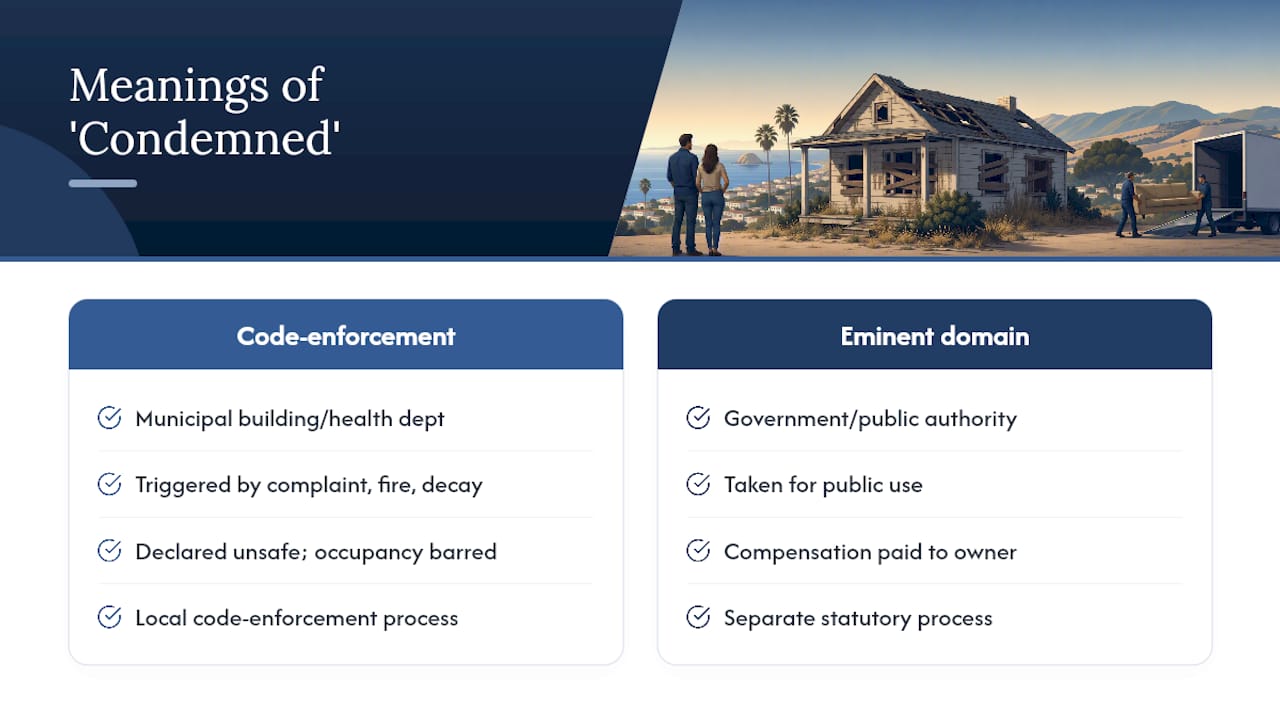
Code-enforcement orders typically come from a municipal building or health department and specify the exact violations, whether utilities have been shut off, and whether occupancy is barred immediately or on a deadline. Eminent domain follows a separate legal track, outlined in the Department of Justice's overview of condemnation cases, where compensation and process are governed by different statutes entirely. Read your notice closely. It will tell you which situation you're in.
Why Do Properties Get Condemned?
Most condemnations trace back to a handful of recurring causes, and the specific one listed on your order changes your options more than people expect.
- Structural failure: sagging roofs, foundation cracks, or collapsed framing that make the building unsafe to enter.
- Fire or flood damage left unrepaired for months or years.
- Long-term abandonment, which invites squatters, pests, and code violations that compound over time.
- Environmental hazards such as asbestos, lead paint, mold, or failed sewage systems.
- Discontinued utilities, often the trigger that turns a distressed home into a legally uninhabitable one.
- Government project needs, which fall under eminent domain rather than code enforcement.
A narrow, specific violation, say a single collapsed porch, often clears with a targeted permit and repair. A broad "unsafe structure throughout" declaration usually means the building department expects demolition, not patchwork fixes. That distinction alone often decides whether a condemned house sale ends in a rehab project or a teardown.
How Do You Sell a Condemned House?
Selling a condemned property is possible in every state, but the paperwork and pricing logic look nothing like a normal listing. LegalClarity's overview of condemned property sales confirms these deals close regularly, provided sellers walk in with realistic numbers and clean documentation.
Start here, in order:
- Request the full condemnation order and violation list from your local code enforcement office. Vague notices need a follow-up call to get specifics.
- Order a title report. Condemned properties frequently carry tax liens, code-fine liens, or utility debts that reduce your net proceeds.
- Price against land value or worst-case rehab cost, not the neighborhood comp sheet. Investors and cash buyers will offer well below market value for a habitable home in the same area, because they're pricing in repair risk, not curb appeal.
- Get a demolition estimate even if you don't plan to tear the house down. Knowing that number tells you your real floor price.
- Decide your channel: sell as-is to a cash buyer, list it explicitly as a rehab or land opportunity, or fund demolition yourself and sell a cleared lot.
Demolition typically runs $10,000 to $25,000 for an average single-family home, and U.S. News reports that municipalities can and do attach those costs as liens against the property if the city ends up doing the demolition itself. That lien follows the property, not just you, so it directly cuts into whatever a buyer is willing to pay.
Pro Tip: Call code enforcement before you call an agent. Many sellers spend weeks trying to list a condemned home traditionally, only to learn the department requires proof of repair or demolition before any sale can legally close.
How Do You Buy a Condemned House?
Buying a condemned property can be one of the better-priced entry points into real estate investing, but only if your due diligence catches what a quick walk-through won't.
- Get the condemnation order and required-repair list directly from the local code department. Don't rely on the listing agent's summary.
- Run title and lien searches. Confirm whether the property will transfer by warranty deed or tax deed, since the two carry very different protections.
- Commission real inspections, not a casual walk-through: a structural engineer for framing and foundation concerns, and environmental testing if the order mentions asbestos, lead, or sewage issues.
- Collect contractor bids before you make an offer, not after. Bids anchor your rehab budget and your maximum purchase price.
- Understand auction mechanics if you're buying at a tax sale, including whether a redemption period lets the former owner reclaim the property after you've paid.
LegalClarity notes that the single most useful early move is figuring out whether the condemnation is remediable through repairs or whether the property is functionally a teardown. That one determination reshapes your financing options, your timeline, and the pool of buyers who'd want the property from you later.
Pro Tip: Never start major rehab work during an active redemption window. If the former owner reclaims the property, you lose the money you put into it with no legal claim to reimbursement in most states.
Can You Get Financing for a Condemned Property?
Conventional mortgages almost never work here. Lenders require an appraisal confirming the home is safe and habitable, and a condemnation order is disqualifying by definition.
Realistic financing routes narrow to a few options:
- Cash. The cleanest and fastest route, and often the only one that works for a property condemned as structurally unsafe.
- FHA 203(k) rehabilitation loans, which bundle purchase and repair costs into one mortgage. LegalClarity's financing breakdown notes the program has real eligibility limits tied to county loan caps and the scope of damage; a full teardown rarely qualifies.
- Hard-money or private rehab loans, typically short-term with higher rates and loan-to-cost ratios built around the after-repair value rather than the purchase price.
Verify any private lender through the NMLS Consumer Access database before signing anything. Many buyers use hard money to acquire and stabilize a property, then refinance into a conventional loan once repairs are done and the home passes inspection again. That bridge strategy works, but it depends entirely on your rehab timeline holding.
What Title and Lien Risks Come With Condemned Properties?
Title problems sink more condemned deals than bad roofs do. A property acquired at a tax auction usually transfers by tax deed, which offers none of the guarantees a standard warranty deed provides. DealMachine's guide to condemned property investing points out that redemption periods, the window during which a former owner can reclaim the property by paying what's owed, vary significantly by state and can leave a buyer in limbo for months.
Watch for these common liens layered onto condemned properties:
- Unpaid property taxes, often the reason the property landed at auction in the first place.
- Code-violation fines that accrued while the property sat empty.
- Demolition assessments, if the municipality already tore down part of the structure.
- Utility debts left unpaid by a previous occupant.
Because tax deeds carry weak guarantees, many buyers eventually need a quiet-title action to get insurable, clean title. Budget for that legal process and the months it can add before you can resell or refinance.
How Do You Get a Condemnation Lifted?
Lifting a condemnation means walking a formal approval path, and skipping steps almost always costs more later.
- Submit repair plans for approval based on the specific violations listed in the order.
- Schedule staged inspections as work progresses, typically framing, electrical, plumbing, then final.
- Address any environmental remediation the order flagged, since inspectors won't sign off with contaminated soil or asbestos still present.
- Reconnect utilities, which usually requires its own inspection before the city restores service.
- Request final inspection and certificate of occupancy once all staged approvals are complete.
Timelines stretch fastest when historic-district review or contaminated soil enters the picture. Meet with code officials before you finalize your scope. Aligning early avoids the rework that eats budgets on condemned rehab projects.
Where Do You Find Condemned or Distressed Properties?
Several channels consistently surface condemned inventory, each with tradeoffs worth knowing before you commit time.
- Municipal code enforcement offices often maintain lists of properties with active condemnation notices, sometimes public, sometimes available by request.
- County tax auctions and sheriff sales list upcoming inventory with registration deadlines well in advance.
- Distressed-property platforms and MLS foreclosure filters surface listed inventory, while investor networks share off-market leads.
- Driving neighborhoods and contacting owners directly can work, but approach occupied or vulnerable owners carefully and ethically. Aggressive tactics invite legal exposure and reputational damage.
What Do Realistic Costs and Risks Look Like?
Numbers make this decision concrete, so plan around ranges rather than best-case guesses.
- Demolition typically runs $10,000 to $25,000, and U.S. News confirms municipalities can lien the property for those costs if they demolish it themselves.
- Full-scope rehab costs vary widely by square footage and damage severity; a cosmetic update runs far less than a structural rebuild involving foundation or framing repairs.
- Hidden risks that blow budgets fastest: asbestos abatement, foundation failure discovered mid-project, and sewage or septic system replacement.
DealMachine's investment analysis recommends budgeting a contingency above every contractor bid, since revealed structural or environmental surprises are the norm, not the exception, on condemned rehabs. A simple decision rule helps here: if total repair costs plus purchase price pushes past a conservative after-repair value threshold, or if title problems require litigation to resolve, walk away rather than chase the deal.
When Does Selling to a Cash Buyer Make the Most Sense?
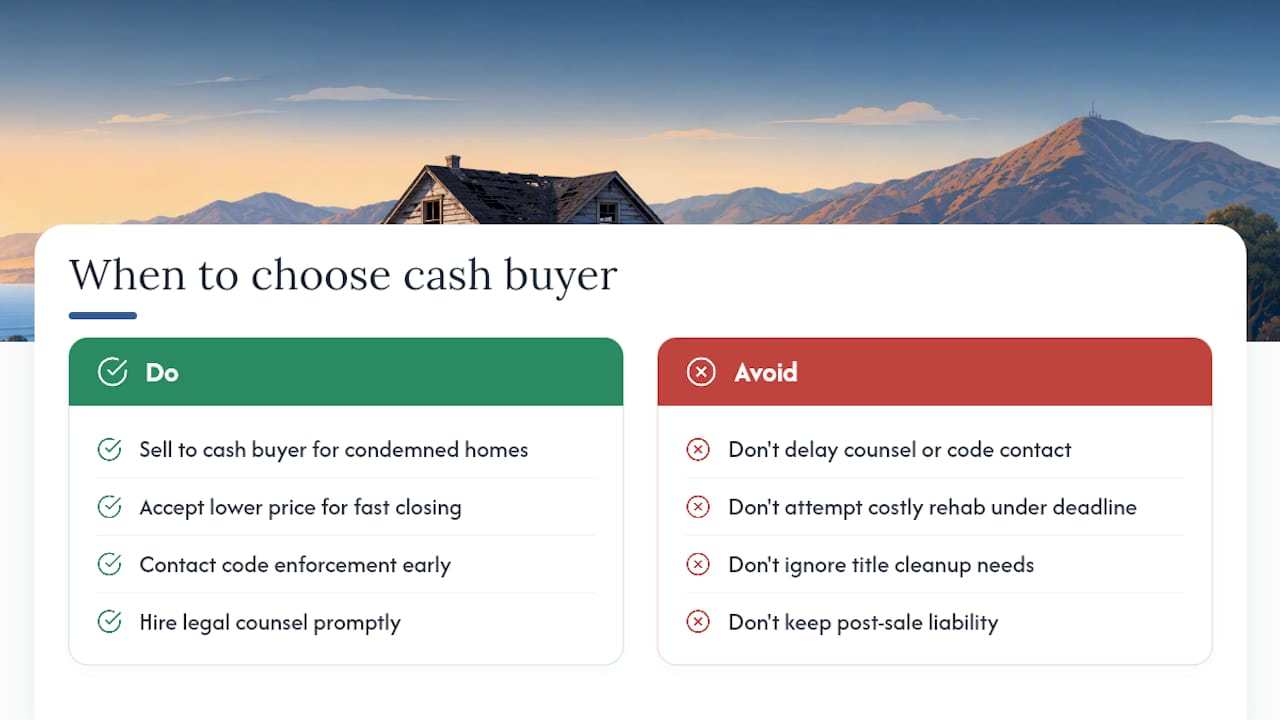
Some situations call for speed and certainty over maximum price, and condemned property sits squarely in that category more often than sellers expect. If a municipality has scheduled demolition, if foreclosure is closing in, if you've inherited a property you can't or don't want to fund repairs on, a fast cash sale often preserves more of your equity than a long, uncertain rehab attempt would.
A reputable cash buyer typically handles the property in its current condition, absorbing the repair, demolition, and title cleanup burden themselves. You trade some sale price for a fast closing and no ongoing liability. U.S. News's reporting notes that sellers who engage code enforcement and legal counsel proactively, rather than reactively, tend to preserve more net proceeds no matter which path they choose.
— Abel
How SLO Cash Buyer Helps Sellers of Condemned Homes
If your property in San Luis Obispo County has an active condemnation order, a pending demolition date, or repair costs you simply can't fund, waiting rarely improves your position. SLO Cash Buyer - San Luis Obispo County Home buyer purchases homes in any condition for cash, no repairs, no cleaning, and no agent commissions eating into your proceeds.

We're upfront about the tradeoff: a cash offer typically comes in below what a fully repaired home would fetch on the open market, because we're absorbing the repair and demolition risk you'd otherwise carry alone. That tradeoff makes sense for homeowners facing foreclosure timelines, inherited properties nobody can maintain, or a condemnation order with a demolition deadline attached. Closing timelines stay flexible, and there are no hidden fees layered on at the end.
If you want to see what a no-obligation cash offer looks like for your specific property, start with SLO Cash Buyer's home page and request a quote. It costs nothing to find out where you stand.
Sources
- Condemnation — Cornell Law School Legal Information Institute
- Can I buy a condemned house? What to know — LegalClarity
- How to buy or sell a condemned home — U.S. News
- Condemned house: Is buying one to flip a good investment? — DealMachine