
The cash offer foreclosure home process is defined as a direct sale of a home to a cash buyer before the foreclosure auction completes, allowing homeowners to close in as little as 7–14 days compared to the 45–60 days a financed sale requires. That speed is the single most important factor when a foreclosure auction date is approaching. You retain the legal right to sell your home at any point before the final gavel falls, which means a cash sale is a real option even when the timeline feels impossibly short. Foreclosure also carries a credit score drop of 100–160 points, a consequence that follows you for years. Acting early in the process protects both your credit and whatever equity you have built.
How does the foreclosure timeline affect your right to sell for cash?
Foreclosure follows a predictable legal sequence, and knowing where you stand in that sequence determines what options remain open to you. The stages move in this order:
- Missed payments. Most lenders allow a grace period of 15–30 days before reporting a late payment.
- Notice of Default (NOD). The lender files a formal notice after roughly 90–120 days of missed payments, starting the official foreclosure clock.
- Pre-foreclosure period. This is your window to sell. You still own the home and can negotiate a sale.
- Notice of Sale. The lender schedules the auction date. In non-judicial states, time from NOD to auction can be as short as 90–120 days total.
- Foreclosure auction. Once the gavel falls, your ownership ends.
The distinction between judicial and non-judicial states matters enormously here. Judicial states require a court process, which typically extends the timeline by months and gives you more time to sell. Non-judicial states move faster, and if the auction date is within 30 days, a traditional financed sale is nearly impossible. A cash offer becomes your most viable path.
Contact your lender as early as possible. Request a formal payoff statement so you know the exact amount needed to satisfy the mortgage. Lenders often prefer a voluntary sale over an auction loss, and presenting an active purchase contract can sometimes convince them to delay the auction date. Ignoring notices and avoiding lender calls consistently worsens outcomes. Timely engagement opens doors that silence closes permanently.

Why are cash sales faster and more reliable than financed deals in foreclosure?
Financed sales carry risks that make them impractical when a foreclosure clock is running. A traditional buyer needs loan approval, an appraisal, and underwriting review. Any one of those steps can fail or stall, and the whole process typically takes 45–60 days. That timeline alone can push you past an auction date.
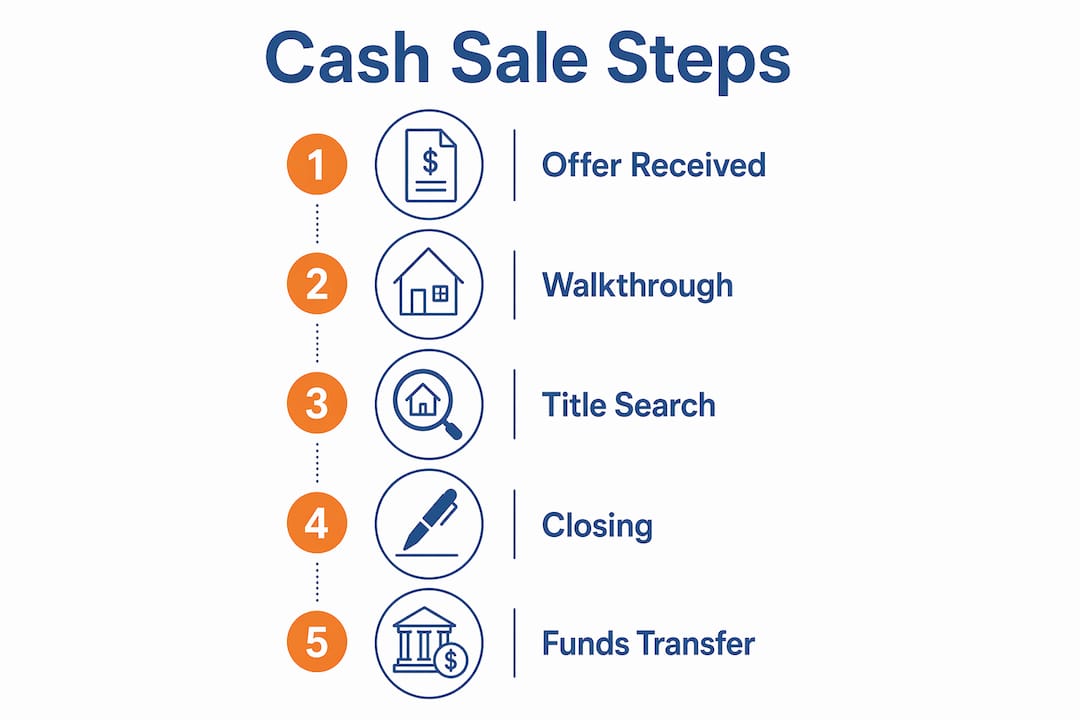
Cash buyers eliminate every one of those hurdles. The key steps in a cash sale are straightforward:
- Submit your property details. Provide accurate information about the home's condition, location, and your loan status.
- Receive an offer. Experienced cash buyers use a formula based on after-repair value, estimated repair costs, and their required margin to price offers quickly. Expect a response within 24–48 hours.
- Accept and schedule a walkthrough. The buyer confirms the property condition in person. No formal appraisal is required.
- Title search. A title company verifies ownership and checks for liens. This runs concurrently with other steps to save time.
- Close. The title company handles the mortgage payoff and distributes any remaining proceeds to you.
Selling as-is without repairs removes another common delay. You do not need to fix anything before closing. Cash sales also avoid agent commissions, which typically run 5–6%, and most seller closing costs. That means more of the sale proceeds go directly toward satisfying your mortgage.
Pro Tip: Request your payoff statement from your lender before you contact a cash buyer. Knowing your exact payoff amount lets you evaluate any offer clearly and move faster once you accept.
What happens to your equity and finances in a foreclosure cash sale?
The money from a cash sale flows in a specific order, and understanding that order helps you set realistic expectations. The title company first satisfies the mortgage balance using the sale proceeds. Any remaining liens, such as tax liens or second mortgages, are paid next. Whatever is left goes to you as the seller.
Cash offers are typically priced 5–15% below fair market value because the buyer accepts the risk and speed of the transaction. That discount is real, but compare it honestly to the alternative. A foreclosure auction typically produces prices well below market value, and the process adds public auction exposure and eviction risk on top of the financial loss.
| Scenario | Typical outcome |
|---|---|
| Cash sale pre-foreclosure | 5–15% below market, no commissions, credit protected |
| Foreclosure auction | Well below market, credit drops 100–160 points, eviction possible |
| Traditional financed sale | Near market value, but 45–60 days and financing risk |
If you owe more than the home is worth, a short sale is a separate option. A short sale requires lender approval to accept less than the full mortgage balance. It takes longer than a cash sale and is not guaranteed, but it can resolve negative equity situations without a full foreclosure on your record.
Pro Tip: Think of the cash offer discount as the cost of speed and credit protection. Losing 10% of market value now is far less damaging than losing 100–160 credit score points and potentially all remaining equity at auction.
Step-by-step guide to completing a cash sale before foreclosure
Following a clear sequence keeps the process moving and reduces the chance of missing a critical deadline. Here is how the quick home sale timeline works in practice:
- Request a free cash offer. Contact a reputable cash buyer and provide accurate details about your property's condition, size, and location. Accuracy speeds up the offer process.
- Review the offer within 24–48 hours. Cash buyers typically respond quickly. Compare the offer to your payoff statement to confirm the sale covers what you owe.
- Confirm payoff coverage. If the offer exceeds your payoff amount, you walk away with the difference. If it falls short, discuss a short sale with your lender before proceeding.
- Allow the title search. The cash buyer's title company searches for liens and verifies ownership. This step usually takes a few days and runs parallel to other preparations.
- Notify your mortgage servicer. Inform your lender that you have an active purchase contract. Present the signed agreement and request an auction delay. Lenders may extend the sale date when presented with credible evidence of a pending sale.
- Close and receive proceeds. The title company handles all payoff disbursements. You can close in as few as 7 days. Proceeds arrive after the mortgage and any liens are satisfied.
| Step | Typical timeframe |
|---|---|
| Offer received | 24–48 hours |
| Walkthrough and title search | 3–5 days |
| Lender notification and auction delay request | 1–2 days |
| Closing | 7–14 days from offer acceptance |
The closing costs breakdown in a cash sale is minimal compared to a traditional sale. No agent commission, no lender fees, and most title costs are covered by the buyer. That simplicity is part of what makes cash sales so effective when time is short.
Key Takeaways
The cash offer foreclosure home process is the fastest legal path to stopping a foreclosure auction while protecting your credit and preserving whatever equity remains in your home.
| Point | Details |
|---|---|
| Act before the auction | You retain the right to sell until the foreclosure gavel falls, so time is your most valuable asset. |
| Cash closes in 7–14 days | Cash sales eliminate appraisals and loan approvals, making them far faster than financed deals. |
| Expect a 5–15% discount | Cash offers price below market, but they avoid commissions and protect your credit score. |
| Notify your lender early | Presenting an active contract can delay the auction date and buy you the time needed to close. |
| Short sale is an alternative | If you owe more than the home is worth, a lender-approved short sale can resolve negative equity. |
What I've learned from watching homeowners wait too long
The most common mistake I see is waiting. Homeowners receive a Notice of Default and assume they have months to figure things out. Sometimes they do. But in non-judicial states, that window can close in 90 days, and once an auction date is set within 30 days, a traditional sale is off the table entirely.
The second mistake is viewing the cash offer discount as a loss rather than a cost. Every financial decision has a price. The price of speed and credit protection in a cash sale is a discount of roughly 5–15% below market value. The price of doing nothing is a credit score that drops 100–160 points, public auction exposure, and often a lower sale price than any cash buyer would have offered. The math is not close.
What surprises most homeowners is how private a cash sale is. There is no listing, no open house, no neighbors watching strangers walk through your home. That privacy reduces stress in a situation that is already difficult enough. Sellers often tell me the relief they feel after accepting an offer is immediate, even before closing. Knowing the outcome is settled changes everything.
My honest advice: explore every option, but prioritize timeliness above all else. A cash sale stopping foreclosure before auction is not a last resort. For many homeowners, it is the best available outcome given the circumstances.
— Abel
How SLO Cash Buyer - San Luis Obispo County Home buyer can help you sell fast
Facing foreclosure in San Luis Obispo County is stressful, and you deserve a clear path forward without added pressure. SLO Cash Buyer - San Luis Obispo County Home buyer purchases homes in any condition for cash, with closing timelines as short as 7 days.

There are no repairs to make, no agent commissions to pay, and no hidden fees. The title company handles all closing paperwork and mortgage payoff, so the process is secure from start to finish. You receive a free, no-obligation cash offer within 24–48 hours of reaching out. If you are ready to protect your credit and get a fast cash offer before your auction date arrives, SLO Cash Buyer - San Luis Obispo County Home buyer is ready to help you close on your schedule.
FAQ
Can I sell my home after receiving a Notice of Default?
Yes. You retain the legal right to sell your home at any point before the foreclosure auction is finalized. Acting quickly after a Notice of Default gives you the most options.
How fast can a cash sale close compared to a traditional sale?
Cash sales close in as little as 7–14 days, while financed sales typically take 45–60 days. That speed difference is critical when an auction date is approaching.
Will selling my home in foreclosure hurt my credit?
A voluntary cash sale before auction protects your credit far better than foreclosure. Foreclosure can drop your credit score by 100–160 points, while a completed sale avoids that damage.
What if I owe more than my home is worth?
A short sale may be an option. Your lender must approve the sale at less than the full mortgage balance. This takes longer than a standard cash sale but avoids a full foreclosure on your credit record.
Do I need to make repairs before a cash sale?
No. Cash buyers purchase homes as-is, meaning you sell in the current condition without any repairs, cleaning, or upgrades required before closing.