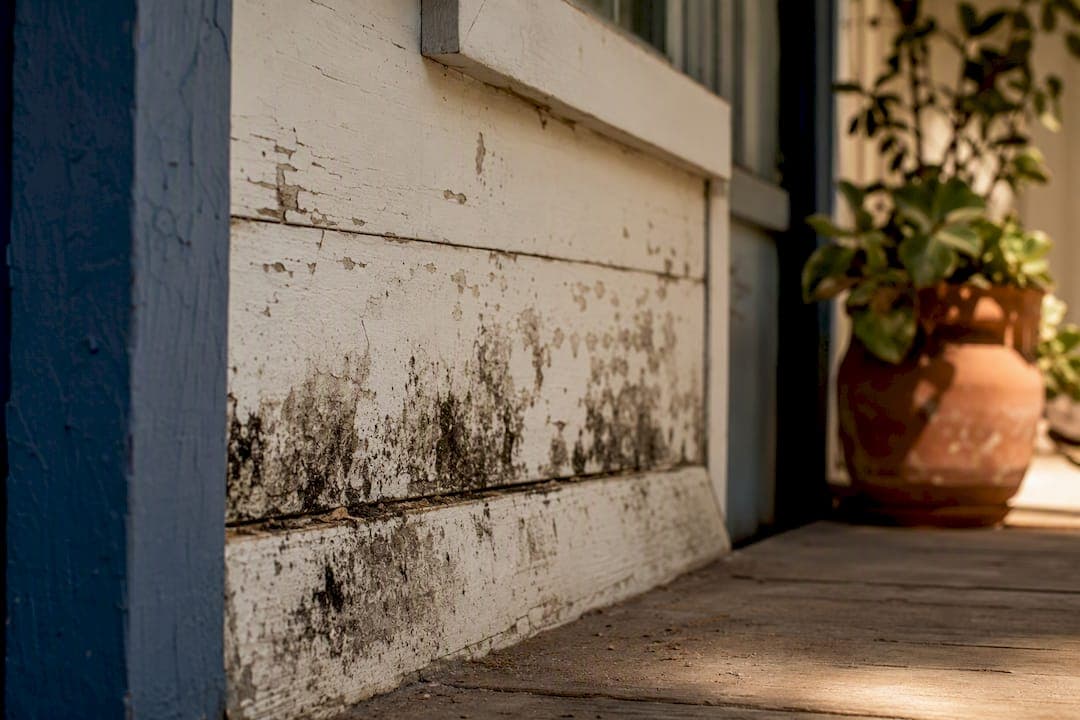
Yes, you can sell a home with mold, but here's the honest truth: mold usually shrinks your buyer pool and knocks down your offers unless you either document professional remediation or sell to a cash buyer who isn't scared off by the word "mold." Neither path is wrong. They just serve different priorities.
You have two real decision paths. Remediate the mold, get clearance documentation, and list on the open market for the strongest price. Or sell as-is to a cash buyer, close fast, and accept a lower net number in exchange for speed and zero repair headaches.
Here's a short action plan for the next two weeks:
- Get a professional mold assessment to understand the scope (surface vs. hidden).
- Request written remediation estimates from at least two licensed contractors.
- Decide: remediate and relist, or sell as-is with full disclosure.
- If selling as-is, gather your inspection reports and disclosure paperwork now.
- Talk to a local cash buyer for a no-obligation comparison offer.
Key Takeaways
Mold typically reduces a home's sale price and buyer pool unless sellers document professional remediation or choose a fast cash sale instead.
| Point | Details |
|---|---|
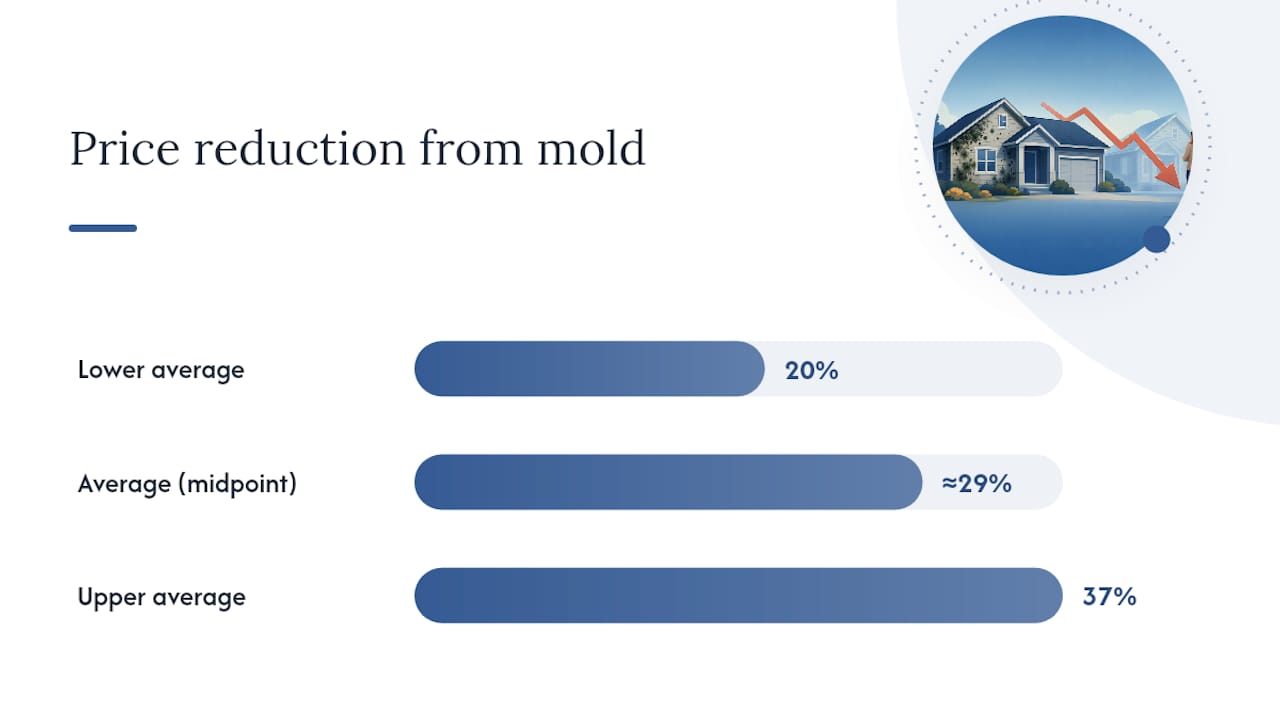
| Price impact is real | Mold can cut value by roughly 20% to 37%, with severe cases exceeding 50% loss. |
| Documentation preserves value | Clearance testing and contractor records restore most value, minus a small residual discount. |
| Disclosure is not optional | Most states require disclosing known mold, and skipping it risks fraud claims later. |
| Financing can stall | Lenders, especially FHA, may require remediation proof before clearing a mortgage. |
| Cash sale skips the risk | SLO Cash Buyer - San Luis Obispo County Home buyer purchases mold-affected homes as-is, with no repairs or commissions required. |
Where to Verify Mold and Disclosure Rules Further
- Health and remediation basics: EPA and CDC guidance.
- Remediation cost data: Servpro's cost resources.
- Check your own state's disclosure requirements before relying on general guidance here.
Table of Contents
- How Mold Affects Home Sale Price and Buyer Interest
- What Happens During Inspection, Appraisal, and Loan Approval?
- Do You Have to Disclose Mold When Selling a House?
- Is It Surface Mold or a Deeper Structural Problem?
- When Should You Test, and Who Do You Call?
- Mold Remediation Costs: What to Expect by Scenario
- Remediate, Sell As-Is, or Sell for Cash: Which Path Fits You?
- Building a Remediation Packet Buyers Actually Trust
- When Selling to a Cash Buyer Makes More Sense Than Remediating
- If You'd Rather Skip Repairs Entirely, Here's Another Route
- Frequently Asked Questions
- Sources
How Mold Affects Home Sale Price and Buyer Interest
Mold doesn't just cost money to clean up. It changes how buyers see your entire property, and that perception shows up in the final number.
Industry market analysis shows mold can reduce a home's value by roughly 20% to 37% on average, with severe cases experiencing much larger losses.
The bigger issue is often who doesn't show up. A meaningful share of buyers walk away from any listing that mentions mold, whether they see it in the disclosure or hear about it from their inspector. That shrinks your competition, which means fewer offers and less negotiating leverage for you.
Run the math on your own situation:
- Remediation might cost you a few thousand dollars depending on severity.
- Skipping it could cost you tens of thousands in reduced offers on a mid-priced home.
- A documented fix that costs a few thousand dollars often pays for itself several times over in preserved value.
What Happens During Inspection, Appraisal, and Loan Approval?
Buyers and lenders both react to mold differently than they react to a cracked driveway or an old water heater.
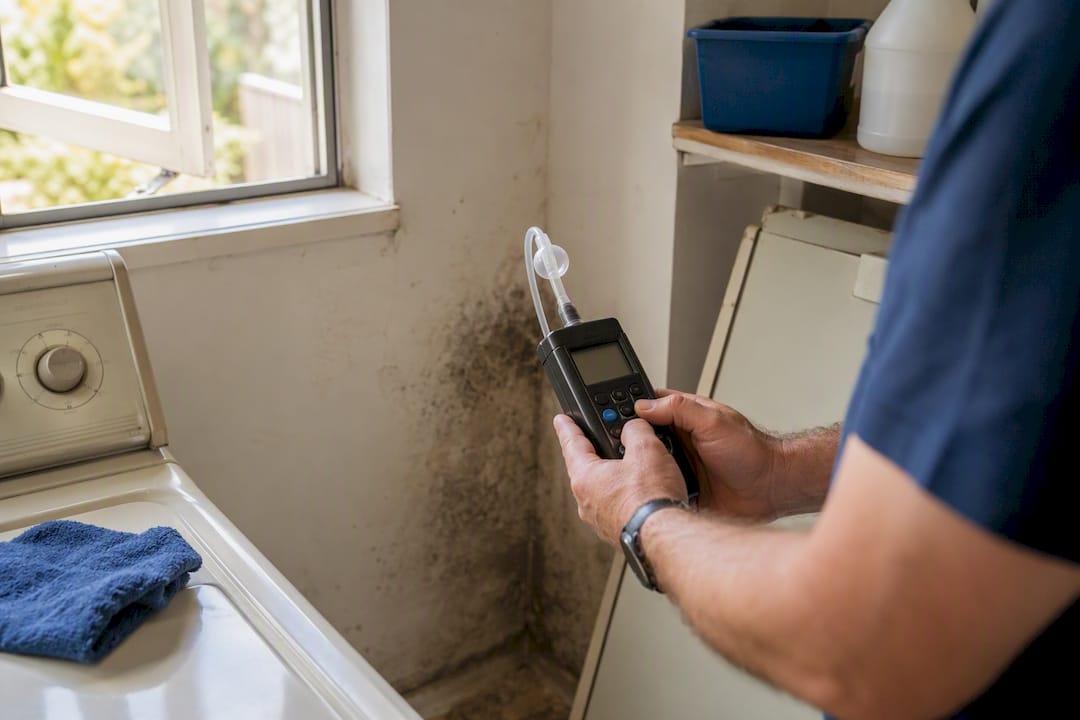
A standard home inspection covers visible mold and moisture staining, but it's not a diagnostic tool. If your inspector flags a suspicious spot, the buyer's next move is usually a specialized mold inspection or air sampling test. Appraisers, meanwhile, are trained to note "conditions requiring repair" and can flag mold directly on the appraisal report, which stalls financing until it's addressed.
Conventional and FHA loans are the most sensitive here. FHA in particular follows HUD habitability guidance that can require remediation before the loan clears underwriting.
To keep financing on track:
- Order your own pre-listing mold inspection before you list.
- Fix any active moisture source first. The EPA is clear that cleanup without solving the moisture problem is a temporary patch, not a fix.
- Have your remediation documentation ready to hand a lender or appraiser the moment mold comes up.
Do You Have to Disclose Mold When Selling a House?
In most states, yes. Mold is treated as a material defect once you know about it, and that knowledge triggers a disclosure obligation you can't sidestep by hoping the buyer's inspector misses it.
Most states require sellers to disclose known mold problems or any past remediation, even if the work is complete and the mold is gone. Skip that disclosure and get caught, and you're looking at fraud or concealment claims, contract rescission, and legal fees that dwarf whatever you saved by staying quiet. Buyers can also pull a CLUE report that reveals past insurance claims tied to water damage or mold, so a hidden history has a way of surfacing anyway.
- Disclose known mold even if you believe it's fully remediated.
- Keep every remediation invoice, inspection report, and clearance test on file.
- When in doubt, disclose more than you think is legally required.
Pro Tip: Put your remediation paperwork in the disclosure packet itself, not just in a drawer. A buyer who sees documentation up front negotiates less aggressively than one who finds mold history on their own.
Is It Surface Mold or a Deeper Structural Problem?
Not all mold is created equal, and the difference changes your entire strategy.
A dark ring around a bathroom fan or a musty smell in one closet is often surface-level and cheap to handle. Mold behind drywall, inside HVAC ductwork, or spreading through an attic or crawlspace is a different animal entirely. CDC guidance notes that certain groups, including children and immunocompromised people, are more vulnerable to mold exposure, which is exactly why buyers with kids tend to react strongly to any mold mention, regardless of severity.
- Surface mold on tile or paint: usually cheap, fast, low buyer alarm.
- Mold on drywall or insulation: moderate cost, needs professional judgment.
- Mold in HVAC or structural framing: highest cost, biggest buyer red flag.
When Should You Test, and Who Do You Call?
Testing isn't always necessary, but skip it in the wrong situation and you'll regret it during negotiations.
Order air sampling or an industrial hygienist's assessment when mold is hidden (behind walls, inside ducts) or when a buyer's inspector disputes your remediation claims. For anything visible and contained, a visual inspection from a licensed mold professional is usually enough.
- Visual inspection: confirms scope, cheapest option.
- Surface swab: identifies mold type on a specific area.
- Air sampling: detects hidden or airborne contamination.
- Clearance testing: proves remediation worked, the document buyers actually want.
Ask any hygienist or remediator for a written, dated clearance report you can hand to buyers directly.
Mold Remediation Costs: What to Expect by Scenario
Cost depends almost entirely on where the mold lives and how far it's spread, which is why a flat number is nearly useless without context.
Industry cost data puts the national average remediation job around $2,368, with typical jobs ranging from $1,223 to $3,753. Location and severity swing that range dramatically.
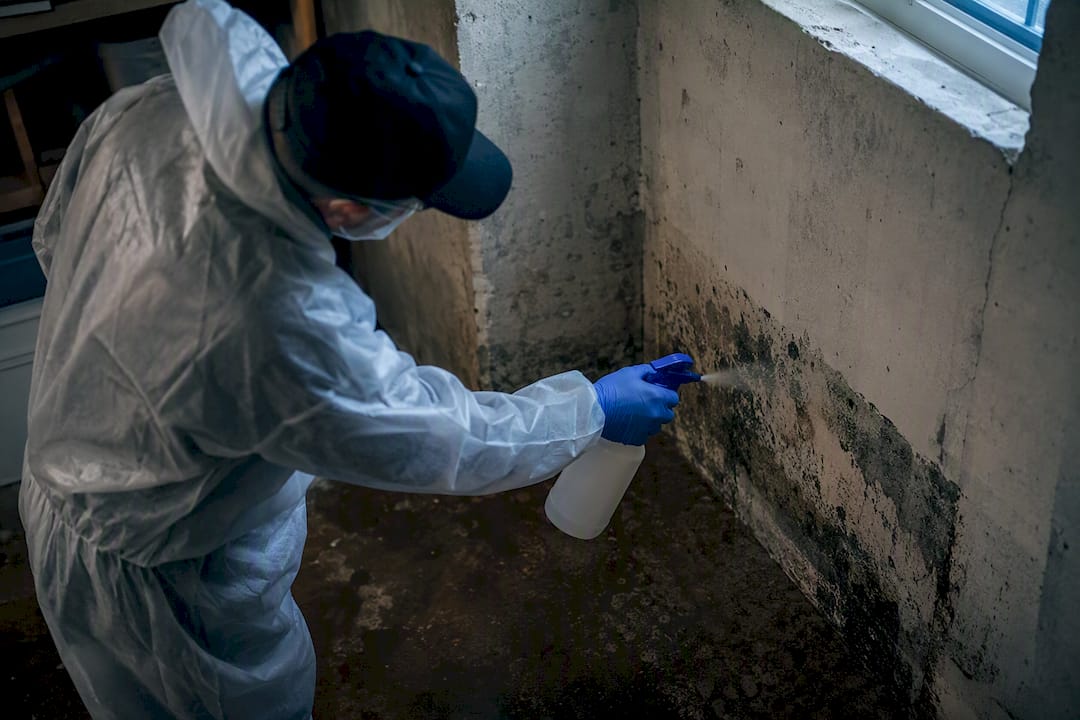
A quick patch job you handle yourself might satisfy a casual buyer, but anything beyond surface mold deserves a licensed remediator following IICRC standards, followed by third-party clearance testing. That paperwork is often worth more to your sale price than the cleanup itself, since documented remediation restores most of a home's pre-mold value, even if a small residual discount remains.
Pro Tip: Never pay for remediation without getting a written scope of work first. "We fixed the mold" means nothing to a buyer's lender. A dated invoice and lab-verified clearance report means everything.
Remediate, Sell As-Is, or Sell for Cash: Which Path Fits You?
Every seller with mold faces the same three-way fork, and the right answer depends on your timeline, your budget, and how much risk you're willing to carry.
| Path | Net Proceeds Impact | Time to Close | Buyer Pool / Financing Risk | Upfront Cost | Documentation |
|---|---|---|---|---|---|
| Remediate, then list | Highest (minus ~3% residual discount) | three to six weeks | Low risk, widest pool | $1,200 to $10,000+ | Clearance report, contractor warranty |
| Sell as-is with disclosure | Moderate discount (often 20%+ off comparable value) | three to six weeks | Narrower pool, financing delays likely | Minimal | Full disclosure, existing reports |
| Sell to a cash buyer | Lowest gross price, no repair costs deducted | 1 to 3 weeks | No financing risk, no inspection contingency | None | Simple disclosure, no clearance needed |
- If you have time and a moderate remediation cost relative to home value, remediate first.
- If you're short on time but want to avoid a steep discount, sell as-is and disclose thoroughly.
- If speed, certainty, and zero repair spending matter most, a cash sale is usually the simplest route.
Building a Remediation Packet Buyers Actually Trust
A folder full of paperwork does more to protect your price than any amount of verbal reassurance during a walkthrough.
Your packet should include the original inspection report, remediation contractor invoices, an IICRC-certified contractor's certificate, third-party lab clearance results, and any moisture-repair receipts. If you ever filed an insurance claim related to water damage, note it, since a CLUE report can surface it regardless.
- Attach the packet directly to your disclosure, not as a separate afterthought.
- Reference it during showings so buyers don't feel like they're uncovering a secret.
- When a buyer asks for a price reduction over old mold, point to the clearance date and let the paperwork do the negotiating.
How Long Does Mold Remediation Delay a Home Sale?
Small surface fixes add maybe a few days. HVAC or duct remediation with lab clearance can add one to two weeks. Full whole-house remediation often adds three to six weeks once you include contractor scheduling and lab turnaround.
- Book contractors and lab testing simultaneously, not sequentially.
- Ask labs for rush clearance turnaround if your closing date is tight.
- Warn your lender early if remediation is in progress, so appraisal re-checks don't blindside your timeline.
When Selling to a Cash Buyer Makes More Sense Than Remediating
Some situations tip the math clearly toward a fast, as-is sale rather than a remediation project.
- The mold has spread through structural framing or HVAC systems, and remediation would run into five figures.
- You're facing foreclosure, a relocation deadline, or an estate that needs to close quickly.
- Tenants have caused repeated water damage and mold keeps recurring despite fixes.
- Remediation cost is approaching a large share of your home's expected sale value.
If your remediation quote is climbing toward $10,000 and your home's expected price gain from fixing it is smaller than that, a cash sale often nets you more time and less legal exposure than chasing top dollar. A cash sale is often the more rational choice once remediation costs eat too deep into your margin.
Pro Tip: Get a cash offer before you commit to remediation. Comparing the two numbers side by side takes the guesswork out of the decision.
A Seller's Practical Tips for Selling With Mold
Be upfront about mold the moment it comes up, not after a buyer's inspector finds it. Prioritize fixing the moisture source before cosmetic repairs, since buyers care more about recurrence than appearance. Keep your agent looped in on every remediation update so nobody's caught off guard mid-negotiation, and respond to buyer questions with documentation instead of reassurance alone.
If You'd Rather Skip Repairs Entirely, Here's Another Route
Remediation and relisting can recover the most value, but it asks a lot of you: contractor coordination, lab scheduling, carrying costs while you wait, and no guarantee a buyer won't still ask for a discount. Selling as-is on the open market avoids the repair work but still means financing delays and a shrunken buyer pool.

SLO Cash Buyer - San Luis Obispo County Home buyer offers a third path built specifically for sellers who don't want to gamble time or money on remediation outcomes: a cash offer on your home exactly as it stands, mold included, with no repairs, no cleaning, and no commissions to negotiate around. We work with homeowners across San Luis Obispo County facing foreclosure, inherited properties, tired landlord situations, or simply properties they need off their hands fast. You'll get a straightforward offer, see exactly what you're netting, and can close on your own timeline instead of waiting on contractor schedules and lab turnaround. If a mold-affected property has you weighing remediation against speed, request a cash offer from SLO Cash Buyer and compare it against your remediation quote before you decide.
Frequently Asked Questions
Does mold always lower a home's appraised value? Not always, but it usually does when the appraiser notes visible mold or moisture damage on the report. Documented remediation before the appraisal often prevents that flag entirely.
Can I sell a house with mold without disclosing it? Legally, no, if you know about it. Most states require disclosure of known mold or past remediation, and failing to disclose can expose you to fraud or concealment claims after closing.
Will a cash buyer really purchase a home with mold? Yes. Cash buyers, including SLO Cash Buyer - San Luis Obispo County Home buyer, typically purchase homes in any condition, mold included, since they factor remediation into their offer rather than requiring you to fix it first.
How much does mold remediation typically cost before selling? National averages run around $2,368, with most jobs falling between $1,223 and $3,753, though whole-house or HVAC contamination can push costs into five figures.
Does homeowners insurance cover mold remediation before a sale? Usually not for long-term or neglect-related mold, though damage tied to a covered water event sometimes qualifies. Check your policy terms and any past claims history before assuming coverage applies.
This article is general information, not a substitute for advice from a qualified lawyer. Consult a qualified legal professional about your own circumstances before acting on anything here.
Sources
- Mold (EPA)
- About mold and health (CDC)
- Mold remediation cost (Servpro resources)
- How Mold Affects Home Values: State-by-State Impact Data (2026)
- Do You Have to Disclose Mold Remediation When Selling? (LegalClarity)