
Joint tenancy with right of survivorship (JTWROS) is a form of co-ownership where two or more people hold equal, undivided shares in a property or account, and when one owner dies, that share automatically passes to the surviving owner or owners without going through probate.
That's the whole concept in one sentence, but the details matter more than most people realize. In a JTWROS arrangement, nobody owns "half the house" or "a third of the account." Every joint tenant owns the entire asset alongside the others, and when death removes one name from the title, the remaining owners simply absorb that interest by operation of law. No court order. No will to probate. No waiting period. The transfer happens the moment the death certificate is issued.
We see this play out constantly with San Luis Obispo County families who inherited a home this way and now need to decide what to do with it. It sounds simple until you realize how many quiet risks ride along with that simplicity.
Pro Tip: Adding someone to your deed as a joint tenant is treated as a gift under tax law, and it can also expose your property to that person's creditors, lawsuits, or divorce proceedings the moment their name goes on the title, not just after you die.
Key Takeaways
Joint tenancy with right of survivorship transfers a deceased owner's share automatically to surviving co-owners, skipping probate but sacrificing testamentary control, partial tax basis benefits, and protection from a co-owner's creditors.
| Point | Details |
|---|---|
| Automatic transfer | JTWROS bypasses probate for the titled asset, but a co-owner's will has no effect on that specific asset. |
| Creditor exposure | Your share can be reached by a co-owner's personal creditors, lawsuits, or Medicaid lookback penalties. |
| Unilateral severance risk | Any joint tenant can end the survivorship right by conveying their interest to someone else, without your consent. |
| Tax basis limits | Standard joint tenancy usually gives only a partial step-up in basis, unlike a full step-up through inheritance or community property. |
| Confirm state rules first | Deed language, reassessment triggers, and available alternatives like tenancy by the entirety vary by state, so confirm specifics with a local estate attorney. |
Table of Contents
- What Is Joint Tenancy With Survivorship, Exactly?
- How Does Joint Tenancy With Survivorship Work in Practice?
- What Are the Four Unities Required for Joint Tenancy?
- Joint Tenancy vs. Tenancy in Common vs. Tenancy by the Entirety
- When Do People Typically Choose Joint Tenancy?
- How Does Joint Tenancy Interact With Probate and Your Estate Plan?
- What Are the Tax Consequences of Joint Tenancy?
- What Risks Come With Joint Tenancy?
- How Do You Create or End a Joint Tenancy?
- Does Joint Tenancy Work the Same for Every Asset Type?
- How Does State Law Change Joint Tenancy Rules?
- What Are the Alternatives to Joint Tenancy?
- What Should You Do Before Choosing Joint Tenancy?
- A Practitioner's View on When Joint Tenancy Actually Makes Sense
- Selling an Inherited or Jointly Owned Property in San Luis Obispo County
- Frequently Asked Questions
- Sources
What Is Joint Tenancy With Survivorship, Exactly?
Joint tenancy with right of survivorship is a legal ownership structure in which co-owners hold identical, undivided interests in an asset, and ownership shifts automatically to the survivors when one owner dies. The Legal Information Institute at Cornell Law School defines it as exactly that: equal shares, one title, and a built-in mechanism that keeps the asset out of probate court.
The "survivorship" part is what separates JTWROS from other forms of shared ownership. It's not a preference or a suggestion written into a will. It's a legal default baked into how the title itself was created. As long as the joint tenancy remains intact, a deceased owner's interest doesn't become part of their estate at all. It just vanishes, and the remaining owners' shares grow to fill the gap, according to Cornell's explanation of the right of survivorship.
This matters most for people who are actively deciding how to title a new home purchase, or who inherited a property under this structure and are now the sole surviving owner. Either way, understanding the mechanics before you sign anything protects you from surprises later.
How Does Joint Tenancy With Survivorship Work in Practice?
While all joint tenants are alive, each one owns an undivided interest in the whole asset, not a fenced-off percentage. Two people who own a house as joint tenants don't each own "their half" of the living room. They both own the entire house, together, in equal shares that can't be carved up without ending the joint tenancy itself.
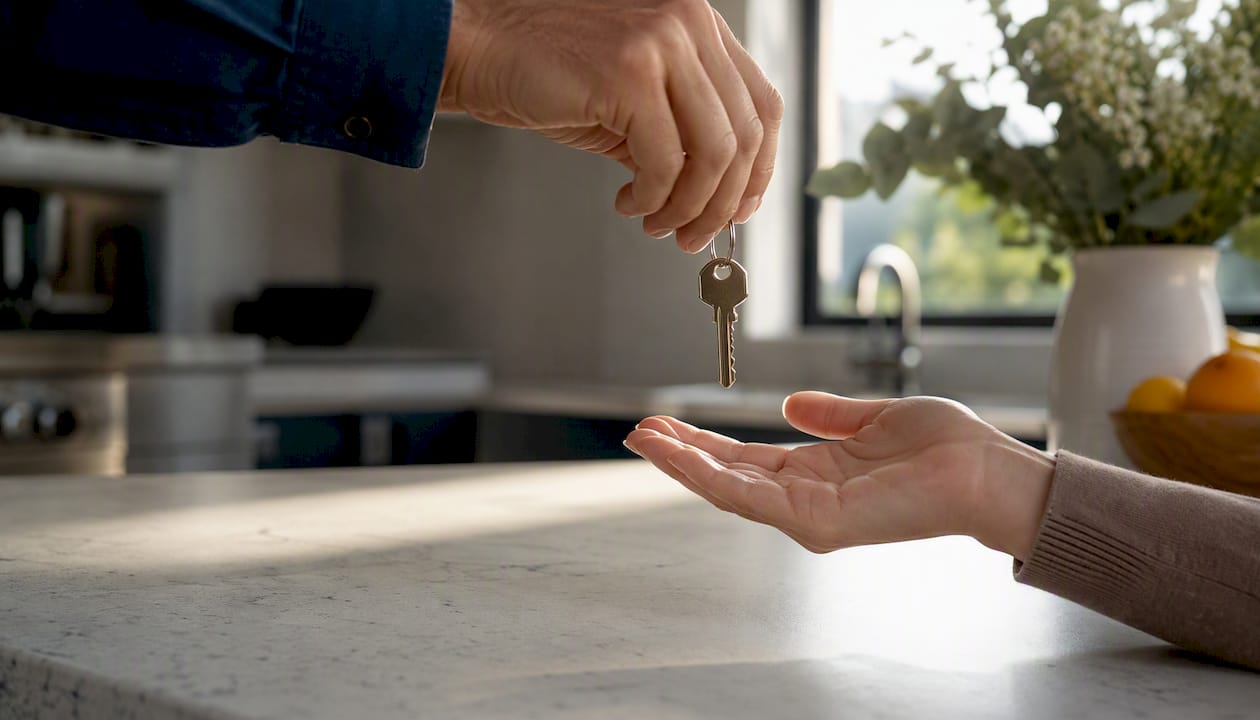
That structure holds until death changes the picture. The instant one joint tenant dies, the surviving owner (or owners) automatically holds full title. There's no deed to file to make that happen and no court hearing to attend, though updating records with the county or the financial institution is still a smart practical step.
You'll typically find JTWROS used across a handful of asset types:
- Real estate, including primary residences, vacation homes, and investment property
- Joint bank accounts and credit union accounts
- Brokerage and investment accounts held in joint name
- Vehicles titled to more than one owner in states that recognize survivorship on auto titles
Picture two sisters, Maria and Elena, who buy a duplex together as joint tenants. Maria dies five years later. Elena doesn't inherit "Maria's half" through a will or probate court. She simply becomes the sole owner of the entire duplex, automatically, the day Maria passes. If Maria had a will that said "I leave my share of the duplex to my daughter," that instruction would have no legal effect on the property. The survivorship right controls, regardless of what the will says.
What Are the Four Unities Required for Joint Tenancy?
Courts don't just take your word for it that a joint tenancy exists. Traditional property law requires four specific conditions, known as the four unities, and all of them generally have to be present when the tenancy is created:
- Unity of time: all owners must acquire their interest at the same moment
- Unity of title: all owners must acquire their interest through the same deed or instrument
- Unity of interest: all owners must hold equal shares of equal duration
- Unity of possession: all owners must have an equal right to possess and use the entire property
Skipping any one of these unities at the outset, or breaking one later, generally converts the arrangement into a tenancy in common instead, which strips away the survivorship right entirely.
In practice, creating a valid joint tenancy usually comes down to precise deed language. Most states require the deed to explicitly state that the owners take title "as joint tenants with right of survivorship" or similar wording. Leaving that phrase out, or using ambiguous language, is one of the most common reasons a joint tenancy fails to hold up when someone actually dies and the family checks the paperwork.
Property law has long treated these four unities as the backbone of joint tenancy. Break one of them, even accidentally, and the tenancy typically slides into a tenancy in common, which means no automatic survivorship at all.
Recording requirements also vary by county and by state, so a deed that creates a valid joint tenancy in one jurisdiction might need different language elsewhere. That variation is exactly why a quick review by a title company or an estate attorney before signing is worth the small cost.
Joint Tenancy vs. Tenancy in Common vs. Tenancy by the Entirety
Choosing the right ownership structure depends on what you actually want to happen to your share when you die, and how much protection you need from creditors or family disputes along the way.
Tenancy in common lets each owner hold a separate, potentially unequal share that passes through their will or through probate, rather than automatically to the other owners. That flexibility is exactly what joint tenancy gives up. Tenancy by the entirety, available only to married couples in certain states, works similarly to joint tenancy but adds an extra layer of creditor protection, since one spouse's individual creditors generally can't force a sale of the property.
Here's how the three stack up on the factors that matter most:
| Factor | Joint Tenancy (JTWROS) | Tenancy in Common | Tenancy by the Entirety |
|---|---|---|---|
| Probate avoidance | Yes, automatic transfer at death | No, share passes through probate | Yes, automatic transfer at death |
| Testamentary flexibility | None; survivorship overrides a will | Full; owner can will their share to anyone | None; survivorship overrides a will |
| Tax basis treatment | Partial step-up on the deceased owner's share only | Full step-up on the deceased owner's share | Partial step-up, similar to joint tenancy |
| Creditor/Medicaid exposure | Exposed to each co-owner's individual creditors | Exposed only through the individual owner's share | Protected from one spouse's individual creditors in many states |
| Ease of creation and severance | Requires the four unities; any owner can sever unilaterally | Easy to create; each share can be sold or willed independently | Married couples only; generally requires both spouses to sever |
Tenancy by the entirety tends to be the better fit when both owners are legally married and want probate avoidance plus real creditor protection. Tenancy in common tends to fit better when co-owners want the flexibility to leave their share to someone other than the other owner, such as siblings who inherit a family property together but each have their own kids to think about.
Pro Tip: If you're married and live in a community property state, ask an attorney whether "community property with right of survivorship" makes more sense than standard joint tenancy. It can provide a full double step-up in basis for both spouses' shares at the first death, which standard joint tenancy usually doesn't offer.
When Do People Typically Choose Joint Tenancy?
Married couples buying a primary residence together are the single most common users of JTWROS, largely because it's simple, familiar, and matches most couples' intent: whoever survives should own the home outright, no questions asked.
Joint bank accounts are another frequent use case, mostly for practical reasons rather than estate planning ones. Parents and adult children sometimes set up a joint checking account specifically so the child can pay bills or access funds immediately if the parent becomes incapacitated or passes away, without waiting on a probate court to sort things out.
Beyond spouses and parent-child pairs, plenty of co-owners choose JTWROS purely because it's the path of least resistance:
- Married couples titling a home or shared brokerage account
- Aging parents adding a trusted adult child to a bank account for bill-paying convenience
- Business partners who co-own a small property and want automatic transfer if one dies
- Unmarried partners who want the same survivorship benefit spouses get automatically in some states
Adding an adult child to a home deed specifically to dodge probate is one of the more common mistakes we see, and it's usually the wrong tool for the job. It counts as a taxable gift, it exposes the home to that child's creditors or divorce, and it can wreck the tax basis benefits the child would have gotten through inheritance instead. JTWROS works fine between non-spouses like friends or business partners too, but it carries more risk the less the co-owners fully trust each other's financial and legal situations.
How Does Joint Tenancy Interact With Probate and Your Estate Plan?
Assets titled as joint tenancy skip probate entirely because, legally, there's nothing left in the deceased owner's estate to probate. The interest disappeared at the moment of death and the surviving owner already holds full title. Compare that to assets governed by a will, which must pass through the probate court, get validated, have debts settled, and only then get distributed to heirs.
That difference in speed and cost is exactly why so many people lean on joint tenancy as an informal estate planning shortcut. Probate can take months, sometimes stretching well past a year for larger or contested estates, and the process consumes a real slice of the estate's value in court fees, executor costs, and attorney time, which is part of why Cornell's overview of joint tenancy describes it as a fast, low-cost alternative even though it's a far blunter instrument than a properly drafted trust.
Before you lean on JTWROS as your main estate planning tool, run through this short checklist:
- Tell your estate attorney about every asset you hold in joint tenancy, not just the ones you think matter most.
- Review your will and confirm it doesn't contain instructions for assets that are actually titled as joint tenancy, since those instructions will be legally ignored.
- Update beneficiary designations on retirement accounts and life insurance separately, since joint titling doesn't touch those.
- Revisit the deed or account paperwork any time a co-owner's circumstances change significantly, such as divorce, bankruptcy, or estrangement.
Fair warning: joint tenancy overrides whatever your will says about that specific asset. If you leave "everything, including my home" to your three children in your will, but the home is titled jointly with just one of them, that one child inherits the entire house automatically. The other two get nothing from that asset, no matter how clearly the will states otherwise. This is one of the most common sources of unintended disinheritance we see families deal with, and it's almost always avoidable with better planning up front.
What Are the Tax Consequences of Joint Tenancy?
The tax rules around joint tenancy hinge almost entirely on something called step-up in basis, and getting this wrong can cost a surviving owner real money when they eventually sell the property.
When someone inherits property outright through a will or trust, the property's cost basis typically "steps up" to its fair market value on the date of death, which can erase decades of unrealized capital gains for tax purposes. Joint tenancy usually only provides a partial step-up, covering just the deceased owner's share of the property, while the surviving owner's original share keeps its old, lower basis. Community property states are the exception here, since spouses who hold property as community property can receive a full step-up on the entire property, not just half, an advantage that standard joint tenancy generally doesn't replicate.
There's also a gift-tax wrinkle that catches people off guard. Adding someone to your deed or account as a joint tenant during your lifetime is treated by the IRS as a gift of half the asset's value at that time, which can trigger gift-tax reporting requirements if the value exceeds the annual exclusion amount.
Losing a full step-up in basis isn't an abstract tax detail. Picture a home purchased decades ago for $80,000 that's now worth $500,000. If it passes through a full step-up at death, the surviving owner could sell it with little or no taxable capital gain. If joint tenancy only stepped up half the basis, that surviving owner could owe capital gains tax on a much larger portion of the sale price.
Tax rules around basis, gift reporting, and community property elections vary by state and shift periodically at the federal level, so treat these mechanics as a starting point for a conversation with a tax advisor familiar with your state, not a final answer for your specific return.
What Risks Come With Joint Tenancy?
The same feature that makes joint tenancy attractive, that instant automatic transfer, is also where most of its problems hide. Once you understand these risks, you can weigh them honestly against the convenience.
- Your property can become exposed to a co-owner's personal creditors, lawsuits, or bankruptcy, even if you had nothing to do with their financial troubles.
- You lose the ability to leave your share of the asset to anyone in your will, since survivorship overrides testamentary instructions every time.
- Any co-owner can unilaterally sever the tenancy by conveying their interest to a third party, which can happen without your knowledge or consent and immediately ends the survivorship right, according to Cornell's overview of partition actions.
- Adding a joint tenant shortly before applying for Medicaid long-term care benefits can trigger the program's lookback penalties, since the transfer may be treated as an uncompensated gift of assets.
Medicaid timing deserves its own callout. Most states use a five-year lookback period when reviewing asset transfers for long-term care eligibility, so adding someone as a joint tenant even a year or two before applying for benefits can delay or disqualify coverage entirely. This is one area where the "simple fix" of adding a family member's name to a deed backfires badly, sometimes years after the transfer happened.
Watch for a few red flags in particular: adding a minor or young adult child to a deed without a clear conversation about intent, entering joint ownership with a business partner without any written exit agreement, or titling property jointly with a romantic partner you haven't been with very long. In each case, a revocable trust, a limited or conditional conveyance, or a straightforward written co-ownership agreement usually protects everyone better than a joint tenancy deed does.

How Do You Create or End a Joint Tenancy?
Creating a valid joint tenancy for real property starts with the deed itself, and the process differs somewhat for financial accounts.
For real property:
- Confirm all four unities can be satisfied: the owners take title at the same time, through the same deed, in equal shares, with equal rights to possess the property.
- Use explicit vesting language on the deed stating the owners hold title "as joint tenants with right of survivorship," not just "as joint owners," which some states interpret differently.
- Have a title company or estate attorney review the deed before signing to confirm it satisfies your state's specific wording requirements.
- Record the deed with the county recorder's office where the property sits, since an unrecorded deed can create real problems for the surviving owner later.
For bank and brokerage accounts, the process runs through the institution's own paperwork rather than a recorded deed. You'll typically fill out an account application or a separate survivorship designation form, and the exact wording the bank or broker uses controls whether the account legally carries survivorship rights, according to FDIC guidance on joint accounts.
A typical deed clause creating joint tenancy reads something close to this:
Ending a joint tenancy, known legally as severance, can happen a few different ways. Any single owner can convey their interest to a third party, which immediately converts the whole arrangement into a tenancy in common. Owners can also agree together to sever the tenancy by recording a new deed, or one owner can force a division through a court-supervised partition action if the co-owners can't agree. And of course, death itself ends the tenancy for the deceased owner, transferring their interest to the survivors automatically.
If you're not sure whether your existing deed or account paperwork actually creates a valid joint tenancy, a title company can usually pull the recorded document and confirm the exact language within a day or two, and an estate attorney can advise on what to do if it doesn't say what you thought it said.
Does Joint Tenancy Work the Same for Every Asset Type?
No, and this is where a lot of people get tripped up. The general concept of survivorship holds across asset types, but the practical rules shift depending on what you're titling.
For real property, county-level rules on deed language and recording vary, and in some states, adding or removing a joint tenant on a home can trigger a property tax reassessment, which resets the taxable value and can meaningfully raise the annual tax bill. That's a detail worth checking with your county assessor before making any changes to a deed.
Bank and brokerage accounts work a bit differently. FDIC deposit insurance calculates coverage per depositor, per ownership category, so how an account is titled directly affects how much of the balance is insured if the bank fails. The specific account agreement, not just a verbal understanding between owners, determines whether survivorship rights actually apply.
- Real property: check for reassessment triggers and confirm exact deed wording with a title company.
- Bank accounts: review how joint titling affects FDIC insurance coverage for balances above standard limits.
- Brokerage accounts: confirm with the custodian whether the account is registered as joint with survivorship, since some default to individual registration unless specified otherwise.
- Retirement accounts and IRAs: these generally aren't titled jointly at all; beneficiary designations control who inherits the account, and those designations override anything written elsewhere, including a will.
Pro Tip: Never try to add a joint tenant to a retirement account the way you would a home or bank account. Update the beneficiary designation form instead. It's the only mechanism that legally controls who inherits an IRA or 401(k), and it takes five minutes with your account custodian.
How Does State Law Change Joint Tenancy Rules?
Every state recognizes joint tenancy in some form, but the details shift enough from one state to another that assuming your neighbor's deed language works the same way in your county is a mistake worth avoiding.
Tenancy by the entirety exists only in certain states and only applies to married couples, offering the added benefit of protecting the property from one spouse's individual creditors, a protection standard joint tenancy doesn't provide. A separate structure, community property with right of survivorship, exists in several community property states and can offer married couples a full double step-up in basis on the entire property at the first spouse's death, rather than the partial step-up that comes with standard joint tenancy.
State law variation isn't a minor footnote here. Whether your deed language actually creates survivorship, whether a reassessment gets triggered, and whether a spouse gets extra creditor protection can all hinge on which state, and sometimes which county, the property sits in.
Before finalizing any joint tenancy arrangement, run through this local-law checklist with a professional familiar with your state:
- Confirm whether your state recognizes tenancy by the entirety, and whether you qualify as a married couple under that state's definition.
- Ask whether your state offers community property with right of survivorship and how it affects tax basis at the first spouse's death.
- Check how your state's version of the Uniform Simultaneous Death Act applies if both owners die in the same incident, since some versions require a survivor to outlive the other by a set period, often 120 hours, before survivorship kicks in.
- Ask your county recorder or a local title company about specific deed wording requirements and whether adding a joint tenant triggers a property tax reassessment.
A local estate attorney or title company will know these variations cold. Given how much money and legal certainty rides on getting the deed language exactly right, that consultation is rarely money wasted.
What Are the Alternatives to Joint Tenancy?
Joint tenancy isn't the only tool for avoiding probate, and for a lot of families, it isn't even the best one. A handful of alternatives solve the same core problem with more control and fewer downstream risks.
- Revocable living trust: lets you name conditions on how and when beneficiaries receive assets, avoids probate, and can be changed anytime while you're alive and competent.
- Beneficiary designations: used for retirement accounts, life insurance, and payable-on-death bank accounts; these override a will and don't require joint ownership at all.
- Tenancy in common: preserves your ability to leave your share to whoever you choose through a will, rather than automatically to a co-owner.
- A will alone: works fine for assets that don't carry a survivorship or beneficiary designation, but requires probate.
Deciding between these options usually comes down to a short list of questions:
- Do you want the surviving co-owner to have full, unconditional control the moment you die, or do you want conditions attached (an age requirement for a minor heir, a spendthrift provision, staged distributions)?
- How concerned are you about a co-owner's personal creditors, lawsuits, or divorce reaching your shared asset while you're both alive?
- Do you want to preserve the maximum possible step-up in basis for tax purposes, or is that a secondary concern?
- Are any of your intended heirs minors, or people who might need a trustee managing funds on their behalf rather than receiving a lump sum outright?
A trust tends to make more sense for complex family situations, blended families, minor children, or real creditor concerns. Joint tenancy still earns its place for simple situations: a married couple buying a first home together, or two siblings who fully trust each other and want the least complicated path to survivorship. There's no universally correct answer here, only the answer that fits your specific family and your specific asset.
What Should You Do Before Choosing Joint Tenancy?
Before you title an asset as joint tenancy, or before you accept that a property you already co-own is set up that way, walk through this short decision framework.
Start with your goals:
- Are you prioritizing probate avoidance, or do you care more about controlling exactly who inherits your share and under what conditions?
- Who are your realistic likely heirs, and does the current or proposed joint tenant match who you actually want to inherit the asset?
- How exposed are you to a co-owner's creditors, lawsuits, or a future Medicaid application, either yours or theirs?
- Are you comfortable knowing any co-owner could sever the tenancy unilaterally, without your consent, at any point?
Then gather the paperwork you'll need for that conversation:
- The current deed or title document for the property in question
- Bank or brokerage account agreements showing how the account is currently registered
- Beneficiary designation forms for any retirement accounts or life insurance policies
- Your existing will or trust documents, if you have them
- A recent appraisal or your records of the original purchase price, which establishes cost basis
Once you've got those documents together, the next call is usually to an estate attorney, followed by a tax advisor if the asset has appreciated significantly since purchase. If real estate is involved, a title company can also confirm exactly how the current deed reads and whether it satisfies your state's requirements for survivorship. Ask specifically about the deed wording, not just whether "joint ownership" exists on paper, since that distinction is where most disputes eventually surface.
A Practitioner's View on When Joint Tenancy Actually Makes Sense
Joint tenancy gets recommended reflexively far too often, usually because it's the path of least resistance at a title company or a bank counter, not because anyone sat down and compared it against the alternatives. In practice, it earns its keep in a narrower set of situations than most people assume: married couples buying a straightforward primary residence, or co-owners who trust each other completely and have no minor children, no creditor concerns, and no interest in conditional distributions.
Where it falls apart is almost always the same story. A parent adds an adult child to a deed "just to make things easier later," without realizing that move is a taxable gift, an open door to that child's creditors, and a potential source of resentment among siblings who assumed the house would be divided equally. Estate planning professionals consistently flag joint tenancy as a blunt instrument precisely because it can't bend to fit complicated family situations the way a trust can.
The question I'd ask before recommending it isn't "does this avoid probate?" Almost anything does, if you're willing to trade away enough control. The real question is whether you're comfortable with a co-owner having full, unrestricted power over that asset the day you're gone, and whether you've actually thought through who that co-owner's creditors, spouse, or future decisions might be. If the honest answer makes you uneasy, that's worth raising with an attorney before you sign anything, not after.
If you've inherited a property through joint tenancy and you're now weighing whether to keep it, sell it, or split proceeds with siblings, understanding how probate and estate sales actually work will save you a lot of guessing before you make that call.
Selling an Inherited or Jointly Owned Property in San Luis Obispo County
If a joint tenancy just transferred a home to you, you now own the whole property outright, along with every decision that comes with it: repairs, taxes, and whether keeping it even makes sense. That can feel like a lot to sort through while you're also grieving a co-owner.
SLO Cash Buyer - San Luis Obispo County Home buyer buys homes across San Luis Obispo County in as-is condition, no repairs, no cleaning, and no agent commissions eating into what you walk away with. If you inherited a property through survivorship and simply want a fair cash offer with a closing timeline that fits your schedule, reach out through our San Luis Obispo home buying page to see what your options look like. And if the property came with tenants already in it, our guide on why landlords sell tenant-occupied homes walks through what to expect before you list or sell.
Frequently Asked Questions
What is joint tenancy with survivorship? Joint tenancy with survivorship is a form of co-ownership where two or more people hold equal, undivided shares in an asset, and a deceased owner's share automatically transfers to the surviving owners without going through probate.
Does joint tenancy avoid probate for every asset I own? No. It only avoids probate for the specific asset titled that way. Any other property or account titled in your name alone, or governed by a will, still goes through probate normally.
Can I leave my share of a joint tenancy property to someone in my will? No. Survivorship overrides your will for that specific asset. Whoever is listed as the surviving joint tenant inherits your share automatically, regardless of what your will says.
What happens if a co-owner sells their share without telling me? A single joint tenant can sever the tenancy by conveying their interest to a third party, which converts the ownership into a tenancy in common and ends the survivorship right for everyone involved.
Is joint tenancy the same as tenancy by the entirety? No. Tenancy by the entirety is available only to married couples in certain states and offers added protection from one spouse's individual creditors, a protection joint tenancy doesn't provide.
This article offers general information about joint tenancy and estate planning concepts and isn't a substitute for personalized legal or tax advice. Rules vary by state and change over time, so confirm current requirements with a licensed estate attorney or tax professional before making decisions about your property.
This article is general information, not a substitute for advice from a qualified lawyer. Consult a qualified legal professional about your own circumstances before acting on anything here.
Sources
- joint tenancy | Wex | US Law | LII / Legal Information Institute
- FDIC - Joint accounts and deposit insurance
- What Is Joint Tenancy and When Should I Use It? | JTWROS - ACTEC