Selling a tenant-occupied home is defined as transferring property ownership while an active lease remains in place, binding the new owner to all existing tenant rights and lease terms. This practice is more common than most landlords realize. About 40% of landlord disposals in 2026 involve tenant-occupied properties, reflecting a deliberate strategy rather than a last resort. Understanding why landlords sell tenant-occupied homes helps you make a confident, informed decision about your own property, whether you are facing financial pressure, planning a portfolio exit, or simply ready to move on.
Why do landlords sell tenant-occupied homes?
The most common reasons landlords sell properties with tenants in place are financial, not personal. Carrying costs like mortgage payments, property taxes, and insurance add up fast during a vacancy. Selling with tenants in place eliminates that gap entirely and keeps cash flowing until the closing date.

Regulatory pressure is another major driver. Tenant protection laws have expanded significantly heading into 2026, increasing landlord obligations around repairs, habitability standards, and eviction procedures. Many landlords choose to exit before new rules take effect rather than absorb the compliance costs. Learning how selling rental property works can help you weigh those costs clearly before deciding.
Market timing also plays a role. When investor demand is high, a tenant-occupied property with a reliable lease in place becomes an attractive income-producing asset. Landlords who recognize that window sell into it rather than waiting for lease expiration.
Here are the core motivations landlords cite most often:
- Avoiding vacancy costs. Every month a unit sits empty costs money. Selling with tenants eliminates that risk entirely.
- Regulatory uncertainty. New tenant protection laws create compliance burdens that push some landlords toward an exit.
- Portfolio rebalancing. Landlords consolidating or diversifying investments often sell occupied properties to free up capital quickly.
- Preserving rental income. Tenants continue paying rent through closing, which protects the landlord's cash position during the sale.
- Investor buyer demand. A property with a paying tenant is a ready-made investment, which attracts a specific and motivated buyer pool.
Pro Tip: If your tenant has a strong payment history, document it thoroughly before listing. Investor buyers treat a reliable rent record as a value-adding asset, not just background information.
How do tenant rights and lease agreements affect the sale?
Tenant leases transfer to the new owner upon sale as a matter of U.S. law. The new landlord inherits every obligation in the original lease, including the rent amount, lease duration, and any agreed-upon terms. You cannot sell your way out of a lease.
Tenants retain the right to remain in the property until the lease expires or until a legally valid termination occurs. This applies whether the lease is fixed-term or month-to-month, though the two types create very different sale timelines. A fixed-term lease locks the new owner into the existing terms until expiration. A month-to-month arrangement gives both parties more flexibility, since proper notice can end the tenancy relatively quickly under most state laws.
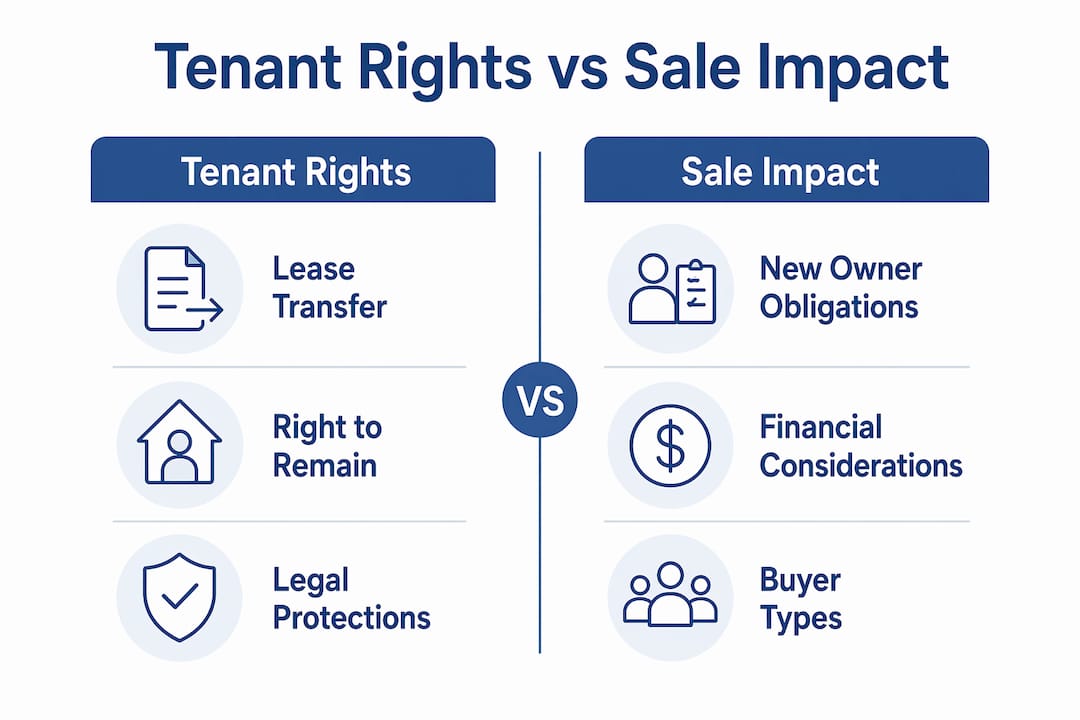
Showings require careful handling. Landlords must provide 24 to 48 hours' notice before entering a tenant-occupied property, and state laws vary on the exact requirement. Violating quiet enjoyment rights during the sale process creates legal exposure and can damage the tenant relationship you need to keep intact.
Follow these steps to manage the legal side of a tenant-occupied sale cleanly:
- Review the lease in full. Identify the expiration date, any early termination clauses, and rent control provisions before listing.
- Notify your tenant in writing. Inform them of your intent to sell and explain what the process will look like for them.
- Schedule showings with proper notice. Always give the legally required advance notice and honor any agreed-upon showing windows.
- Transfer the security deposit. Most states require the security deposit to transfer to the new owner at closing, with written notice to the tenant.
- Document all communications. Keep records of every interaction with your tenant during the sale to protect yourself legally.
Pro Tip: Consult a local real estate attorney before listing a tenant-occupied property. State-specific habitability standards and notice requirements vary widely, and a single misstep can delay or derail your closing.
What impact does selling with tenants have on value and buyers?
The occupied status of a property directly affects both its price and the type of buyer willing to purchase it. Tenant-occupied properties typically sell at a 25–40% discount compared to vacant homes. That gap exists because the buyer pool shrinks and the path to possession is longer.
Owner-occupant buyers generally require vacant possession due to financing requirements and personal move-in timelines. A conventional mortgage lender often requires the property to be vacant at closing if the buyer intends to live there. This effectively removes the largest segment of the traditional buyer market from consideration.
Investor buyers fill that gap, but they evaluate occupied properties differently. Investors factor in lease terms, rent payment history, and any rent control restrictions when pricing an offer. A tenant paying below-market rent or carrying arrears reduces the property's income value and lowers what an investor will pay.
| Buyer type | Financing approach | Possession requirement | View of tenants |
|---|---|---|---|
| Owner-occupant | Conventional or FHA mortgage | Vacant at closing | Deterrent |
| Individual investor | Conventional or portfolio loan | Flexible | Neutral to positive |
| Cash investor | No financing required | Flexible | Positive if rent is current |
| Institutional buyer | Portfolio or private financing | Flexible | Positive with strong lease |
Properties sold with tenants command prices influenced by lease length, rent level relative to market, and tenant reliability. A long-term tenant paying market rent with a clean payment history is a genuine selling point. A tenant in arrears or on a below-market lease from five years ago is a liability that buyers will price accordingly.
What strategies help landlords sell occupied properties effectively?
The most effective landlord selling strategies for occupied properties start with targeting the right buyers from the beginning. Listing on the open market attracts mostly owner-occupants, which is the wrong audience for a tenant-occupied home. Selling off-market to investor networks reduces tenant disruption and keeps the transaction discreet, which protects your relationship with the tenant through closing.
Tenant cooperation is not optional. It is the single biggest variable in how smoothly the sale goes. Clear communication and proper notice reduce conflicts and legal risk throughout the process. Landlords who treat tenants as partners in the transaction close faster and with fewer complications than those who treat tenants as obstacles.
- Target investor buyers first. Use off-market channels, local investor groups, and cash buyer networks before going to the open market.
- Communicate early and honestly. Tell your tenant what is happening, what their rights are, and what the timeline looks like. Surprises create resistance.
- Schedule showings strategically. Cluster showings into a few agreed-upon windows rather than requesting access repeatedly throughout the week.
- Consider a cash for keys agreement. Cash for keys is a negotiated buyout where you offer the tenant a financial incentive to vacate early. This gives you vacant possession without eviction and is faster and cheaper than a court process.
- Prepare full documentation. Gather the lease, rent payment history, security deposit records, and any maintenance logs before buyer conversations begin.
- Consider a cash sale. A cash sale avoids repair delays and eliminates the financing contingencies that slow traditional closings.
Pro Tip: A cash for keys agreement should always be in writing and signed by both parties. Verbal agreements create disputes. A simple one-page document stating the payment amount, vacate date, and lease termination is enough to protect both sides.
Key Takeaways
Landlords sell tenant-occupied homes primarily to preserve cash flow, avoid carrying costs, and exit before regulatory changes increase their obligations, while the sale legally transfers the existing lease to the new owner.
| Point | Details |
|---|---|
| Lease transfers automatically | The new owner inherits all lease terms and tenant rights upon closing. |
| Occupied homes sell at a discount | Expect a 25–40% price reduction compared to vacant properties due to a smaller buyer pool. |
| Investor buyers are the target market | Cash and portfolio investors value immediate rental income and accept occupied status. |
| Tenant communication is critical | Clear, early communication reduces legal risk and keeps the sale on track. |
| Cash for keys speeds up vacancy | A negotiated buyout is faster and cheaper than eviction when vacant possession is needed. |
What I've learned from watching landlords navigate occupied sales
Most landlords I talk to underestimate how much the tenant relationship shapes the outcome of a sale. They focus on price, timing, and buyer type, which all matter. But the tenant is the variable that can make or break a closing on a practical level.
The landlords who close quickly and cleanly are the ones who treat the tenant like a stakeholder from day one. They explain the situation honestly, give proper notice, and sometimes offer a small goodwill gesture, like covering moving costs or giving a rent credit, to keep things cooperative. That approach costs very little and pays off significantly in smoother showings and fewer last-minute complications.
The trade-off between speed and price is real, and most landlords get it backwards. They hold out for a higher price by waiting for the lease to expire, then spend months covering carrying costs that eat into the margin they were protecting. Selling occupied, at a modest discount, often nets more after carrying costs are factored in.
My honest advice is to get a local real estate attorney involved early, target cash investors from the start, and reduce landlord stress by keeping the process as simple as possible. The landlords who try to manage every detail themselves while also managing a tenant relationship usually end up exhausted and underselling anyway.
— Abel
How SLO Cash Buyer - San Luis Obispo County Home buyer helps landlords with occupied properties
Selling a tenant-occupied property does not have to mean months of showings, financing delays, or difficult conversations with buyers who want vacant possession.

SLO Cash Buyer - San Luis Obispo County Home buyer purchases homes in any condition, including properties with tenants in place, for cash in San Luis Obispo County. There are no repairs required, no agent commissions, and no financing contingencies that can fall through at the last minute. You choose the closing timeline, which means you can coordinate the sale around your lease and your tenant's situation. If you are ready to exit your rental property without the usual headaches, get a cash offer from SLO Cash Buyer - San Luis Obispo County Home buyer and see what a straightforward sale looks like.
FAQ
Can a landlord sell a property while a tenant is still living there?
Yes. A landlord can sell a tenant-occupied property at any time. The existing lease transfers to the new owner, who must honor all terms until the lease expires or is legally terminated.
Does selling a rental property affect the tenant's right to stay?
The tenant's right to remain is protected until the lease ends. The sale itself does not terminate the lease or change the tenant's legal rights under the original agreement.
How much less does a tenant-occupied home sell for?
Tenant-occupied properties typically sell for 25–40% less than comparable vacant homes, primarily because owner-occupant buyers are excluded and investor buyers price in lease and tenant risk.
What is a cash for keys agreement?
Cash for keys is a voluntary arrangement where the landlord pays the tenant a negotiated sum to vacate the property before the lease expires. It avoids eviction and gives the landlord vacant possession faster.
Do landlords have to tell tenants they are selling the property?
Most states require landlords to provide written notice of a sale and to give proper advance notice before showings. Specific requirements vary by state, so reviewing local law before listing is the right first step.