The implied warranty of habitability is defined as a legal doctrine requiring landlords to maintain residential rental properties in a safe, sanitary, and livable condition throughout the entire lease term. This standard is recognized in virtually every U.S. state except Arkansas, making it one of the most universal tenant protections in American housing law. It covers essential services like heat, water, electricity, structural integrity, and protection from health hazards. Whether you are a landlord trying to stay compliant, a tenant dealing with unsafe conditions, or a real estate professional advising clients, understanding what is habitability standard real estate means in practice is not optional. It is a legal obligation with real financial and legal consequences.
What is habitability standard real estate law actually requiring?
The implied warranty of habitability sets a floor, not a ceiling. It defines the minimum conditions a rental property must meet to be legally occupable. Courts across the country have consistently held that this standard exists regardless of what a lease says.
The warranty applies exclusively to residential leases. Commercial properties are governed by the terms of the lease contract itself, with no implied warranty protecting tenants. Residential tenants, by contrast, receive baseline protections that cannot be negotiated away.
The core legal principle is straightforward: a landlord who rents a home implicitly promises it will remain fit to live in. That promise does not expire at move-in. The duty is continuous, meaning landlords must maintain habitability throughout the lease, not just hand over a working property on day one.

What conditions must landlords maintain for compliance?
Property habitability standards cover several distinct categories. Each one carries specific obligations that landlords must meet under local housing codes and state law.
| Category | Required Condition |
|---|---|
| Structural integrity | Roof, walls, floors, windows, and doors must be sound and weatherproof |
| Essential services | Working plumbing, heating, hot water, and electrical systems |
| Health and safety | Pest control, mold prevention, functioning smoke detectors, and sanitation |
| Local code compliance | Meeting all applicable municipal housing and building codes |
| Garbage and sanitation | Adequate trash disposal facilities and clean common areas |
Habitability standards require compliance with local codes and cover conditions beyond what a lease might specify, including smoke detectors, garbage disposal, and pest management. These conditions form a baseline that landlords must meet or exceed, not a suggestion.
One detail many landlords miss: habitability does not require luxury. A working heater that keeps a unit at a safe temperature meets the standard. A broken heater in January does not, regardless of the age of the building or the rent amount. The law draws a clear line between livable and merely imperfect.
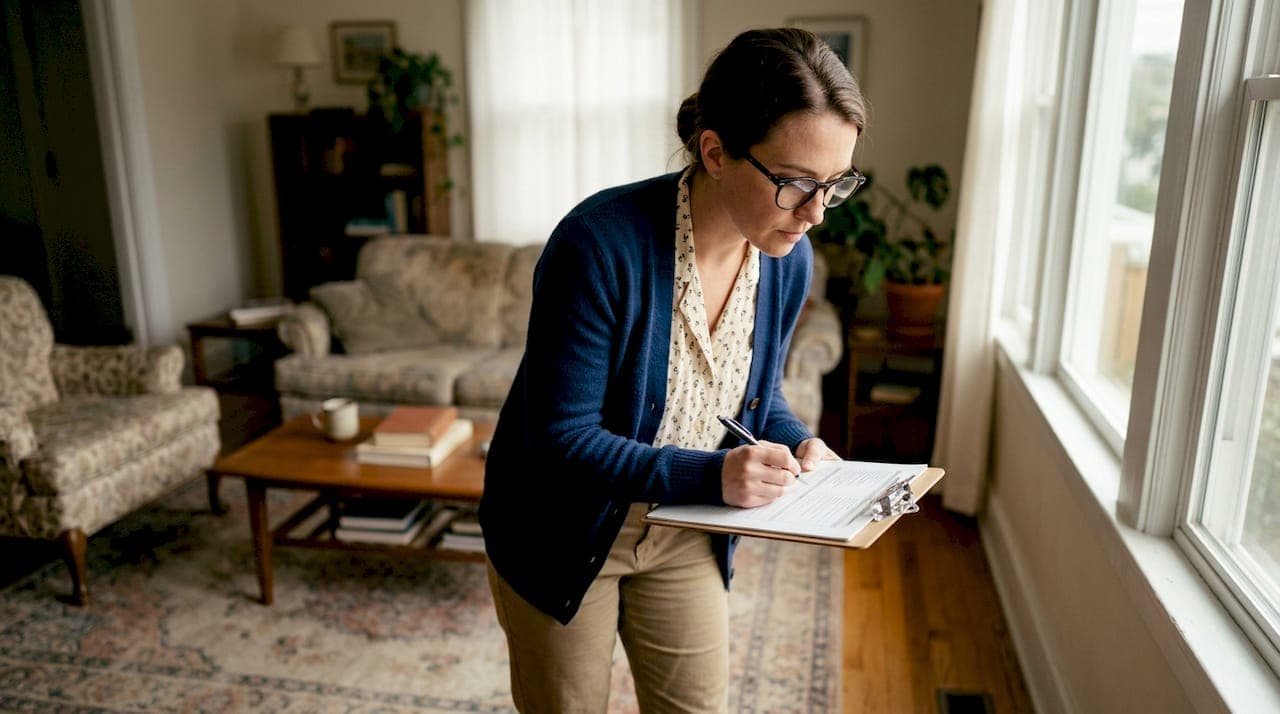
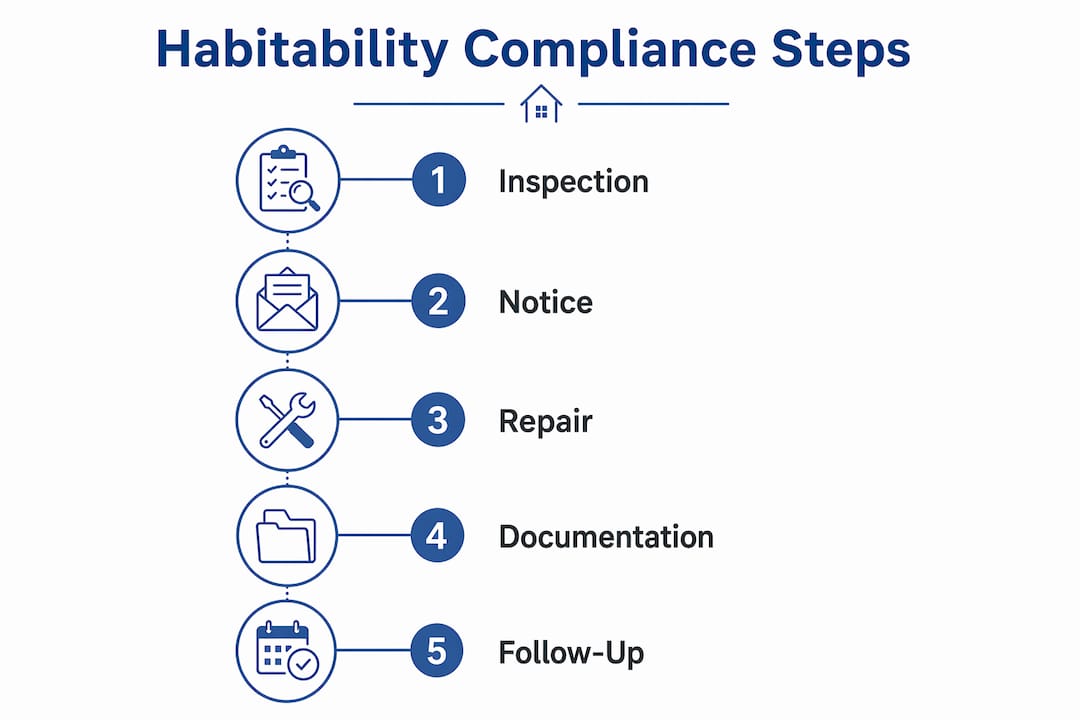
Pro Tip: Conduct a written inspection of every unit at least twice a year and document the results. This creates a paper trail that protects you if a tenant later claims a condition was pre-existing.
What are landlord obligations and tenant remedies under habitability laws?
Landlords carry a clear repair duty once they receive notice of a habitability problem. Repair response times depend on urgency: emergencies require immediate or next-day fixes, while non-emergencies generally must be resolved within 7 to 14 days. Ignoring repair requests does not make the obligation disappear. It escalates the landlord's legal exposure significantly.
When landlords fail to act, tenants have several legal remedies available:
- Rent withholding: Tenants stop paying rent until repairs are made. Not all states authorize this explicitly, and improper withholding risks eviction, so tenants must follow strict state protocols.
- Repair and deduct: Tenants hire a contractor, pay for the repair, and deduct the cost from rent. Most states cap the deductible amount.
- Rent reduction: A court or housing authority reduces rent to reflect the diminished value of the unit.
- Lease termination: Tenants can vacate and end the lease without penalty if conditions are severe enough.
Before exercising any remedy, tenants must typically provide written notice and allow a waiting period. Written notice and waiting periods of around 10 days are commonly required before tenants can act unilaterally. Skipping this step can invalidate the remedy entirely.
One legal nuance worth knowing: lease clauses that waive habitability protections are unenforceable. Courts routinely invalidate "as is" clauses and provisions that shift all repair responsibility to tenants. The warranty exists as a matter of public policy, and private contracts cannot override it.
Pro Tip: If you are a landlord, respond to every repair request in writing, even if the fix is minor. A documented response showing prompt action is your strongest defense against a habitability claim.
What common habitability issues trigger repair obligations?
Common habitability issues include broken heating systems in winter, sewage backups, roof leaks causing interior damage, severe mold growth, and pest infestations. Each of these conditions makes a rental unit legally uninhabitable and triggers the landlord's repair obligation immediately.
The following conditions consistently qualify as habitability violations:
- A heating system that fails during cold months, leaving the unit below safe temperature thresholds
- Sewage backups or plumbing failures that create unsanitary conditions
- Roof leaks that cause water intrusion, interior damage, or mold growth
- Active pest infestations, including rodents or cockroaches, that the landlord has not addressed
- Unsafe electrical wiring that creates a fire or shock hazard
- Structural defects that make floors, ceilings, or walls unsafe
Cosmetic issues do not qualify. Peeling paint in a non-lead context, worn carpet, or an outdated kitchen do not breach real estate habitability requirements. The standard targets conditions that threaten health or safety, not aesthetic shortcomings.
Tenant-caused damage is also excluded. If tenants cause damage through willful or negligent conduct, the warranty does not apply to those specific issues. A landlord can successfully defend against a habitability claim by demonstrating that the tenant's own actions caused the problem. Landlords should document the unit's condition at move-in precisely for this reason. These habitability problems can also affect a property's sale negotiation position significantly if you ever decide to sell.
How can landlords and tenants prevent habitability disputes?
Proactive management is the most effective way to avoid habitability conflicts. Reactive repairs after a tenant complaint are more expensive, more stressful, and legally riskier than catching problems early. Here is a practical framework for both parties.
-
Schedule regular inspections. Landlords should inspect each unit at least twice per year with proper notice. Catching a small roof leak before it becomes a mold problem saves thousands of dollars and avoids legal exposure.
-
Create a written repair request system. Require tenants to submit maintenance requests in writing, even by email or text. This creates a timestamped record that protects both parties.
-
Know your state's specific timelines. Repair deadlines vary by state and by the severity of the issue. Research your local requirements or consult a real estate attorney to confirm what applies to your properties.
-
Clarify tenant responsibilities upfront. Tenants have a duty to keep the unit reasonably clean and to avoid causing damage. Spell this out clearly in the lease and at move-in orientation.
-
Act immediately on emergencies. A heating failure in winter or a sewage backup requires same-day or next-day action. Delayed response on emergencies is the fastest path to a tenant exercising legal remedies.
-
Consider your options when repairs become unmanageable. Some landlords reach a point where a property's repair needs exceed what they can reasonably handle. In those cases, disclosing the property's condition and exploring a cash sale to avoid repairs is a legitimate exit strategy that avoids ongoing legal risk.
Pro Tip: Keep a dedicated maintenance log for each property. Record the date of every repair request, your response, and the completion date. This single habit prevents most landlord-tenant disputes from escalating.
Key Takeaways
The implied warranty of habitability is a non-waivable legal duty requiring landlords to maintain safe, sanitary, and structurally sound residential properties throughout every lease term.
| Point | Details |
|---|---|
| Universal legal standard | The implied warranty applies in nearly every U.S. state and cannot be removed by lease clauses. |
| Core maintenance categories | Landlords must maintain structure, plumbing, heating, electricity, and health and safety systems. |
| Repair response timelines | Emergencies require same-day or next-day fixes; non-emergencies must be resolved within 7 to 14 days. |
| Tenant remedies require notice | Tenants must provide written notice and wait the required period before withholding rent or terminating a lease. |
| Proactive management prevents disputes | Regular inspections and documented communication reduce legal risk for landlords significantly. |
What habitability law taught me after years in real estate
Working with homeowners and landlords in San Luis Obispo County, I have seen the same pattern repeat itself. A landlord buys a rental property with good intentions, handles the first few repairs promptly, and then gradually falls behind. A broken window becomes a delayed fix. A slow drain becomes a sewage backup. Before long, the landlord is facing a tenant complaint, a housing code inspection, or worse, a lawsuit.
The public policy behind habitability law is sound. Housing markets have a real power imbalance. Tenants often cannot afford to walk away from a unit, even when conditions deteriorate. The law steps in to protect them because the market alone will not.
What I find most landlords misunderstand is that habitability is not a checklist you complete at move-in. It is an ongoing operational responsibility. The landlords who handle it best treat their properties the way a business owner treats a piece of equipment: scheduled maintenance, documented service records, and fast response when something breaks.
The other common mistake I see is tenants who do not document anything. A verbal complaint to a landlord is nearly impossible to prove in court. A text message, an email, or a written repair request creates a record that protects the tenant's legal rights and often motivates faster landlord action.
The trend in 2026 is toward stricter local enforcement of housing codes, particularly around mold, air quality, and energy systems. Landlords who are not already treating habitability as a continuous priority will find themselves under increasing pressure from both tenants and local regulators. The landlords who transition proactively rather than reactively are the ones who avoid the most costly outcomes.
— Abel
When repairs become too much: SLO Cash Buyer can help
Some landlords reach a point where the cost of bringing a property up to habitability standards simply does not make financial sense. Deferred maintenance, aging systems, and mounting repair bills can make continued ownership more burden than benefit.

SLO Cash Buyer - San Luis Obispo County Home buyer purchases homes in any condition for cash in San Luis Obispo County. No repairs required, no agent fees, and no lengthy negotiations. If you are a landlord dealing with habitability issues that feel too costly or complicated to resolve, you can get a fair cash offer and close on your timeline. The process is straightforward, transparent, and designed to give you relief fast. Reach out to SLO Cash Buyer - San Luis Obispo County Home buyer to learn what your property is worth today.
FAQ
What is the implied warranty of habitability?
The implied warranty of habitability is a legal doctrine requiring landlords to keep residential rental properties safe, sanitary, and fit for habitation throughout the lease. It is recognized in nearly every U.S. state and cannot be waived by lease clauses.
What are the most common habitability violations?
The most common violations include broken heating systems in winter, sewage backups, roof leaks, severe mold growth, pest infestations, and unsafe electrical systems. These conditions make a unit legally uninhabitable and trigger the landlord's repair obligation immediately.
Can a lease clause remove habitability protections?
No. Courts routinely strike down lease clauses that waive habitability rights or shift all repair responsibility to tenants. The warranty exists as a matter of public policy and overrides private contract terms.
What can a tenant do if a landlord ignores repairs?
Tenants can withhold rent, use repair-and-deduct, seek rent reduction, or terminate the lease, but they must first provide written notice and allow the required waiting period. Improper use of these remedies can result in eviction, so following state-specific procedures is critical.
Does habitability law apply to commercial properties?
No. The implied warranty of habitability applies only to residential leases. Commercial tenants must negotiate maintenance and repair obligations directly in their lease contracts, with no implied legal protections.