
An estate attorney is the legal professional who establishes your authority to sell estate property, clears title defects, and keeps the transaction compliant with probate law. The role of estate attorney in a property sale goes far beyond signing documents. Estate attorneys secure court-issued authority documents, resolve liens and encumbrances, coordinate with title companies, and guide personal representatives through state-specific probate requirements. Whether you are selling an inherited home, managing a foreclosure during probate, or relocating after a loved one's passing, understanding what an estate attorney actually does protects you from costly delays and legal liability.
What legal authority does an estate attorney provide to sell estate property?
Legal authority to sell estate property does not transfer automatically at death. An estate attorney obtains the court-issued documents that give a personal representative the legal right to act on behalf of the estate.
The two most critical documents are Letters Testamentary and Letters of Administration. Letters Testamentary are issued when the deceased left a valid will. Letters of Administration are issued when there is no will. Both documents authorize the executor or administrator to sign contracts, negotiate with buyers, and transfer title. Without them, any contract signed creates a clouded title that title insurers and buyers will reject outright.
State law determines whether a personal representative can sell independently or must seek court approval for each transaction. Some states allow independent administration, which lets the executor sell without returning to court for every step. Other states require supervised probate, where a judge must approve the sale price, terms, and buyer. Your estate attorney knows which rules apply in your jurisdiction and files the correct petitions to keep the process moving.
Independent administration can cut months off the sale process and reduce legal costs significantly. That time savings matters when you are managing mortgage payments, property taxes, or a pending foreclosure on the estate.
Key risks of selling without proper legal authority:
- Title insurers refuse to issue a policy, blocking most buyers from financing the purchase.
- The sale can be voided after closing, exposing the executor to personal liability.
- Heirs who were not properly notified can challenge the sale in court.
- Creditors of the estate may have superior claims that invalidate the transfer.
Pro Tip: Request certified copies of Letters Testamentary or Letters of Administration as soon as probate opens. Most title companies and real estate agents require them before they will list or market the property.
How does an estate attorney handle title and legal issues in estate property sales?
Title defects are the most common reason estate property sales stall or fall apart. An estate attorney identifies and resolves these defects before they reach the closing table.
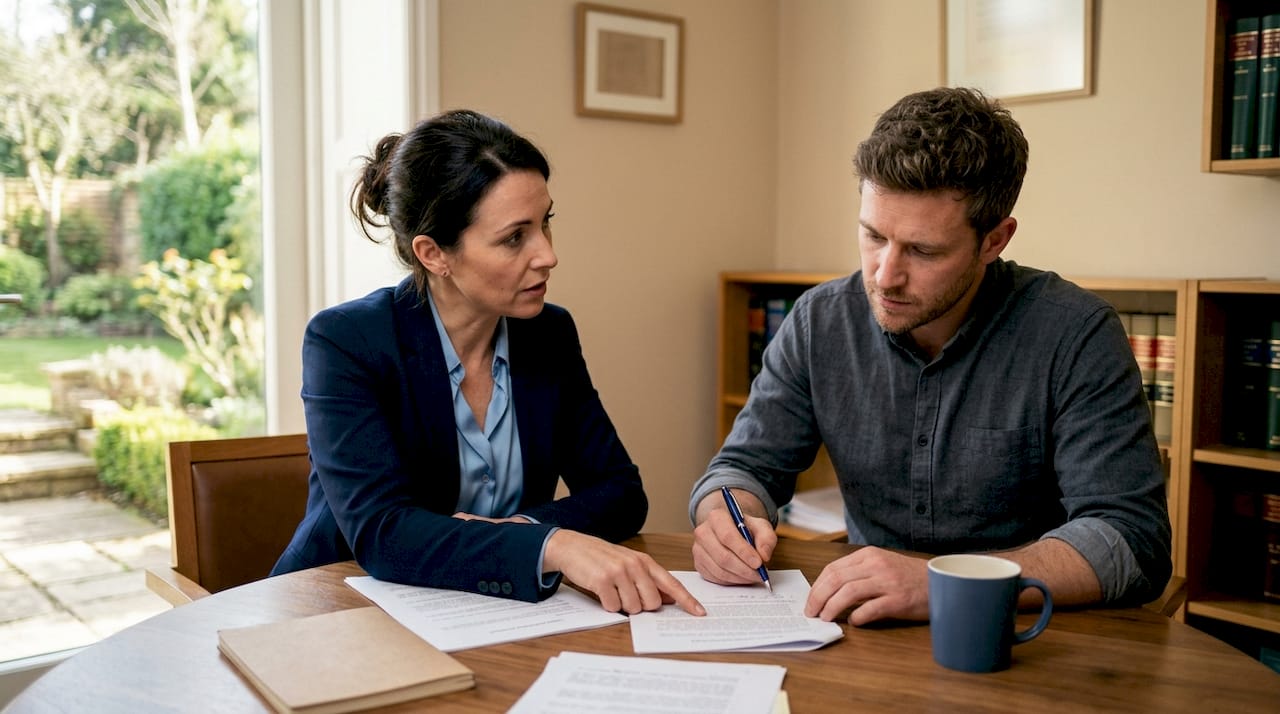
Preliminary title reports reveal hidden liens, ancient mortgages, judgment liens, and boundary disputes early in the process. Getting this report ordered immediately after probate opens is one of the highest-value steps an estate attorney takes. A defect discovered two weeks before closing can delay the sale by months. The same defect found at the start of probate can be resolved quietly while the property is being prepared for sale.
Common title defects in estate sales include:
- Unreleased mortgages: Loans paid off years ago but never formally discharged from the public record.
- Judgment liens: Creditors who obtained court judgments against the deceased and recorded them against the property.
- Mechanic's liens: Contractors who performed work but were never paid.
- Boundary disputes: Encroachments or easements that were never formally resolved.
- Heir claims: Relatives who believe they have an ownership interest not reflected in the title.
Title defects like liens and mortgage releases must be resolved before title can be insured. Delays caused by unresolved defects can stretch from weeks to months, depending on the complexity of the issue and the responsiveness of creditors.
Pro Tip: Ask your estate attorney to order the preliminary title report on day one of probate, not after you accept an offer. Early detection gives you time to negotiate payoffs, file releases, and clear the record without pressure.
| Title defect | Resolution method | Who handles it |
|---|---|---|
| Unreleased mortgage | Obtain payoff and record satisfaction | Estate attorney with lender |
| Judgment lien | Negotiate payoff or challenge validity | Estate attorney |
| Mechanic's lien | Pay contractor or dispute in court | Estate attorney |
| Boundary dispute | Survey and recorded agreement | Estate attorney with surveyor |
| Heir claim | Probate court determination | Probate attorney |
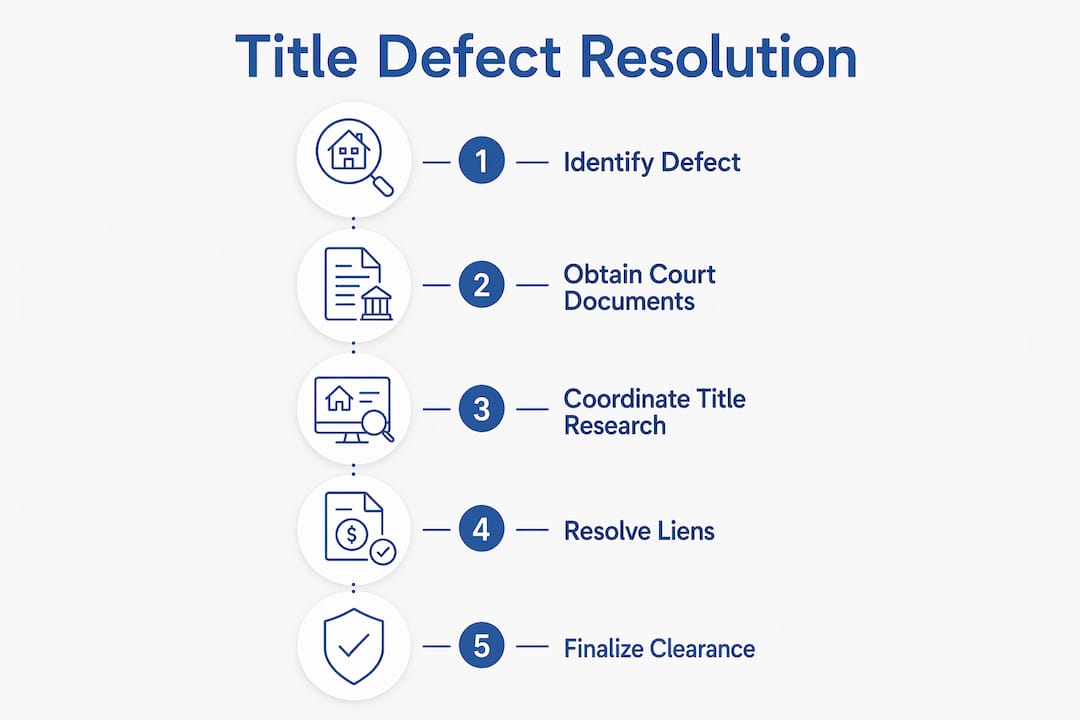
Coordination between the estate attorney and title companies reduces delay risk and prevents legal pitfalls that can derail a sale at the last moment.
What is the difference between probate attorneys and real estate attorneys in estate sales?
Probate attorneys and real estate attorneys serve distinct but complementary roles. Mixing these roles without clarity causes fatal closing defects because neither attorney covers the other's responsibilities by default.
A probate attorney handles fiduciary authority, court filings, creditor notifications, and heir distributions. This attorney ensures the personal representative acts within the law and that the estate is administered correctly. A real estate attorney focuses on purchase contracts, disclosure requirements, closing mechanics, and document review. This attorney protects the seller's interests in the transaction itself.
| Role | Probate attorney | Real estate attorney |
|---|---|---|
| Primary focus | Court authority and estate administration | Contracts and closing documents |
| Key documents | Letters Testamentary, court petitions | Purchase agreements, deeds, closing statements |
| Coordinates with | Probate court, heirs, creditors | Title company, buyer's agent, lender |
| When needed | From probate opening through distribution | From listing through closing |
Some attorneys hold expertise in both probate and real estate law and can handle the full process. This is common in smaller markets or straightforward estates. In complex sales involving multiple heirs, disputed wills, or significant liens, hiring two specialists and having them coordinate directly produces better results. The key is making sure both attorneys communicate openly and that no task falls through the gap between their responsibilities.
How do estate attorneys navigate foreclosure, multi-heir sales, and multi-state issues?
Estate property sales become significantly more complex when foreclosure, disagreements among heirs, or out-of-state property are involved. An estate attorney provides legal tools that individual heirs cannot access on their own.
-
Foreclosure during probate. When a mortgage is in default at the time of death, the lender can continue foreclosure proceedings against the estate. Estate attorneys can petition probate courts to delay foreclosure sales and negotiate liens, offering executors protections not available to individual heirs alone. The court can issue injunctions or grant extensions that preserve the estate's equity while a sale is arranged. A cash sale that stops foreclosure before auction is often the fastest way to protect that equity once the attorney secures the legal window.
-
Multi-heir disagreements. When multiple heirs inherit a property jointly, any one heir can block a sale by refusing to sign. An estate attorney can petition the probate court for a partition action, which forces the sale of the property and distributes proceeds according to each heir's share. This legal remedy prevents one heir from holding the estate hostage indefinitely.
-
Ancillary probate for out-of-state property. If the deceased owned real estate in a state different from their primary residence, a separate probate proceeding called ancillary probate must be opened in that state. The estate attorney coordinates with local counsel in the second state to obtain authority there and comply with that jurisdiction's specific rules.
-
Jurisdictional compliance. Each state sets its own timelines for creditor claims, notice requirements, and sale approval processes. An estate attorney tracks these deadlines and files the correct documents in the correct courts. Missing a statutory deadline can restart the clock or expose the executor to personal liability.
-
Tax considerations. Estate attorneys work alongside accountants to address estate tax obligations and capital gains implications before the sale closes. Selling without understanding the tax consequences can reduce the net proceeds to heirs significantly.
What should sellers know about hiring and working with an estate attorney?
Choosing the right estate attorney is one of the most consequential decisions you make during an estate property sale. The wrong choice costs time, money, and peace of mind.
Estate attorney rates in 2026 generally range from $200 to $400 per hour, or flat closing fees depending on complexity and state regulations. Flat fees work well for straightforward estates with clean titles. Hourly billing is more common when title defects, heir disputes, or court petitions are involved. Always ask for a written fee agreement before work begins.
Key questions to ask when vetting an estate attorney:
- How many estate property sales have you handled in this county or state?
- Do you handle both probate and real estate law, or will I need a separate real estate attorney?
- How do you communicate with title companies and real estate agents during the sale?
- What is your typical timeline from probate opening to closing?
- How do you handle disputes among heirs or creditors who contest claims?
Executors benefit significantly from experienced probate attorneys because local courts enforce rigid rules whose mishandling causes costly delays or personal liability. Local experience is not a bonus. It is a requirement.
Pro Tip: Ask your estate attorney to introduce themselves directly to your title company and real estate broker at the start of the process. A single introductory call between all three parties prevents miscommunication and keeps everyone working from the same timeline.
Working with a real estate broker who has probate sale experience adds another layer of protection. Brokers with probate experience understand unique sales constraints and can manage multiple heirs and court timelines. They know not to list the property before authority documents are in hand, and they understand that court-confirmed sales follow different rules than standard transactions.
Key Takeaways
An estate attorney is the single most important professional in an estate property sale because no other team member can establish legal authority, clear title defects, or navigate probate court on your behalf.
| Point | Details |
|---|---|
| Legal authority comes first | Obtain Letters Testamentary or Letters of Administration before listing or signing any contract. |
| Title defects need early action | Order a preliminary title report at probate opening to resolve liens before closing pressure builds. |
| Probate and real estate roles differ | Confirm which attorney covers court filings and which covers contracts to avoid gaps in coverage. |
| Complex sales need specialized help | Foreclosure, multi-heir disputes, and out-of-state property each require specific legal tools only an attorney can access. |
| Local experience matters | Choose an attorney with direct experience in your county's probate court to avoid costly procedural errors. |
Why I think most sellers underestimate the estate attorney's role
People often treat the estate attorney as a document processor. They assume the attorney shows up at closing, signs a few papers, and sends a bill. That is not what actually happens in a well-run estate sale.
The estate attorney is the person who makes the sale legally possible in the first place. Without proper authority documents, no title company will insure the transaction. Without early title work, defects surface at the worst possible moment. Without court coordination, a single heir or creditor can freeze the entire process.
What I have seen repeatedly is that sellers who involve their estate attorney early, before listing, before accepting offers, and before negotiating with creditors, close faster and with fewer surprises. The attorneys who do this work well are not passive. They are proactive. They call the title company. They flag the lien before it becomes a crisis. They tell the executor exactly what the court needs and when.
The sellers who struggle are the ones who treat legal help as a last resort. They list the property, accept an offer, and then discover a $40,000 judgment lien two weeks before closing. At that point, the buyer is frustrated, the agent is nervous, and the attorney is working under pressure that could have been avoided entirely.
Hire your estate attorney before you do anything else. Give them time to do the work properly. The cost of their hourly rate is small compared to the cost of a delayed or failed closing.
— Abel
Selling estate property in San Luis Obispo? SLO Cash Buyer can help
Once your estate attorney has established legal authority and cleared the title, the next step is finding the right buyer. For sellers in San Luis Obispo County, SLO Cash Buyer - San Luis Obispo County Home buyer offers a direct path to closing without repairs, agent commissions, or extended negotiations.

SLO Cash Buyer - San Luis Obispo County Home buyer works directly with executors, administrators, and heirs who need to sell estate property fast after probate clears. There are no hidden fees, no repair requirements, and no waiting on lender approvals. If you are managing an inherited home, dealing with a foreclosure timeline, or simply need to close quickly and move forward, reach out to SLO Cash Buyer - San Luis Obispo County Home buyer for a fair cash offer on your terms.
FAQ
What does an estate attorney do in a property sale?
An estate attorney secures legal authority to sell, resolves title defects, and ensures compliance with probate court requirements. Without this role, no title company will insure the transaction and no buyer can take clear ownership.
Do I need both a probate attorney and a real estate attorney?
Probate and real estate attorneys serve distinct roles. Some attorneys handle both, but complex estates with title disputes or multiple heirs often benefit from two specialists working in coordination.
What are Letters Testamentary and why do they matter?
Letters Testamentary are court-issued documents that authorize an executor to act on behalf of the estate, including signing sale contracts. Selling without them creates a clouded title that buyers and title insurers will reject.
How much does an estate attorney cost for a property sale?
Estate attorney rates in 2026 range from $200 to $400 per hour, with flat fees available for simpler transactions. The total cost depends on state regulations, title complexity, and whether court petitions are required.
Can an estate attorney stop a foreclosure during probate?
Yes. An estate attorney can petition the probate court for an injunction or extension that delays a foreclosure sale, giving the executor time to sell the property and protect the estate's equity.