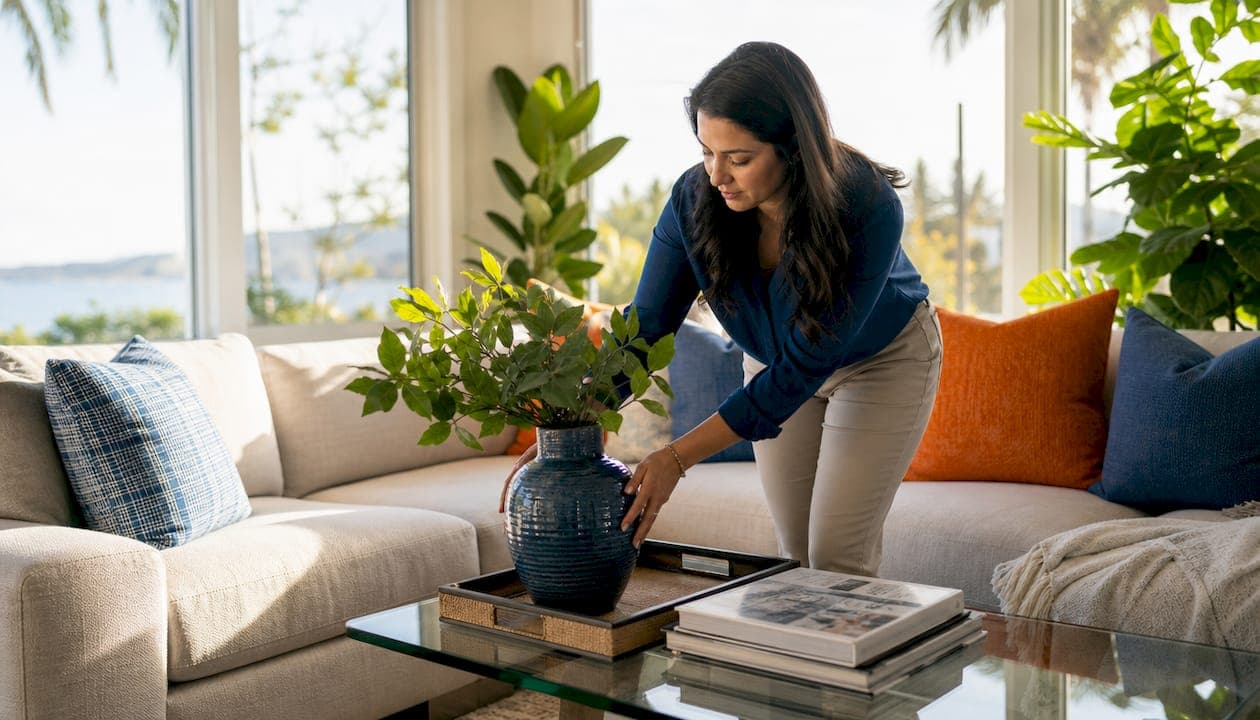
Home staging is defined as the practice of preparing a property for sale by arranging furniture, décor, and lighting to maximize buyer appeal and perceived value. It directly affects sale price because it shapes how buyers feel the moment they walk through the door. Staged homes can increase final sale price by 1% to 10%, with 75% of sellers seeing returns of 5% to 15% over asking price. That kind of return makes staging one of the highest-yield pre-sale investments available to sellers. Whether you are listing a move-in-ready property in San Luis Obispo or a home that needs some love, understanding why home staging affects sale price gives you a real edge before you list.
What evidence supports the impact of home staging on sale price?
The data on home staging benefits is clear and consistent across multiple industry sources. Professional staging returns an average of $23.34 for every $1 invested, according to Q1 2025 data from the Real Estate Staging Association. That is not a marginal gain. It is one of the strongest returns available in pre-sale preparation.

Price increases tied to staging range from 1% to 10% in most markets. Some competitive markets report final sale prices up to 23% over list price when staging is combined with strong photography and pricing strategy. The difference between a staged and an unstaged home is not just cosmetic. It is financial.
Speed matters too. Staged homes sell 22 to 47 days faster than unstaged homes, and in some cases up to 73% faster. Fewer days on market means lower carrying costs for the seller, including mortgage payments, utilities, and homeowner association fees. A faster sale also signals demand, which keeps buyers from negotiating aggressively.
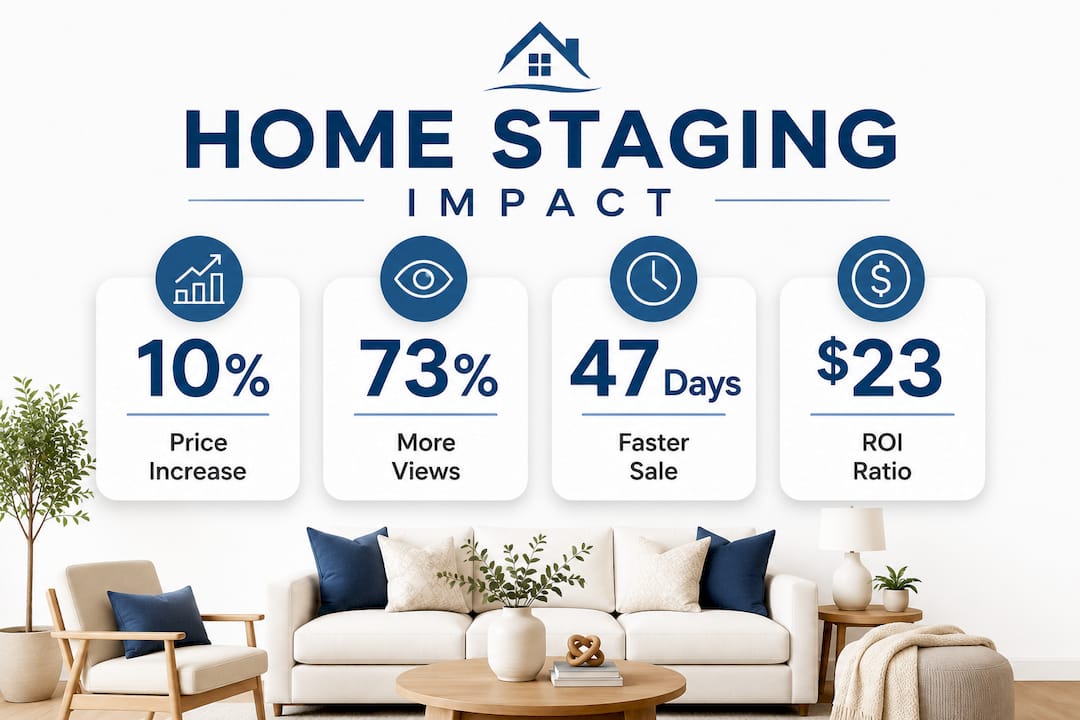
Pre-photography staging generates 73% more online views, leading to more showings and more competitive offers. More eyes on a listing creates urgency. Urgency drives offers up.
| Staging Outcome | Typical Result |
|---|---|
| Sale price increase | 1%–10% above unstaged homes |
| Sellers netting above asking | 75% of staged homes |
| Average ROI on staging investment | $23.34 per $1 spent |
| Reduction in days on market | 22–47 days faster |
| Online views with pre-photo staging | 73% more than unstaged |
How does home staging influence buyer psychology and decision-making?
Buyers decide emotionally first, then justify that decision with logic. Buyers form emotional impressions of a property within 7 seconds, and staging aligns the environment with the lifestyle a buyer wants to live. That first impression anchors every offer they make.
"Buyers decide emotionally first. Staging creates a feeling of rightness that anchors all further rational analysis toward a higher offer. A well-staged room does not just look good. It feels like home before the buyer has said a word."
This is not just intuition. Environmental psychology research confirms that people assign higher value to spaces that feel ordered, warm, and purposeful. A cluttered or empty room forces the buyer to mentally fill in the blanks. That mental effort creates doubt, and doubt kills offers.
Staging reduces the mental effort buyers must expend by clearly defining each room's function through furniture placement and lighting. When a buyer walks into a room and immediately understands how they would use it, they feel confident. Confidence leads to stronger offers.
Staging also removes negotiation obstacles. Distracting personal items, outdated décor, and visible wear shift a buyer's focus from the home's potential to its problems. A well-staged home keeps attention on the space, not the flaws. That shift in focus is worth real money at the closing table.
Pro Tip: Depersonalize before staging. Remove family photos, sports memorabilia, and bold artwork. Buyers need to picture their own life in the space, not yours.
What staging strategies maximize sale price and ROI?
Not every room delivers the same return. Targeted staging of the living room, primary bedroom, kitchen, primary bath, and curb appeal yields the strongest results, netting $5,400 to $14,200 more than unstaged homes in comparable markets. Whole-house staging is not always necessary. Focused investment in high-traffic, high-emotion rooms delivers better returns in many cases.
Here is a practical priority order for sellers working with a limited budget:
- Curb appeal first. The exterior is the first impression in person and in listing photos. Fresh landscaping, a clean driveway, and a painted front door cost little but signal care.
- Living room second. This is where buyers spend the most mental time during a showing. Neutral furniture, good lighting, and clear traffic flow make the space feel larger and more livable.
- Primary bedroom third. Buyers want to feel like this room is a retreat. Clean lines, soft bedding, and minimal furniture accomplish that without major expense.
- Kitchen and bathrooms fourth. These rooms close deals. Clean counters, updated hardware, and fresh towels signal that the home has been maintained.
- Entryway last but not least. The first step inside sets the emotional tone. A clear, welcoming entry primes buyers for a positive showing.
Partial or focused staging on high-ROI rooms often outperforms full-house staging in cost efficiency. For homes under a certain price point, a DIY approach using rented furniture and professional photography can deliver strong results without the full cost of a professional stager.
Timing is the factor most sellers overlook. Staging should be a pre-listing strategy. Staged homes that sit on the market for 30 or more days before staging rarely recover their full pricing power. The listing has already been seen, judged, and passed over. Starting strong is far more effective than trying to recover momentum.
How does staging affect the speed of sale and seller negotiation power?
A faster sale is not just convenient. It is financially significant. Each week a home sits unsold costs approximately 1.2% of its final sale price in carrying costs and lost negotiating leverage. Staging directly reduces that risk by generating early interest and competitive offers.
Here is what faster sales mean in practice for sellers:
- Fewer price reductions. Sellers who skip staging face price cuts 5 to 20 times the cost of staging itself. The typical first price reduction runs 2% to 4% of list price. That is money that staging would have protected.
- Stronger negotiating position. A home with multiple showings in the first week signals demand. Buyers in a competitive situation make stronger offers and fewer contingency requests.
- Lower carrying costs. Every month a home sits on the market adds mortgage interest, utilities, insurance, and HOA fees to the seller's total cost. Staging that cuts 30 days off the sale timeline saves real money.
- Better final sale price. The indirect effect of staging in generating multiple offer scenarios can push the final price above listing through competitive bidding. This is the compounding benefit most sellers do not anticipate.
Sellers who want to avoid prolonged listings should treat staging as the first line of defense, not a last resort. The cost of staging is almost always lower than the cost of a price reduction. Understanding common negotiation mistakes before you list helps you protect your position from day one.
Key Takeaways
Home staging increases sale price by creating emotional buyer engagement, reducing time on market, and generating competitive offers that protect the seller's negotiating position.
| Point | Details |
|---|---|
| Staging boosts sale price | Staged homes typically sell for 1%–10% more, with 75% netting 5%–15% above asking. |
| ROI is measurable | Professional staging returns $23.34 for every $1 spent, per Real Estate Staging Association data. |
| Speed reduces costs | Staged homes sell 22–47 days faster, cutting carrying costs and preserving negotiating power. |
| Target high-impact rooms | Focus on living room, primary bedroom, kitchen, bath, and curb appeal for the best return. |
| Stage before listing | Homes staged after 30+ days on market rarely recover full pricing power. |
Why I think sellers underestimate staging as a marketing tool
Most sellers I talk to think of staging as decoration. They see it as optional, even a little indulgent. That framing costs them money.
Staging is not about making a home pretty. It is about marketing a lifestyle to a specific buyer. Every furniture placement, every lighting choice, every cleared countertop is a message that says, "Your life could look like this." That message is worth thousands of dollars at the closing table.
The sellers who get hurt most are the ones who list first and stage later. By the time they bring in a stager, the listing has already been seen by the most motivated buyers in the market. Those buyers have moved on. The ones still looking are either waiting for a price drop or have already decided the home is not worth full price. You cannot fully undo that first impression.
I have also seen sellers make the mistake of staging the wrong rooms. They spend money on a formal dining room that buyers barely notice and skip the primary bedroom, which is where emotional decisions get made. Knowing where buyers spend their attention is the difference between staging that works and staging that just costs money.
The bottom line is this: treat staging as a line item in your marketing budget, not a home improvement expense. When you frame it that way, the ROI becomes obvious. And if you are selling a home that needs significant work before it can be staged effectively, there are other paths worth knowing about.
— Abel
Selling your San Luis Obispo home without the staging stress
Staging works well when a home is in good condition and you have the time and budget to prepare it properly. Not every seller is in that position. Some homes need repairs that make staging impractical. Some sellers need to close fast without the weeks of preparation that a full staging process requires.

SLO Cash Buyer - San Luis Obispo County Home buyer works with homeowners across San Luis Obispo County who need a straightforward path to a fast sale. There are no repairs required, no cleaning crews to schedule, and no agent commissions to factor in. You get a fair cash offer and a closing timeline that works for you. If you want to sell your house fast without the staging process, reach out to SLO Cash Buyer - San Luis Obispo County Home buyer to get a no-obligation cash offer today.
FAQ
Does home staging actually increase sale price?
Yes. Staged homes sell for 1% to 10% more than unstaged homes, with 75% of staged properties netting 5% to 15% above asking price.
How much does professional staging cost versus the return?
Professional staging returns an average of $23.34 for every $1 spent. The cost varies by market and home size, but the return consistently outpaces the investment.
Which rooms should I stage first for the best ROI?
The living room, primary bedroom, kitchen, primary bath, and curb appeal deliver the highest returns from targeted staging, netting $5,400 to $14,200 more than unstaged homes.
What happens if I skip staging and reduce the price instead?
Sellers who skip staging typically face price cuts 5 to 20 times the cost of staging itself. The first price reduction usually runs 2% to 4% of list price.
Can I sell my home fast without staging it?
Yes. If your home needs significant repairs or you need to close quickly, a cash buyer like SLO Cash Buyer - San Luis Obispo County Home buyer purchases homes in any condition, with no staging or repairs required. You can learn more about quick home sale steps to find the right path for your situation.