
You can sell your house for a fast, all-cash, as-is sale to a vetted property buyer — often within 7–30 days. No repairs, no agent commissions, no waiting on a buyer's mortgage approval. If you're facing foreclosure, dealing with an inherited property, or simply want out of a rental headache, a direct cash buyer can close on your timeline. Before you sign anything, take 24–48 hours to compare multiple offers and verify proof of funds. Ready for an immediate offer? Request a cash offer from SLO Cash Buyer - San Luis Obispo County home buyer today.
Table of Contents
- What types of property buyers will you actually meet?
- How does a cash sale to a property buyer actually work?
- What do you gain — and give up — selling to a cash buyer?
- How do cash buyers calculate what to offer you?
- How do you vet a cash buyer and spot the red flags?
- When should you skip the cash buyer and consider alternatives?
- SLO Cash Buyer is ready to make you a fair cash offer today
- Key Takeaways
- What most sellers get wrong about cash buyers
- Helpful sources for verifying buyers and understanding cash sales
What types of property buyers will you actually meet?
Not every "cash buyer" is the same, and knowing who's making the offer changes how you negotiate.
- Local investor/flipper: Buys to renovate and resell. Offers are typically the lowest because they factor in full repair costs plus a profit margin. Best fit if your home needs significant work and you want speed above all else.
- Rental investor (landlord): Wants a property to hold and rent. May pay slightly more than a flipper if the home is already tenant-occupied and cash-flowing. If you're a landlord selling a rental, this buyer type is worth targeting.
- Wholesaler: Secures a contract below market value, then assigns that contract to another investor for a fee. They are not the end buyer. Their offers are often the furthest below market, and they move fast to lock you in before you realize it.
- iBuyer/instant buyer platform: Algorithm-driven platforms that generate offers online. Faster process, but they typically charge service fees that can rival agent commissions.
- Direct owner-occupant cash buyer: A person buying to live in the home, paying cash from savings or a sale. Offers are closest to market value, but these buyers are rare in as-is transactions.
Pro Tip: Check every purchase agreement for an assignment clause — language that lets the buyer transfer the contract to a third party. If you see it and the end buyer isn't named, you're likely dealing with a wholesaler. Ask directly: "Will you be the one closing on this property, or will you assign this contract?" Their answer tells you everything.
How does a cash sale to a property buyer actually work?
The process is straightforward, but each stage has a decision point worth understanding.
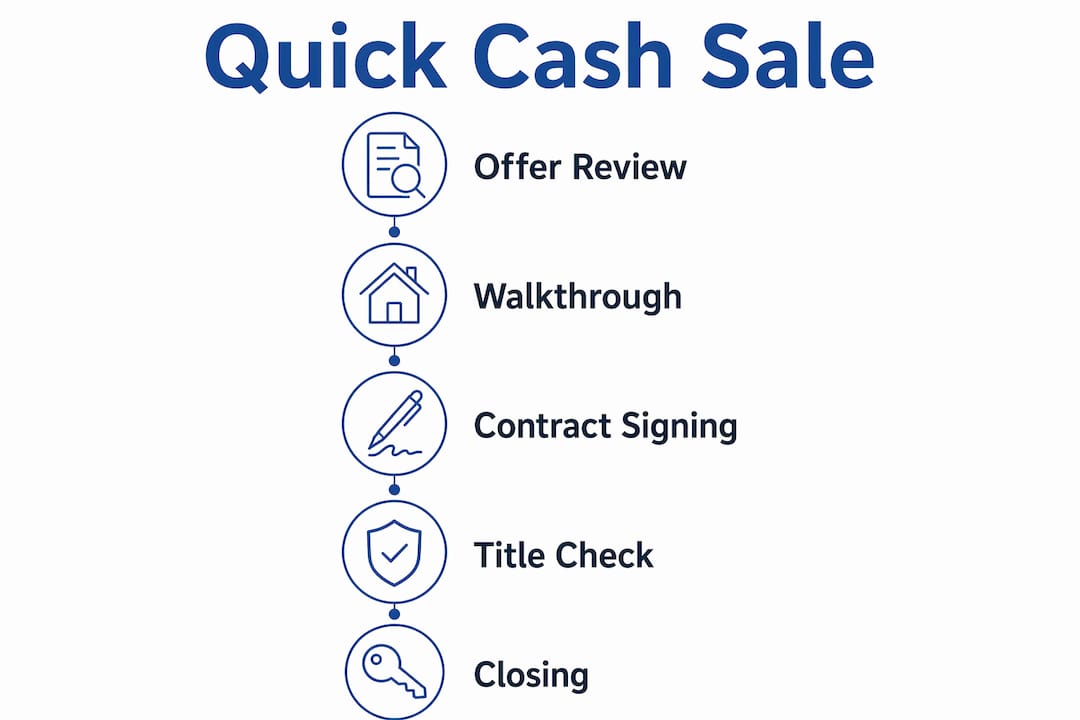
- Request an offer — Contact the buyer with basic property details (address, condition, rough square footage). Most cash buyers respond within 24–72 hours.
- Property review — The buyer visits or does a virtual walkthrough to assess condition. This is where repair estimates get baked into the offer.
- Written cash offer — You receive a written offer with price, terms, contingencies (if any), and a proposed closing date. Read every line before signing.
- Acceptance and escrow — Once you sign, the buyer opens escrow with a title company. A legitimate buyer always uses a licensed title company or real estate attorney.
- Title search and closing — Title is cleared, closing documents are prepared, and you receive your funds. Many cash sales close in 7–30 days from offer acceptance.
For a detailed breakdown of timing at each stage, the quick home sale timeline guide covers common bottlenecks and how to avoid them.
| Stage | Typical Timeframe |
|---|---|
| Initial offer response | 24–72 hours |
| Property walkthrough | 1–3 days after contact |
| Written offer delivered | Same day as walkthrough or within 24 hours |
| Escrow opened | 1–2 days after acceptance |
| Title cleared and close | 7–30 days total from offer |
Contingencies that can slow things down include unresolved title liens, probate delays on inherited properties, and any inspection contingency the buyer insists on. A truly non-contingent offer skips inspection but may price in a larger condition discount.
What do you gain — and give up — selling to a cash buyer?
Cash sales close faster and with far fewer moving parts than a traditional listing. Here's the honest picture:
What you gain:
- Speed: close in days, not months
- Sell as-is: no repairs, no cleaning, no staging
- Certainty: no loan fall-through risk (at the start of 2025, more than 14% of pending home sales were canceled, largely due to financing issues)
- Reduced carrying costs: no mortgage payments, taxes, or insurance piling up during a long listing period
- Flexible closing dates: many cash buyers let you pick the date
What you give up:
- Price: investor sales typically close faster but sellers accept lower offers in exchange for speed and certainty
- Market exposure: you won't know if a higher offer was out there
- Negotiation depth: cash buyers often present take-it-or-leave-it offers with limited back-and-forth
Statistic: ATTOM data shows 38% of U.S. home sales in 2024 were cash transactions, yet many sellers received at least one all-cash offer and still chose a financed buyer — proof that cash isn't always the highest monetary outcome, but it's often the most reliable path when speed matters.
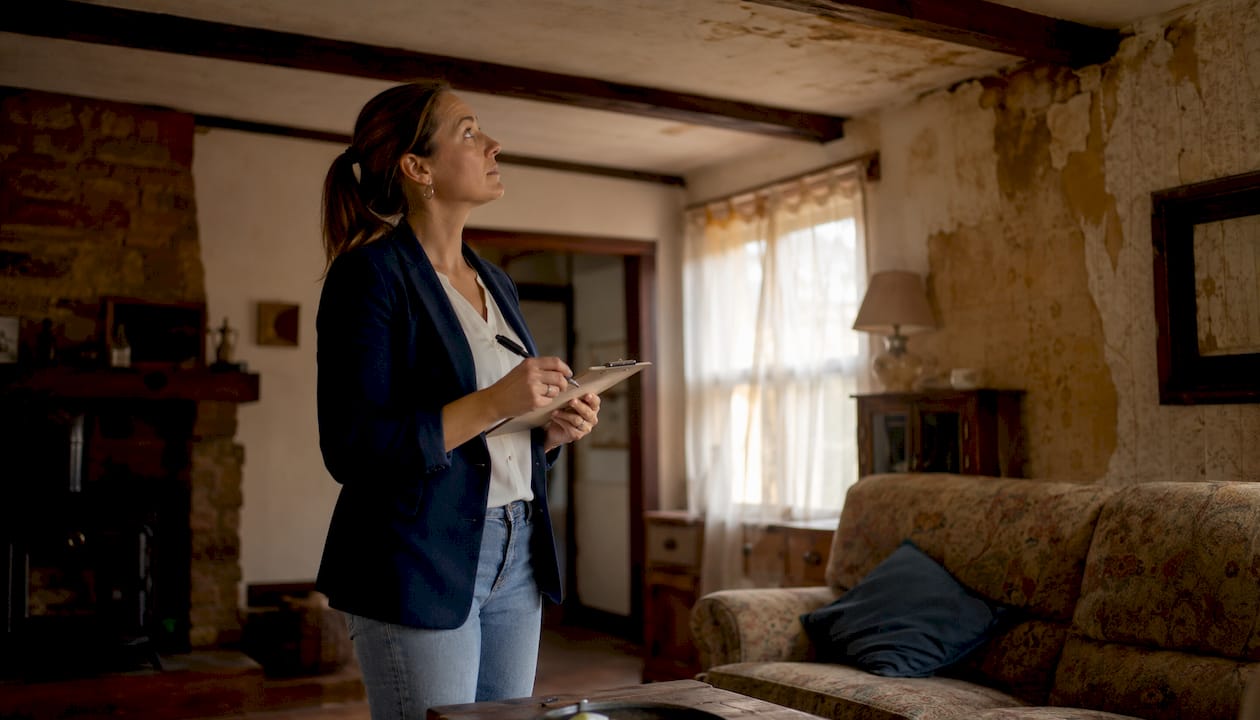
A practical example: if your home needs substantial repairs, a cash buyer will subtract those costs plus their profit margin from the offer, potentially significantly lowering the net amount compared to selling after repairs and agent fees on the open market. The gap is real. Whether it's worth it depends entirely on your situation.
How do cash buyers calculate what to offer you?
Most investors work from a simple formula rooted in after-repair value (ARV). Wholesalers often target offers around a portion of ARV minus repair costs and their fee. Local flippers and direct buyers may offer slightly more, especially in a competitive market.
Example calculation:
- ARV (what the home sells for fully repaired): $350,000
- Estimated repairs: $50,000
- Investor margin (profit + holding costs): $35,000
- Typical cash offer range: around 70% of ARV minus repairs and fees ($175,000 after repairs and profit margin, but actual offers may vary and be higher in competitive local markets).
| Home Condition | Typical Offer vs. ARV |
|---|---|
| Good condition, minor cosmetic work | Often above 85% of ARV |
| Moderate repairs needed | Offers may fall closer to 70–75% of ARV |
| Major repairs or structural issues | Around 70% of ARV, minus full repair costs and buyer fee |
Local market conditions shift these ranges. In a hot seller's market, investors compete harder and offers inch upward. In a slower market, they pull back. San Luis Obispo County's coastal demand tends to keep ARVs strong, which can work in your favor even on a distressed property.
- Ask for the buyer's ARV estimate and repair breakdown in writing.
- Compare at least two or three offers before accepting.
- A gap of more than 15% between two offers on the same property usually signals one buyer is padding their margin.
How do you vet a cash buyer and spot the red flags?
This is where most sellers get hurt. State and federal laws provide limited consumer protections in fast-cash deals, and there is no federal cooling-off period for real estate contracts.
Vetting checklist:
- Request written proof of funds (a bank statement or letter dated within 30 days).
- Ask for the buyer's full legal name, business license, and state of registration.
- Confirm the escrow/title company they use — call that company directly to verify.
- Get every promise in writing: price, closing date, who pays closing costs, and any contingencies.
- Read the assignment clause. If present without a named end buyer, ask who will actually close.
- Take 24–48 hours minimum before signing anything. Legitimate buyers will wait.
Red flags to walk away from:
- Pressure to sign the same day or "lose the offer"
- Requests for any upfront fee before closing
- Verbal-only promises about price or timeline
- No named title company or escrow agent
- Assignment clause with no end-buyer disclosure
- Offer that arrives before any property review
For closing-step details, this purchase checklist covers what to confirm before you sign. If anything in the contract feels unclear, pause and get an independent title company or real estate attorney to review it before you proceed.
When should you skip the cash buyer and consider alternatives?
A cash sale is the right call when speed, condition, or carrying costs make the price discount worth it. But it's not always the best move.
- List with an agent if your home is in good condition and you have 60–90 days. You'll almost certainly net more money.
- For-sale-by-owner (FSBO) cuts commission but still requires time, marketing, and negotiation skill.
- Auction can move fast and attract competitive bids, though outcomes vary by market and property type and auction fees apply.
- iBuyer platforms sometimes beat a local investor's offer on a well-maintained home in a high-demand zip code, but their service fees can erode that advantage.
- Owner financing keeps the property generating income if you don't need a lump sum immediately.
- Short-term repairs then list makes sense when a modest $5,000–$10,000 investment could add $30,000+ to your sale price.
Quick rule of thumb: if your timeline is under 30 days, your home needs major work, or carrying costs are eating into your equity, a cash buyer wins. If you have time and a move-in-ready home, the open market will likely pay more.
SLO Cash Buyer is ready to make you a fair cash offer today
If you're a homeowner in San Luis Obispo County who needs to sell fast, without repairs or agent fees, SLO Cash Buyer - San Luis Obispo County home buyer is the direct, local alternative to a drawn-out listing process.

SLO Cash Buyer - San Luis Obispo County home buyer purchases homes in any condition for cash, with no agent commissions and no hidden fees. Closing costs are covered or negotiated so you walk away with a clear number. Offers are non-contingent and as-is, meaning you don't clean, repair, or stage a thing. The process is transparent from the first call: you'll know the offer, the timeline, and exactly what happens at closing before you sign anything. Whether you're facing foreclosure, dealing with an inherited property, or just ready to move on from a rental, the team is here to help. Request your cash offer directly on the website and get a response within 24–72 hours.
Key Takeaways
Selling to a vetted cash buyer gives you speed and certainty, but comparing multiple offers and verifying proof of funds are the two steps that protect your equity throughout the process.
| Point | Details |
|---|---|
| Cash sales close fast | Most cash transactions close in 7–30 days from offer acceptance, far faster than a traditional listing. |
| Offers reflect condition discounts | Most cash offers from wholesalers and investors are typically around 70% of ARV minus repair costs and their margin; always ask for the buyer's written repair estimate. |
| Vet every buyer carefully | Request proof of funds, a named title company, and written terms before signing anything. |
| Assignment clauses signal wholesalers | If a contract allows assignment without naming the end buyer, ask who will actually close. |
| SLO Cash Buyer serves San Luis Obispo | SLO Cash Buyer - San Luis Obispo County home buyer offers all-cash, as-is purchases with no agent fees and fast local closings. |
What most sellers get wrong about cash buyers
The conventional wisdom says cash buyers are a last resort for desperate sellers. That framing misses something real estate agents rarely say out loud: the open market is not free. Commissions, staging, carrying costs, price reductions after inspection, and the occasional deal falling apart at the finish line all have a dollar value. When you add those up on a distressed or time-sensitive property, the gap between a cash offer and a "higher" listed price often shrinks to almost nothing.
What sellers underestimate is the cost of uncertainty. A financed buyer can walk away three weeks before closing because their lender changed the terms. A cash buyer with verified funds cannot. For a seller facing a foreclosure deadline or an estate that needs to be settled, that certainty is worth real money. The question isn't whether a cash offer is lower. It's whether the difference, after all costs and risks are counted, is actually as large as it looks on paper.
Helpful sources for verifying buyers and understanding cash sales
- ProPublica: State and federal laws do little to protect homeowners — Essential reading on regulatory gaps and title-clouding risks; use this before signing any contract.
- ProPublica: Want to sell your home for cash? Read this first — Practical guide on spotting assignment clauses and pressure tactics; most useful during the vetting stage.
- CNBC: What do "We Buy Houses for Cash" companies do? — Explains the 70% ARV rule and wholesaler business models; helpful for evaluating whether an offer is in a fair range.
- Zillow: Should I accept a cash offer for my house? — Covers seller decision-making and the prevalence of cash offers in recent markets.
- Bankrate: Cash homebuyer companies — Broad overview of national cash-buying platforms and their fee structures; useful for comparing iBuyer options.
- Better Business Bureau (BBB) — Check any cash buyer's complaint history and accreditation status before you engage.
This article is general information, not legal or financial advice. Confirm current rules with a licensed title company, real estate attorney, or your state's consumer protection office before closing.