
Yes, selling to a local cash buyer and closing before the trustee sale can stop a foreclosure before it finalizes. The two things that make or break this plan are a current payoff quote from your servicer and a closing date that lands before the sale. Call your servicer today, then reach out to a local cash buyer like SLO Cash Buyer to see what timeline is realistic for your property.
TL;DR:
- A current payoff quote from your servicer and a closing date before the trustee sale are critical for stopping foreclosure effectively.
- California allows a one- or two-time postponement of the trustee sale if you deliver signed agreements following strict rules, but only a completed closing stops the sale.
- A cash sale typically closes within two weeks if proof of funds and title work are prepared early, making it the fastest solution if value covers the payoff and costs.
- Short sales take longer than cash offers and require lender approval, which might not be feasible given the time constraints before the sale.
- The primary delay in closing a fast cash sale is usually the servicer's delay in providing a payoff statement and the time needed to clear title.
Table of Contents
- What To Do Right Now To Stop Foreclosure In San Luis Obispo
- How Much Time Do You Actually Have In California?
- Will A Cash Sale Cover Your Loan, Or Do You Need A Short Sale?
- How Our Local Cash-Offer Process Stops Foreclosure Fast
- An Honest Local Take On Timing And Trust
- Sources
What To Do Right Now To Stop Foreclosure In San Luis Obispo
Every day matters once a Notice of Default has been filed, but panic doesn't close deals faster. A clear checklist does. Here's the order that protects your options best.
- Call your loan servicer today. Ask for a written payoff quote and the exact dates of your Notice of Default and any scheduled trustee sale. These two numbers anchor every decision you make from here.
- Pull your paperwork together. You'll want your mortgage statement, deed of trust, recent property tax records, and a few current photos of the home. Buyers move faster when they don't have to chase documents.
- Request a no-obligation cash offer. Ask for proof of funds and a realistic closing window in writing, not just a verbal promise over the phone.
- Start title work immediately. An expedited title search identifies liens, judgments, or ownership issues before they become last-minute surprises. Pick an escrow or title company with foreclosure experience.
- If the math looks tight, open a loss-mitigation conversation. Contact your servicer about a repayment plan or forbearance, and consider a HUD-approved housing counselor who can walk you through alternatives at no cost.
Pro Tip: Ask your title company to run a preliminary title report the same day you get a cash offer. Waiting until escrow opens to discover a lien can cost you the one window you had left to close before the sale.
Servicers can often officially begin foreclosure once a borrower falls more than 120 days behind, which is exactly why the counselor conversation and the payoff call belong on the same day, not spread across a week you may not have.
How Much Time Do You Actually Have In California?
California runs a nonjudicial foreclosure process, meaning it moves through recorded notices rather than a courtroom, and it moves faster than many homeowners expect. Understanding the sequence tells you how much runway is left to sell.
- A Notice of Default (NOD) gets recorded once you're significantly behind on payments, opening a minimum waiting period before the process can advance.
- A Notice of Sale (NOS) follows later, setting the actual trustee sale date and starting a countdown that is far shorter than the NOD stage.
- From missed payment to a scheduled sale, California's process typically spans several months when you combine the pre-foreclosure period with the formal foreclosure steps, though timing varies by servicer and county.
One detail most homeowners never hear about: California allows a one-time 45-day postponement of the trustee sale if you deliver a signed listing agreement to the trustee, and potentially a second 45-day postponement if you deliver a signed purchase agreement. Both require strict delivery rules, so a fax or a verbal promise to the trustee won't count. This is where a serious cash offer, already in writing with proof of funds, becomes leverage instead of just paperwork.
Title work and your payoff statement have to be ready before any of this matters. A postponement buys time, but only a completed closing with clear title actually stops the sale.
Will A Cash Sale Cover Your Loan, Or Do You Need A Short Sale?
Your payoff quote is the number that decides everything. It includes your remaining principal, accrued interest, and any fees the servicer has added, and it's usually only valid for a set number of days, so request a fresh one before you sign anything.
From there, subtract your likely costs:
- Real estate commissions, typically a small percentage of sale price, if you list traditionally instead of selling directly
- Standard closing costs and any unpaid property taxes
- Repair costs, which a retail buyer will often negotiate down from the asking price anyway
If your home's value covers the payoff and these costs, a direct cash sale is usually your fastest, cleanest path. If it doesn't, you're likely looking at a short sale, which requires your lender's written approval before closing and typically takes longer than a straight cash transaction. That extra time is exactly what a homeowner racing a trustee sale date often can't afford.
If proceeds still fall short, you have a few fallback moves: bringing cash to closing to cover the gap, asking your servicer to waive a deficiency, or working with a HUD-approved counselor to explore a deed in lieu of foreclosure as a last resort.
How Our Local Cash-Offer Process Stops Foreclosure Fast
SLO Cash Buyer built this process around one reality: when you're racing a trustee sale date, every extra week of a traditional listing works against you. A direct cash sale skips loan underwriting and financing contingencies entirely, which is usually where deals stall or fall apart.
Requesting an offer is simple. Share your address, your rough payoff amount, and a few photos, and you'll typically hear back with a no-obligation cash offer within a day or two. From there, we coordinate directly with your title company and your servicer to pull your payoff statement and run an expedited title search at the same time, which is how some local cash sales close in under two weeks instead of the standard 30 to 45 days.
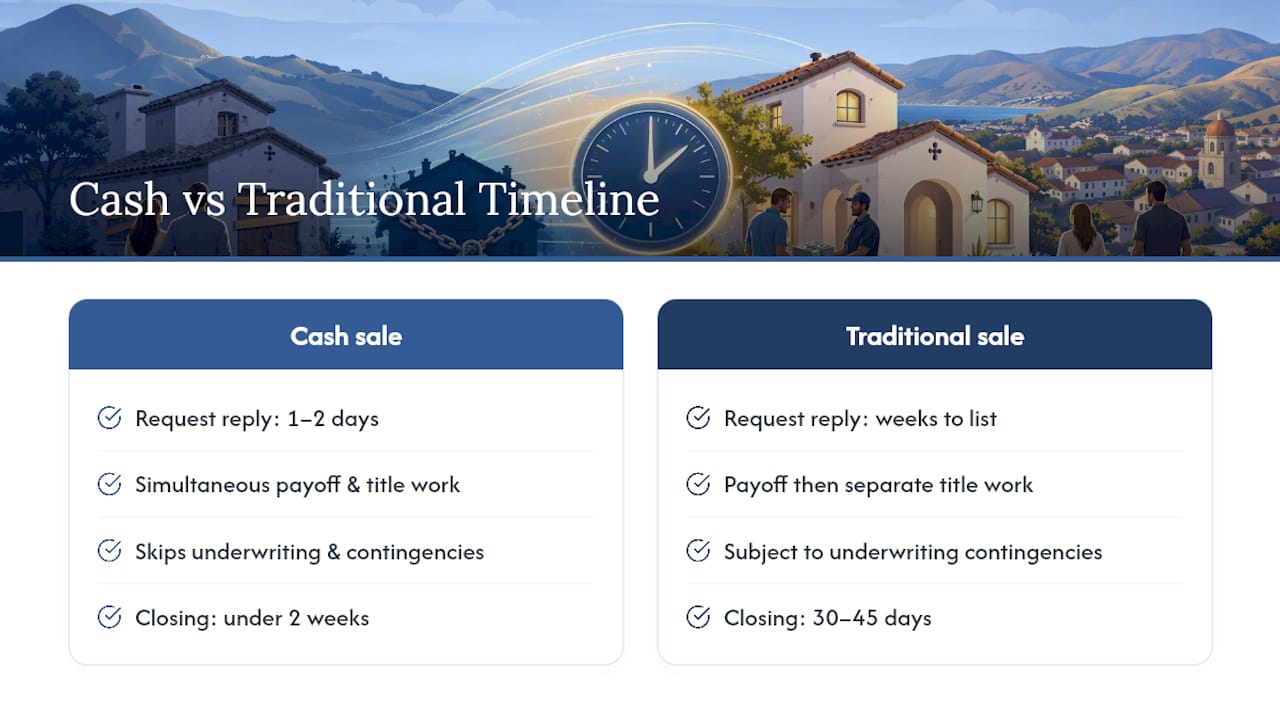
Before you accept any offer, ask for proof of funds, a named title or escrow company, and a written closing date. A legitimate buyer hands these over without hesitation. If you're weighing a cash offer against a traditional sale, remember that certainty has value of its own when a sale date is fixed and non-negotiable.
Ready to see your options? Visit SLO Cash Buyer to request your no-obligation offer, and have your payoff quote and property details ready to speed things along.
An Honest Local Take On Timing And Trust
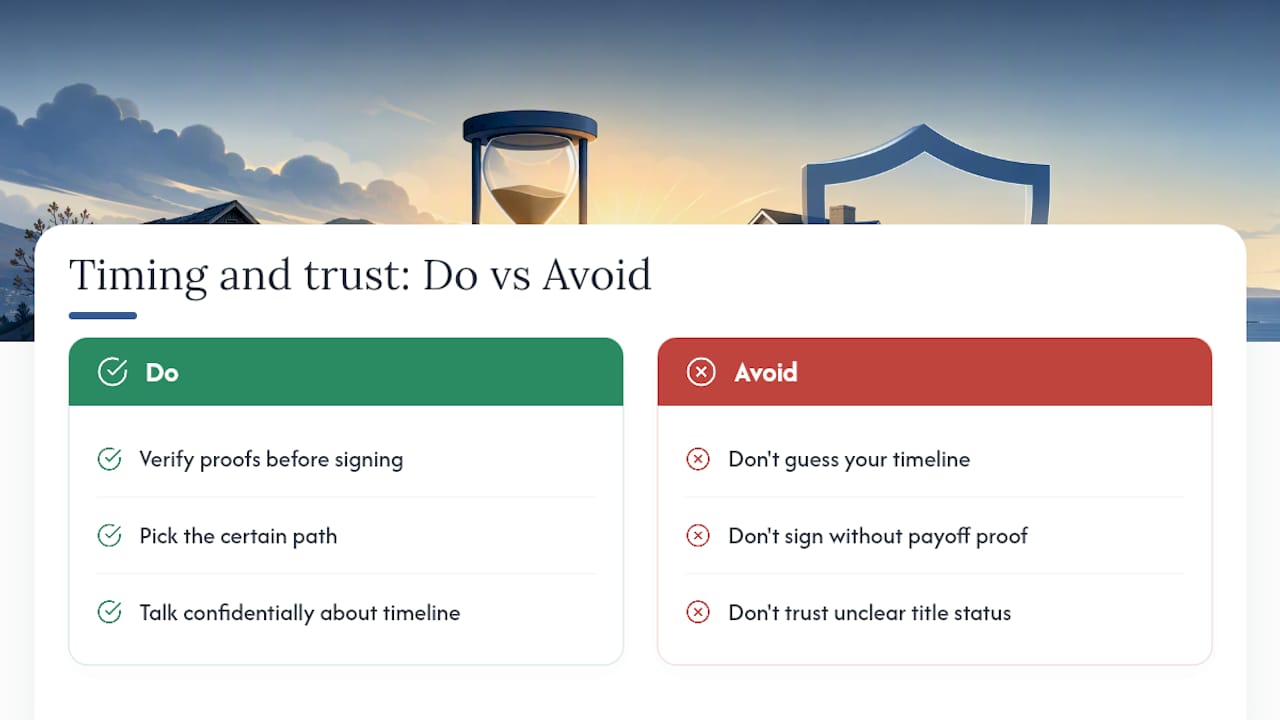
Fast, as-is cash sales genuinely give homeowners the clearest path out of an active foreclosure, but I want to be straight with you about what actually gates the timeline. It's rarely the buyer. It's how quickly your servicer produces a payoff statement and how fast title work clears. Every case moves a little differently depending on liens, county recording times, and your servicer's own backlog.
Verify proofs before you sign anything, and pick the certain path over the uncertain one. If you're staring down a sale date, a confidential conversation about your specific timeline beats guessing every time.
— Abel