
Buyers waive inspection contingencies primarily to make their offers more attractive to sellers in competitive markets. When inventory is tight and multiple bids arrive on the same property, removing the inspection contingency signals to the seller that the deal is unlikely to fall apart over repair negotiations. About 20% of buyers waive inspection contingencies in tight market conditions to compete effectively, according to early 2026 industry data.
Here is a quick summary of why buyers make this choice:
- To win bidding wars by presenting a cleaner, more certain offer
- To shorten the closing timeline and reduce negotiation back-and-forth
- To signal confidence in the property's condition
- To match strategies other competing buyers are already using
- To factor repair costs into the purchase price, as investors often do
Entities like HomeTeam Inspection Service and Freddie Mac both caution that while waiving can help you win, it transfers real financial risk onto your shoulders the moment you close.
Why buyers waive home inspection contingencies
The core reason is competitive pressure. In markets where homes receive multiple offers within days of listing, sellers naturally favor offers with fewer conditions. Waiving inspection contingencies presents sellers with a more certain and faster closing process by eliminating repair negotiations entirely.
Several specific motivations drive buyers to this decision:
- Bidding war dynamics. When five buyers compete for one home, removing contingencies can be the deciding factor that gets your offer accepted.
- Faster closing. Without a 7–14 day inspection window, the transaction moves quicker, which appeals to sellers who want certainty.
- Confidence in the property. Buyers who have toured the home multiple times or reviewed a seller-provided report may feel comfortable proceeding without their own contingency.
- Investor logic. Experienced investors often waive inspections because they budget repair costs into their offers and prioritize speed over condition details.
- Dream home pressure. In high-cost markets, buyers sometimes accept more risk when the property is exactly what they want, especially when potential repair costs represent a smaller share of the overall purchase price.
- Matching the competition. When other buyers in the same market are already waiving contingencies, keeping yours in place can feel like a disadvantage.
Real estate professionals consistently note that sellers prefer offers that let them sell without worrying about re-negotiating for repair credits or facing a buyer who backs out over minor findings.

What are the real risks of skipping an inspection contingency?
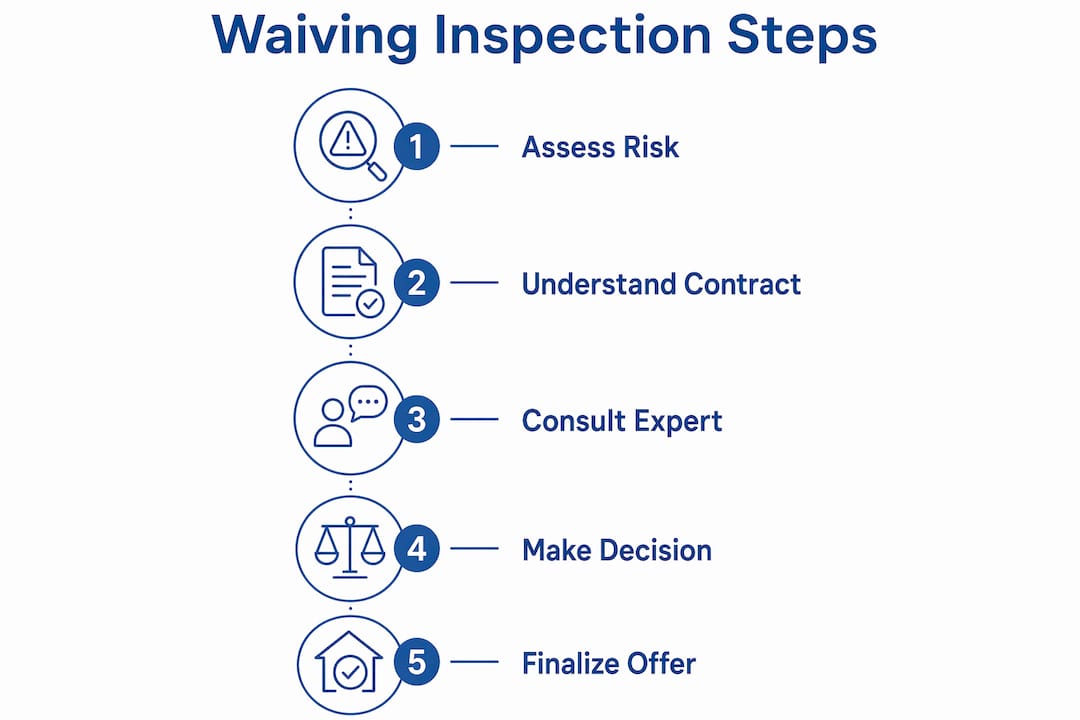
The financial exposure is the biggest concern. Waiving inspection contingencies transfers 100% of maintenance and repair risk to the buyer, including costly issues like roof or foundation failures. Research from Repair Pricer, which analyzed 50,000 home inspection reports, found that the average inspection uncovers more than 20 individual repair items with a combined average cost of $11,222. For older or poorly maintained homes, that figure climbs much higher.
Key risks buyers face when forgoing this protection:
- Hidden defects. Structural issues, mold, outdated electrical wiring, and roof damage are common in older homes and can cost tens of thousands of dollars to fix.
- No exit without penalty. Without the contingency, backing out of the deal typically means forfeiting your earnest money deposit, which in competitive markets can be substantial.
- Loss of negotiation leverage. You cannot ask the seller for repair credits or a price reduction based on inspection findings once the contingency is waived.
- Emotional stress. Discovering major problems after closing, with no recourse, is one of the most common sources of buyer's remorse in real estate.
- Missed deadline risk. If a contingency deadline passes without action, it is often automatically waived, removing your protection even if you intended to keep it.
Pro Tip: Before waiving any inspection contingency, honestly assess whether you could absorb an $11,222 surprise repair bill in your first year of ownership. If the answer is no, the contingency is protecting you from a real financial risk, not just slowing down the deal.
A standard inspection contingency gives you a typical 7–14 day window to assess the property and negotiate or cancel if major issues arise. Losing that window means losing your clearest opportunity to catch problems before they become your problem.
Legal and contractual considerations when waiving
Waiving the inspection contingency does not mean you lose all legal protection. Most states require sellers to disclose known material defects, and waiving the contingency does not waive your right to sue for fraudulent concealment. If a seller knowingly hides a serious defect, courts in most jurisdictions have held them liable even when the buyer agreed to purchase the property as-is.
Key legal and contractual points to understand:
- Disclosure laws still apply. Sellers must reveal known material defects in writing regardless of whether you waive the inspection contingency.
- As-is is different from waiving the contingency. Agreeing to buy as-is means you accept the property in its current condition with very limited legal recourse. Waiving the contingency means you give up your right to renegotiate or exit penalty-free based on inspection results. These are related but distinct.
- Lead paint disclosures are non-negotiable. For any home built before 1978, federal law requires the seller to disclose known lead-based paint hazards regardless of what contingencies you waive.
- Missed deadlines can waive your rights automatically. Many contracts treat an expired contingency deadline as an automatic waiver, so tracking dates carefully matters.
- Fraud claims remain available. If a seller actively conceals a defect they knew about, you may still have legal recourse, though proving intentional concealment is difficult and costly.
- New state laws are emerging. Massachusetts enacted legislation in 2024 prohibiting sellers from conditioning offer acceptance on buyers waiving their right to a home inspection. New York introduced similar legislation during the 2025–2026 legislative session.
Reviewing real estate contract terms carefully before signing is always worth the time, especially when contingencies are being modified or removed.
Alternatives to fully waiving the inspection contingency
You do not have to choose between a competitive offer and zero protection. Several middle-ground options let you stay attractive to sellers while keeping some safeguards in place.
- Pre-offer inspection. Hire an inspector before submitting your offer. You pay a few hundred dollars upfront, but your offer looks as clean as any no-contingency bid while you actually know what you are buying. The downside is paying for an inspection on a home you might not win.
- Informational inspection only. You keep the right to inspect but waive the right to negotiate repairs or cancel based on findings. Buyers can perform inspections for informational purposes only after waiving contingencies, gaining knowledge without negotiation rights. Freddie Mac specifically recommends this as a compromise in competitive markets.
- Pass/fail inspection. You agree to proceed unless the inspector finds a major defect, such as structural damage or mold. Minor issues do not give you an exit. This makes your offer more appealing while preserving protection against catastrophic findings.
- Shortened contingency window. Offer a five-day inspection period instead of the standard ten to fourteen days. Sellers see a faster timeline; you keep your right to walk away.
- Capped repair requests. Include the contingency but agree upfront that you will only request repairs if costs exceed a specific dollar threshold, such as $5,000. This removes the seller's fear of being nickel-and-dimed.
- Seller-provided inspection reports. When sellers supply recent inspection reports upfront, you can review them before making your offer and feel confident waiving your own contingency period.
The role of home inspection in any transaction is to give buyers clear information. These alternatives preserve that goal while reducing friction for the seller.
Expert insights on when waiving actually makes sense
The consensus among real estate professionals is clear: waiving contingencies signals an unconditional commitment to sellers, which is often the deciding factor in bidding wars. But that signal only makes sense when you can actually back it up financially.
Zillow's 2024 buyer trends data shows that 66% of mortgage buyers included an inspection contingency in their final offer, meaning the majority of buyers still keep this protection even in competitive conditions. That context matters: waiving is a minority move, not the default.
Practical guidance from industry experts and legal professionals points to a few situations where waiving carries lower risk. New construction with a builder warranty reduces hidden-defect exposure significantly. Cash buyers with substantial reserves beyond their down payment can absorb surprises without financial crisis. Buyers who have already completed a pre-offer inspection and are comfortable with the findings are making an informed choice rather than a blind one.
For everyone else, especially first-time buyers or anyone stretching their budget to afford the purchase, the inspection contingency is protecting you from a scenario that is genuinely difficult to recover from. An $11,222 repair bill in your first year of ownership is not just stressful. It can derail your finances for years.
SLO Cash Buyer - San Luis Obispo County Home buyer works with sellers across San Luis Obispo County who want to skip the inspection process entirely by selling for cash. That model removes the uncertainty on both sides of the transaction, which is exactly why sellers in difficult situations find it so appealing.
A quick summary of what you need to know
Waiving an inspection contingency can win you a home in a competitive market, but the trade-off is real and the stakes are high. Here is a clear recap:
- Buyers waive contingencies primarily to strengthen offers and speed up closings in seller's markets
- The average home inspection uncovers repair needs averaging $11,222, all of which become your responsibility without the contingency
- Waiving does not remove seller disclosure obligations or your right to sue for intentional concealment
- Alternatives like pre-offer inspections, informational-only inspections, and capped repair contingencies offer a middle path
- Only waive if you are financially prepared to absorb major repair costs without putting your ownership at risk
- New laws in Massachusetts and New York signal growing regulatory concern about buyers being pressured into waivers
Key Takeaways
Buyers who waive inspection contingencies gain a competitive edge in tight markets but accept full financial responsibility for any defects discovered after closing.
| Point | Details |
|---|---|
| Primary motivation | Buyers waive to make offers more attractive and close faster in competitive seller's markets. |
| Average repair exposure | Home inspections uncover repair needs averaging $11,222, which fall entirely on the buyer without the contingency. |
| Legal protections remain | Seller disclosure laws still apply; waiving the contingency does not protect sellers who intentionally conceal defects. |
| Safer alternatives exist | Pre-offer inspections, informational-only inspections, and capped repair requests preserve competitiveness with less risk. |
| Financial readiness is the test | Only waive if you can absorb major unexpected repair costs immediately after closing. |

If you are a homeowner in San Luis Obispo County who wants to skip the inspection process entirely and sell on your timeline, SLO Cash Buyer - San Luis Obispo County Home buyer makes fair cash offers with no repairs required and no hidden fees. Get your cash offer today and close when it works for you.