Yes, you can verify a cash buyer, and you should do it before you sign anything or pull your listing. Check that the proof of funds is recent, that the amount covers the full purchase price plus closing costs, and confirm authenticity by calling the financial institution at its publicly listed number, not one the buyer gave you. While you're on the phone, ask a direct question: will this buyer close, or do they plan to assign the contract to someone else?
TL;DR:
- Confirm proof of funds is no older than 30 days, or within 7 days for high-value transactions, to ensure liquidity is recent and available.
- Verify that the proof matches or exceeds the full purchase price plus closing costs, avoiding underfunded offers.
- Call the issuing bank or institution directly at a publicly listed number to authenticate the proof and avoid forgeries.
- Ask whether the buyer intends to close personally or plans to assign the contract, to prevent trust in a buyer who might never complete the deal.
- Store comprehensive documentation and verification records, including call notes and signed statements, to safeguard against last-minute surprises or disqualifications.
Table of Contents
- How to Verify Cash Buyer Proof of Funds, Step by Step
- What Counts as Real Proof of Funds?
- Red Flags That Signal a Fake or Risky Cash Offer
- Verifying the Bank: What to Say When You Call
- Documents to Request and Sample Wording for Sellers
- Your One-Page Verification Checklist
- Why Disciplined Proof of Funds Checks Actually Save Deals
- Skip the Verification Process With a Direct Local Cash Offer
- Sources
- FAQ
How to Verify Cash Buyer Proof of Funds, Step by Step
Sellers lose weeks, sometimes their whole selling season, to buyers who never had the money to begin with. A short verification routine catches almost every one of them before the contract gets signed. Here's the order that works.
- Check the date first. Proof of funds (POF) should be no older than 30 days for a standard deal. If you're closing a high-value transaction, ask for a bank letter dated within the past 7 days.
- Confirm the amount. The balance needs to cover the full purchase price plus a buffer for closing costs, title fees, and any repairs the buyer promised to absorb. A number that matches the offer price exactly, down to the dollar, is worth a second look.
- Call the institution directly. Look up the bank or brokerage's phone number independently. Never use a number printed on the document itself. This single step catches the most sophisticated forgeries because a fake letter almost never survives a real conversation with a bank officer.
- Cross-check the buyer's name. The name on the ID should match the name on the account. Ask in writing whether the buyer intends to close personally, with no assignment to a third party.
- Log everything. Save a copy of the POF, note the date you verified it, and set a reminder to request a refresh if the closing timeline runs past 30 days.
Pro Tip: Keep a simple spreadsheet with columns for buyer name, POF date, verification call date, and expiration. It takes five minutes and it's the difference between spotting an expired letter and finding out at the closing table.
What Counts as Real Proof of Funds?
Acceptable POF documents show liquid, accessible money. That means a recent bank statement, a brokerage statement for stocks or money-market funds, or a bank-issued letter on official letterhead listing the account holder's name and available balance.
What doesn't qualify on its own:
- Home equity. It's not cash until a loan or sale converts it.
- IRA or 401(k) balances. These trigger penalties and taxes on early withdrawal, so the stated number isn't what actually lands in escrow.
- Cryptocurrency. Unless it's already converted to dollars in a verified account, it's not proof of anything a title company can use.
- Margin credit. A margin line only counts if the buyer can show an actual draw against it, not just an available limit.
If a buyer combines a checking account with a brokerage account to hit the total, ask for statements on both and request a short letter from each institution confirming the balances are current and available for this transaction.
Red Flags That Signal a Fake or Risky Cash Offer
Most fraudulent POF documents share the same tells once you know where to look. Round numbers are a common red flag, as real bank balances are rarely perfectly even amounts.
Watch for these signs:
- Formatting that doesn't match a real bank statement (wrong fonts, misaligned logos, inconsistent spacing).
- PDF metadata showing recent edits when the document claims to be an original scan.
- Missing contact information, a generic signature, or no bank officer name at all.
- Pressure to skip verification, sign quickly, or wire money before you've confirmed anything.
The most common trap isn't a forged document. It's a legitimate-looking buyer who never intends to close. Wholesalers sometimes lock up a contract with real POF, then try to assign it to someone else for a fee. Ask this exact question before you accept an offer: "Will you be the closing buyer, or do you plan to assign this contract?"
Pro Tip: A serious buyer answers that question without hesitation. Hesitation, deflection, or "we'll figure that out later" is your answer.
Verifying the Bank: What to Say When You Call
Finding the right number matters as much as making the call. Search the bank's name directly, or use the number printed on its official website, never one texted or emailed by the buyer.
- Ask to confirm the letter or statement is authentic and was issued by that branch.
- Ask if the person who signed it has authority to verify account balances.
- Ask if the balance shown matches what the bank has on file as of that date.
Banks operate under privacy limits, so don't expect a full account rundown. Under Gramm-Leach-Bliley Act protections, most institutions will confirm or deny whether a document is genuine and whether the signer had authority, but they won't recite exact numbers to a third party without the account holder's consent.
Confirming authenticity and signer authority is usually enough. If the bank hesitates to confirm even that much, treat the letter as unverified until the buyer clears it up directly.
Documents to Request and Sample Wording for Sellers
A clean verification file needs four things: a current bank or brokerage statement, a bank letter on letterhead if the deal is high-value, a copy of ID matching the account name, and a short written statement that the buyer intends to close without assigning the contract.
Here's wording you or your agent can paste into a pre-offer request:
- "Please provide a bank or brokerage statement dated within the last 30 days showing funds available for this purchase."
- "If possible, include a letter from your institution on official letterhead confirming the account holder's name and balance."
- "Please confirm in writing that you intend to be the closing buyer on this transaction."
Refresh any POF that's aging past 30 days, and always request a fresh bank letter if closing slips more than a few weeks past the original document date.
Your One-Page Verification Checklist
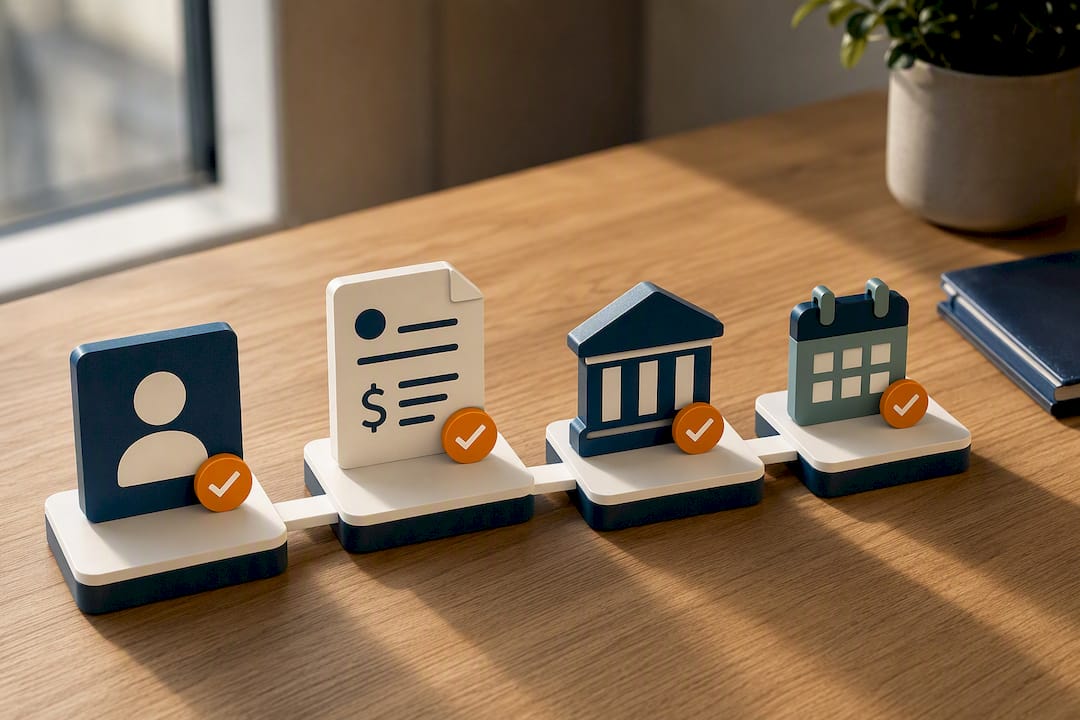
Before you take an offer seriously, confirm these four things: the POF date is within 30 days (7 days for a bank letter on a high-value deal), the amount covers price plus closing costs, the issuing bank confirmed authenticity by phone, and the buyer has stated in writing they'll close rather than assign.
Store copies of every document and your call notes in the buyer's file, and note who verified them and when.
| Item | Standard | Confirm By |
|---|---|---|
| POF date | 30 days (7 days for bank letter, high value) | Document timestamp |
| Amount | Price + closing cost buffer | Statement or letter total |
| Institution | Verified via public number | Phone call |
| Assignment status | Written no-assignment confirmation | Buyer's signed statement |
Why Disciplined Proof of Funds Checks Actually Save Deals
Fast closings sound great until an unverified buyer disappears three days before signing. At SLO Cash Buyer, we've seen the pattern in foreclosure sales, inherited properties, and urgent relocations, where sellers under pressure skip the verification step because they just want the stress to end. The sellers who take ten minutes to confirm funds and intent are the ones who actually close on schedule. Every offer deserves that same scrutiny, no matter how good it sounds. For more on spotting legitimate buyers, see our guide on vetting "we buy houses" companies.
— Abel
Skip the Verification Process With a Direct Local Cash Offer
Verifying proof of funds protects you, but it's still work: phone calls, document requests, waiting on confirmation. If you'd rather skip that entirely, a direct alternative exists for homeowners in San Luis Obispo County.

Working with a local, known buyer removes the guesswork of vetting a stranger's bank letter, because there's no third party to verify in the first place. Homes can be sold as-is, with no repairs, no cleaning, and no agent commissions eating into your proceeds, and the process can be kept transparent from the first conversation through closing. Homeowners dealing with foreclosure, an inherited property, or a fast relocation may get a fair cash offer without the delays that come from chasing down a buyer's financials. If a straightforward, verified path to selling sounds better than another round of phone calls, visit SLO Cash Buyer to request your offer and see a closing timeline that fits your situation. You can also review our full closing checklist to see what happens after you accept.
Sources
- Proof of Funds: How to Verify a Cash Buyer
- Proof of Funds (POF): What It Is, Qualifying Documents, and How to Obtain
- How to Get a Proof of Funds Letter From Your Bank - LegalClarity
FAQ
How do you know if a cash buyer is legit?
Confirm their proof of funds is dated within 30 days, matches or exceeds the purchase price, and call the issuing bank at its publicly listed number to verify the document is authentic.
Is it illegal to have $10,000 cash on you?
No, carrying cash is legal, though banks and government agencies require reporting for certain cash transactions and deposits under federal anti-money-laundering rules.
What is the best way to sell your house to a cash buyer?
Vet the buyer's proof of funds and closing intent first, then compare that offer against a direct, local option like SLO Cash Buyer, which buys homes as-is without agent commissions or repair demands.
How does a cash buyer show proof of funds?
A cash buyer typically provides a recent bank or brokerage statement, or a bank-issued letter on letterhead listing the account holder's name, balance, and issue date.